7 Growth Hormone Secretagogues and How They Compare Now
7 Growth Hormone Secretagogues and How They Compare Now
Growth hormone secretagogues are not a single therapy class in practical use today. Tesamorelin, macimorelin, ipamorelin, and ibutamoren are often discussed together, but their FDA status, intended use, and sports-doping implications are very different.
Among the available options, growth hormone secretagogues like tesamorelin and macimorelin are gaining traction for their unique approaches to stimulating growth hormone production.
Understanding growth hormone secretagogues is essential for anyone interested in their potential benefits.
TL;DR: Summary
Growth hormone secretagogues now split into distinct categories: tesamorelin is FDA-indicated for excess abdominal fat in HIV-associated lipodystrophy, macimorelin is FDA-indicated only for diagnosing adult growth hormone deficiency, and widely discussed agents like ipamorelin and ibutamoren are not FDA-approved to treat adult GHD.
FDA materials state no growth hormone secretagogue is approved for treating adult growth hormone deficiency, and only sermorelin was approved for pediatric short stature associated with GHD.
Tesamorelin is a GHRF analog given at 1.28 mg subcutaneously once daily, while macimorelin is a GHSR agonist given as a single 0.5 mg/kg oral diagnostic dose.
Sports rules matter: USADA says the 2026 WADA Prohibited List includes S2 peptide hormones, growth factors, and related substances, and the list is not exhaustive.
The best way to compare any growth hormone secretagogue is to check five things in order: mechanism, exact indication, route and dosing context, evidence quality, and legality in your setting.
That means the useful question is no longer “Which one raises GH?” It is “Which one has evidence, a defined indication, acceptable risk, and a legal use case for my situation?”
What are growth hormone secretagogues?
Growth hormone secretagogues are agents like tesamorelin and macimorelin that stimulate the body’s own GH axis rather than supplying recombinant growth hormone directly. The group includes GHRH or GHRF analogs and ghrelin receptor, or GHSR, agonists.
That broad definition is why the category creates so much confusion. A secretagogue can act at the GHRH receptor, the ghrelin receptor, or both through downstream endocrine signaling, yet still have a completely different clinical purpose. Tesamorelin is a GHRF analog with a narrow treatment indication, while macimorelin is a receptor agonist used as a diagnostic tool. If two compounds sit under the same umbrella but one is for diagnosis and one is for a specific HIV-related fat distribution problem, they are not interchangeable.
“Your Peptide Guide focuses on physician-informed, vendor-neutral peptide education rather than product sales.”
Growth hormone secretagogues can differ in their mechanism of action and effectiveness.
A common mistake is to compare these agents only by how much GH they might provoke in theory. The better comparison is indication first, mechanism second, and evidence third.
Why do growth hormone secretagogues matter more now?
Growth hormone secretagogues matter now because FDA labeling, peptide-market hype, and anti-doping enforcement have moved in different directions. Tesamorelin and USADA are the two names that clarify the split fastest.
Growth hormone secretagogues are critical for understanding how our body regulates growth hormone levels naturally.
Growth hormone secretagogues play a role in advancing our understanding of hormone therapies.
On one side, official medical use remains narrow. FDA-linked sources in this topic point to tesamorelin for HIV-associated lipodystrophy and macimorelin for diagnosing adult growth hormone deficiency. On the other side, public interest keeps expanding into body composition, recovery, performance, and longevity.
That gap matters because the same online conversation often mixes approved drugs, older approved agents, investigational compounds, and sport-prohibited substances as if they belong in one decision tree. They do not. If your goal is diagnosis, treatment, performance, or research interpretation, the answer changes immediately.
Many people are exploring growth hormone secretagogues for their effects on body composition.
In the realm of performance enhancement, growth hormone secretagogues have become a hot topic due to their potential benefits.
As the market evolves, understanding growth hormone secretagogues is essential for both clinical and personal use.
The growing interest in growth hormone secretagogues reflects a broader shift in health and wellness approaches.
What are the 7 growth hormone secretagogues people compare most often now?
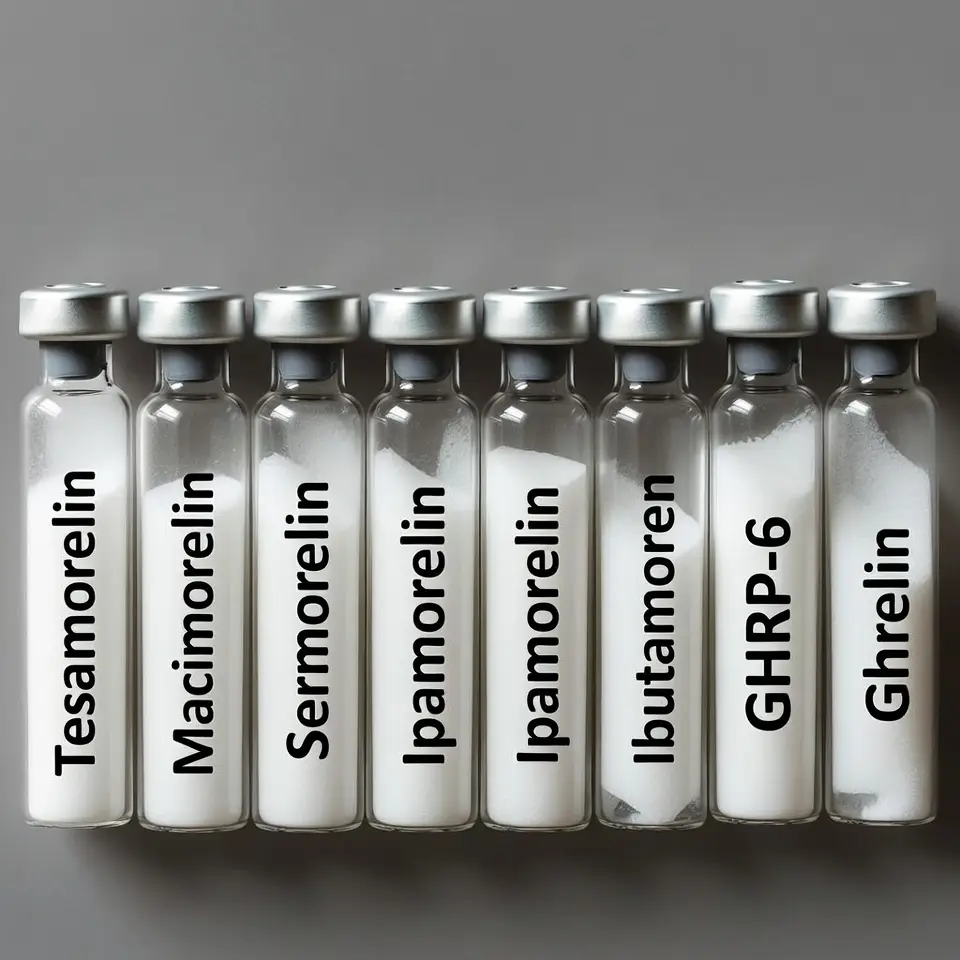
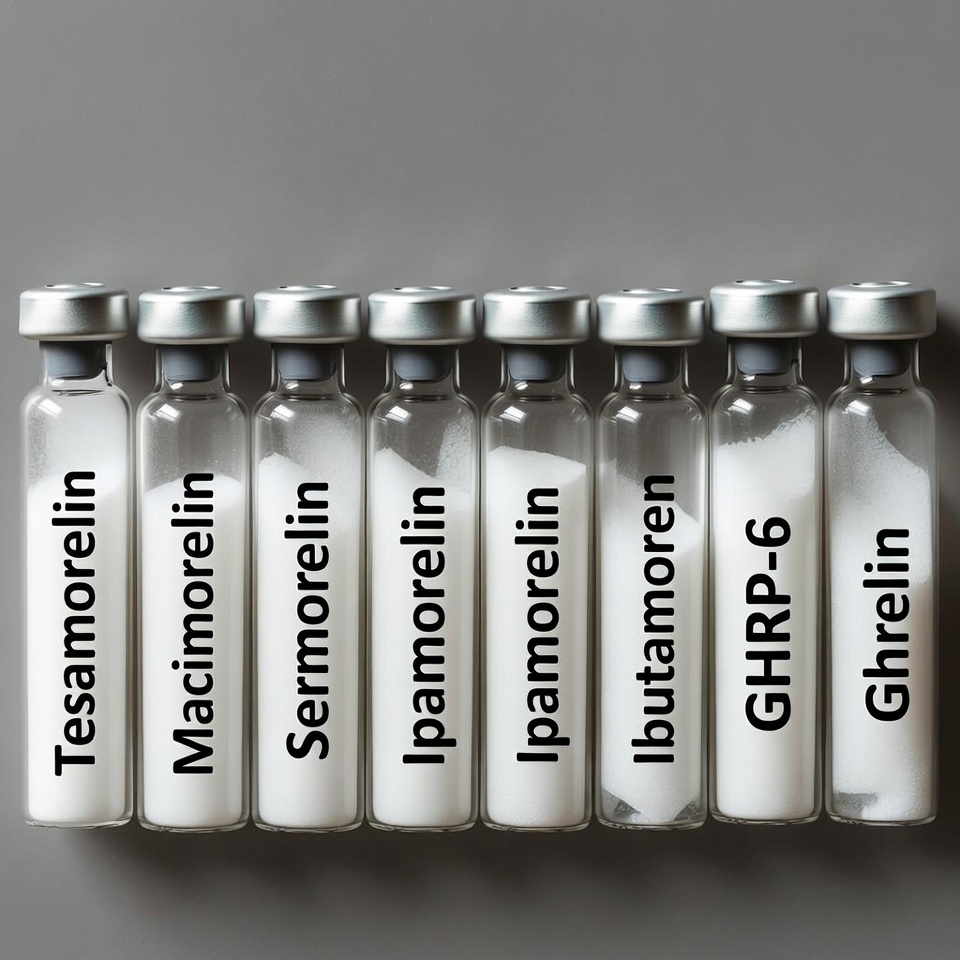
The most commonly compared names right now are tesamorelin, macimorelin, sermorelin, ipamorelin, ibutamoren, GHRP-6, and ghrelin. They belong to the same broad conversation, but not to the same regulatory or clinical category.
People tend to compare these seven because they cover the full spectrum: current FDA-linked use, historical approval, research compounds, and mechanistic benchmarks.
Many individuals are curious about the safety profiles of growth hormone secretagogues.
Growth hormone secretagogues could play an important role in future medical therapies.
Given the complexity of growth hormone secretagogues, it is essential to approach them with a well-informed perspective.
As research progresses, growth hormone secretagogues may become more widely accepted.
The implications of using growth hormone secretagogues need thorough understanding.
Growth hormone secretagogues are an important topic in discussions about hormonal health.
New advancements in research on growth hormone secretagogues are shedding light on their effectiveness and safety.
Tesamorelin: A GHRF analog FDA-indicated for reduction of excess abdominal fat in HIV-infected adults with lipodystrophy. The labeled dose is 1.28 mg subcutaneously once daily, and the label says it is not indicated for weight-loss management.
Macimorelin: A GHSR agonist FDA-indicated for diagnosis of adult growth hormone deficiency. It is given as a single oral dose of 0.5 mg/kg.
Sermorelin: A GHRH analog that FDA says was the only approved growth hormone secretagogue among examples like ipamorelin for short stature associated with pediatric GHD.
Ipamorelin: A commonly discussed peptide GHSR agonist. FDA says it has not identified data supporting effectiveness of ipamorelin or ipamorelin acetate for diagnosis or treatment of GHD in children or adults.
Ibutamoren (MK-677): A nonpeptide ghrelin receptor agonist often compared because it is oral. Older academic literature treats it as a GH secretagogue, but the official sources here do not support an FDA treatment role for adult GHD.
GHRP-6: A peptide secretagogue used mainly as a mechanistic and historical comparator in research. Its practical relevance now is often discussed in sports and peptide-market contexts rather than mainstream approved care.
Ghrelin: The endogenous ligand and a mechanistic reference point for the GHSR pathway. It helps explain how many secretagogues work, even though it is not the routine clinical comparator most readers are actually deciding between.
Understanding the evolution of growth hormone secretagogues can provide insight into their future applications.
How do GHRH analogs and GHSR agonists compare?
GHRH analogs like tesamorelin and GHSR agonists like macimorelin act on different receptors and often produce different downstream effects. That receptor difference is one of the cleanest ways to compare the class.
GHRH analogs work closer to physiologic growth hormone releasing hormone signaling. GHSR agonists act through the ghrelin receptor, which can bring appetite, gastrointestinal, or broader neuroendocrine considerations into the picture depending on the compound. In simple terms, one side is “GHRH-like,” the other is “ghrelin-like.”
Understanding the distinctions among various growth hormone secretagogues is crucial for making informed decisions.
That difference becomes useful when you interpret claims. If a compound is discussed mainly for hunger, sleep, or oral convenience, it is often sitting in the GHSR conversation. If it is framed around GHRH pathway analog activity, it is often discussed more like tesamorelin or sermorelin.
A subtle point matters here: a stronger mechanistic story does not create a treatment indication by itself. If the hypothalamic-pituitary axis is disrupted, expected signaling may not translate cleanly, which is one reason tesamorelin labeling specifically flags disruption of that axis as a contraindication context.
Professionals must stay informed about growth hormone secretagogues to guide effective patient care.
Evaluating the mechanisms of action of growth hormone secretagogues can clarify their roles in treatment.
How do tesamorelin and macimorelin compare in current FDA use?
Understanding the differences between various growth hormone secretagogues is crucial for informed choices.
Tesamorelin and macimorelin are the two most important FDA-linked comparators in this category, but they solve different problems. Tesamorelin is a treatment for a specific body-fat indication in HIV, while macimorelin is a diagnostic challenge test for adult GHD.
Tesamorelin, sold as EGRIFTA WR, is indicated for reduction of excess abdominal fat in HIV-infected adults with lipodystrophy. The label states it is not indicated for weight-loss management, and its long-term cardiovascular safety has not been established. The recommended dose is 1.28 mg subcutaneously once daily.
Considering the implications of growth hormone secretagogues is essential for responsible usage.
As discussions around growth hormone secretagogues proliferate, understanding their context is increasingly vital.
“Your Peptide Guide organizes peptide research by goal, with protocol overviews and safety considerations instead of product promotion.”
Macimorelin, sold as MACRILEN, is indicated for the diagnosis of adult growth hormone deficiency and is taken as a single oral dose of 0.5 mg/kg. The key insight is simple: one compound is used to generate diagnostic information, the other is used for a narrow treatment endpoint. Neither is approved for treating adult GHD itself.
The role of growth hormone secretagogues in aging and longevity continues to be a critical area of research.
Different growth hormone secretagogues can have unique effects on the body’s metabolism.
If you only remember one trade-off, make it this one: oral versus injectable is less important than diagnostic versus therapeutic intent.
How should you evaluate FDA status, indication, and evidence step by step?
Many users seek clarity about growth hormone secretagogues to distinguish fact from fiction in marketing claims.
Becoming familiar with growth hormone secretagogues is crucial for anyone involved in sports or fitness.
Growth hormone secretagogues play a role in the ongoing dialogue about performance enhancement.
The fastest reliable method is to check the label claim, then the patient population, then the outcome being measured. FDA and DailyMed entries usually resolve the confusion in minutes.
Step 1 is to read the exact indication, not the marketing summary you saw reposted online. “Reduction of excess abdominal fat in HIV-infected adults with lipodystrophy” is not the same as “fat loss,” “anti-aging,” or “general GH optimization.”
Step 2 is to separate diagnosis from treatment. Macimorelin is used to diagnose adult GHD. That does not mean it is a treatment for adult GHD. This is where many comparison charts fail.
Growth hormone secretagogues are often discussed in the context of both their benefits and potential risks.
Step 3 is to separate adult from pediatric use. FDA states there are no growth hormone secretagogues approved for treating adult- or childhood-onset GHD in adults. FDA also states only sermorelin was approved for short stature associated with pediatric GHD among the secretagogues discussed in that context.
A useful rule is this: if the outcome on the label is different from your goal, treat the compound as a poor match unless strong new evidence says otherwise.
As science progresses, the narrative around growth hormone secretagogues will evolve, impacting their usage.
How do sports-doping rules apply to growth hormone secretagogues?
For tested athletes, growth hormone secretagogues should be treated as a high-risk category. USADA and WADA matter more here than forum terminology or brand naming.
Many athletes are considering growth hormone secretagogues for their potential performance benefits.
USADA says the 2026 WADA Prohibited List took effect on January 1, 2026, includes category S2 for peptide hormones, growth factors, and related substances, and is not exhaustive. That last point is critical. A compound can be prohibited even if a seller highlights that it is “not specifically named.”
An understanding of growth hormone secretagogues can empower users to make informed decisions.
If you compete under anti-doping rules, class membership is the first question, not whether a peptide sounds obscure. That is the misconception that gets people into trouble.
Research on growth hormone secretagogues continues to evolve as new studies emerge.
Check the category: S2 can capture named compounds, analogs, mimetics, and related substances.
Check the year: WADA updates the list annually, so old screenshots can be wrong.
Check your status: Tested athletes, collegiate competitors, and national-level lifters often face stricter consequences than casual gym users expect.
It is vital to consult with professionals when considering growth hormone secretagogues.
How should clinicians and researchers think about risks and contraindications step by step?
Risk assessment should start with the exact compound and label, not with the umbrella term “secretagogue.” Tesamorelin and ipamorelin do not come with the same level of defined contraindication language.
Understanding the regulatory environment surrounding growth hormone secretagogues is key for users.
Step 1 is axis integrity. Tesamorelin is contraindicated in patients with disruption of the hypothalamic-pituitary axis, active malignancy, or pregnancy. That immediately tells you the risk discussion is not generic.
Growth hormone secretagogues are often discussed in the context of performance enhancement.
Using growth hormone secretagogues responsibly is crucial in any treatment strategy.
One should remain vigilant about the implications of growth hormone secretagogues in athletic competition.
Being informed about growth hormone secretagogues is essential for anyone considering their use.
Step 2 is endpoint-specific safety. The tesamorelin label also states long-term cardiovascular safety has not been established. That means even for an approved indication, unanswered outcome questions remain.
“Your Peptide Guide publishes evidence-based peptide guides and timely updates on investigational compounds, which is useful when FDA status and sports rules shift.”
Growth hormone secretagogues will continue to be a focal point in discussions about hormonal health.
Step 3 is monitoring context. A single supervised diagnostic exposure, like macimorelin at 0.5 mg/kg, is a different safety framework from repeated chronic exposure pursued for nonapproved goals. A common mistake is to collapse all GH-axis stimulation into one risk bucket.
If the indication is narrow and the safety language is specific, then extrapolation should be narrow too.
Ultimately, growth hormone secretagogues require careful consideration in both clinical and personal contexts.
Future studies on growth hormone secretagogues aim to unravel their potential therapeutic benefits.
Why is ipamorelin so often misunderstood?
Ipamorelin is misunderstood because mechanism and popularity have outpaced official evidence. FDA and peptide-market discourse are not saying the same thing about it.
FDA states it has not identified data supporting the effectiveness of ipamorelin or ipamorelin acetate for diagnosis or treatment of GHD in children or adults. That single sentence should reset many online comparisons. A compound can be mechanistically interesting, widely discussed, and still lack the data needed for a treatment claim.
This is a good place for a practical filter. If someone presents ipamorelin as though it sits beside tesamorelin or macimorelin in regulatory standing, ask three questions: approved for what, proven in whom, and measured by which endpoint? If those answers are vague, the comparison is doing more marketing than analysis.
Where does current research go beyond pituitary GH release?
Many people seek information on the latest developments regarding growth hormone secretagogues.
Current research goes well beyond simple GH release and includes GHRH biology in tissues outside the classic pituitary focus. Nature Reviews Endocrinology and mechanistic ghrelin research point in that direction.
A 2024 review describes therapeutic potential for GHRH and its analogues across cardiovascular disease, diabetes, oncology, neurodegenerative disease, and regenerative medicine, while also discussing extrapituitary effects. That widens the scientific conversation, but it does not create automatic clinical use.
The right interpretation is disciplined optimism. If GHRH agonists show signal in wound healing, myocardial infarction, ischemic stroke, or spinal muscular atrophy models, then the next questions are dose, translation, safety, and regulatory pathway. Research breadth is exciting, yet it is still different from current approved practice.
Which comparison criteria matter most before you take any next step?
Growth hormone secretagogues have gained attention for their potential applications in various fields.
The strongest comparison framework is practical and repeatable. Tesamorelin, macimorelin, and ipamorelin become much easier to sort when you use the same five filters every time.
Use this order before you rely on any claim:
Mechanism: GHRF analog and GHSR agonist are not interchangeable labels.
Indication: HIV-associated lipodystrophy, adult GHD diagnosis, and body-composition goals are different use cases.
Use pattern: Once-daily subcutaneous treatment and a single oral diagnostic dose answer different questions.
Evidence level: FDA-approved indication, historical approval, and research interest are separate tiers.
Legal context: Clinical legality and anti-doping permissibility are two different screens.
If a compound scores well on only one of those five filters, it is usually not a strong candidate for broad claims. That simple habit will keep your reading sharp and your decisions grounded.
Growth hormone secretagogues can influence a range of bodily functions and health outcomes.
The discussion around growth hormone secretagogues must consider both benefits and risks.
For labeled medicines in related pathways, review FDA product information rather than forum summaries. Start with the FDA drugs portal and search approved labels for tesamorelin or macimorelin when comparing growth hormone secretagogues in clinical settings.