7 Best Longevity Peptides and What Science Shows Now
7 Best Longevity Peptides and What Science Shows Now
The best products to “which longevity peptides matter now?” is that oral/topical skin peptides and tirzepatide currently have the strongest human evidence, while GHK-Cu, epitalon, BPC-157, TB-500, and MOTS-c are still supported more by preclinical or early-stage data.
A 2025 systematic review and meta-analysis found oral polypeptides improved skin hydration (mean difference 5.80), wrinkle reduction (0.35), and brightness (2.40), with minimal effect on elasticity and few reported adverse events
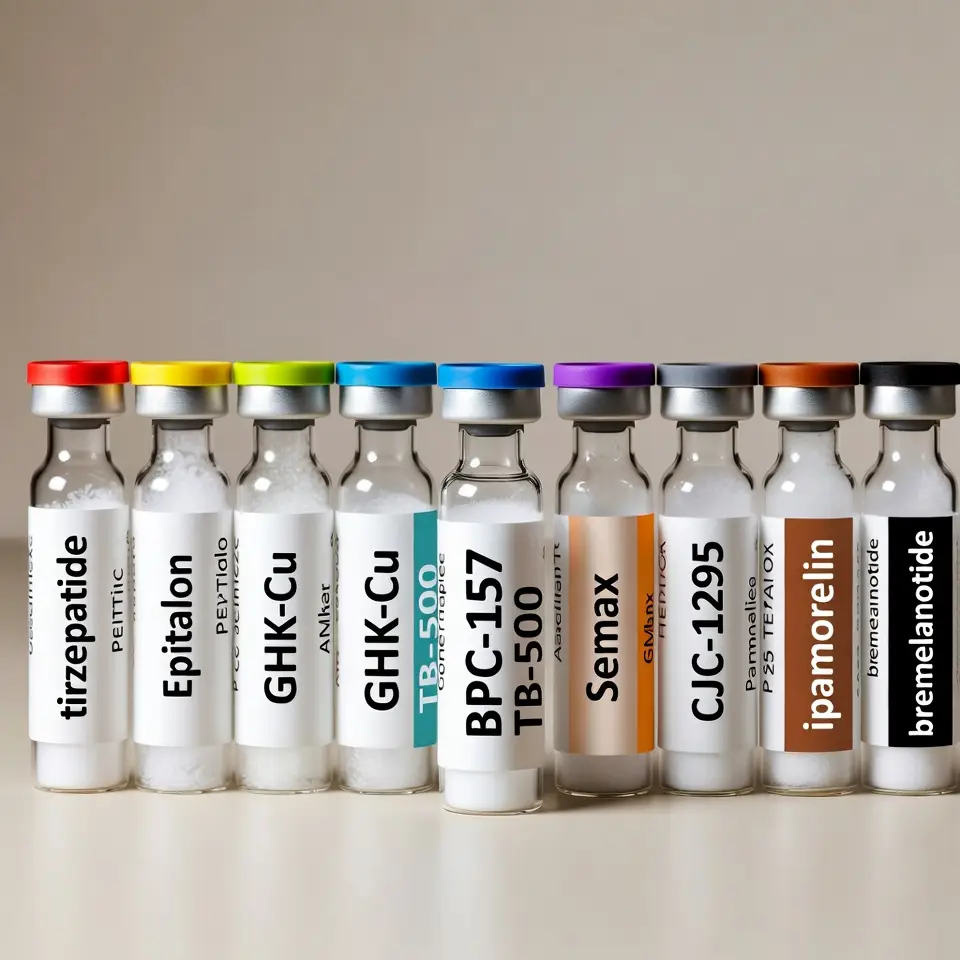
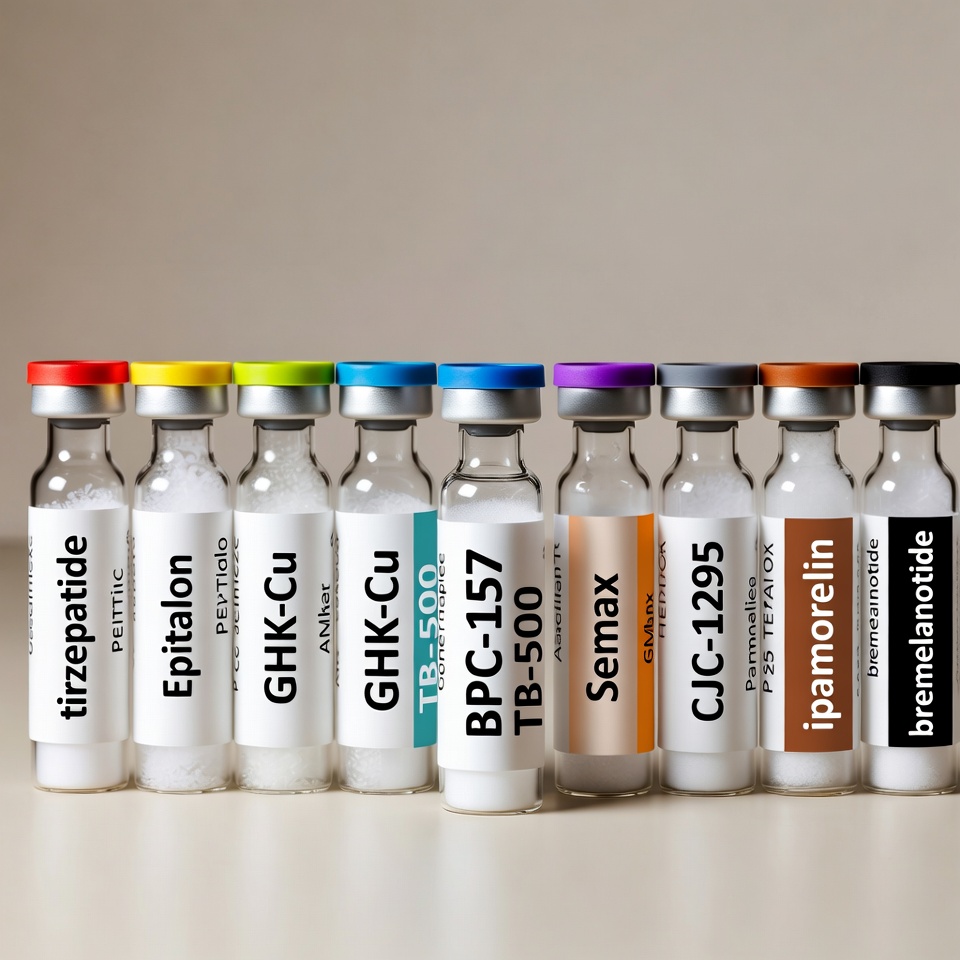
A 2026 gerontology review identified nine peptides tied to healthy aging domains, including tirzepatide, epitalon, GHK-Cu, BPC-157, TB-500, Semax, CJC-1295, ipamorelin, and bremelanotide, based on 20 primary sources through January 2026.
Tirzepatide stands out because its human evidence is strongest for metabolic restoration, which matters for aging risk, even though it is not a classic “anti-aging peptide.”
Epitalon, GHK-Cu, BPC-157, TB-500, and MOTS-c are best viewed as research-stage or context-specific candidates tied to telomerase, dermal repair, tissue healing, and mitochondrial signaling, not proven lifespan-extending therapies in humans.
If your goal is practical decision-making, separate cosmetic aging, metabolic health, injury repair, and lifespan claims. The evidence quality changes sharply by endpoint.
Longevity peptides are not one thing, and that is the first fact worth getting right. The current research points to a mixed field where some peptides have credible human data for skin or metabolic outcomes, while others remain promising mainly in animal, cell, or early-stage research.
That split matters because people often ask one question and mean four different things. A peptide that improves skin hydration is not automatically improving healthspan, and a peptide that changes a metabolic marker is not automatically extending lifespan. The useful way to read this field is by domain, evidence quality, and how close the data are to real human outcomes.
What do longevity peptides actually mean?
Longevity peptides are best viewed as function-specific compounds, not a single anti-aging class; GHK-Cu and tirzepatide target very different aging-related problems.
In current use, “longevity peptide” usually means a peptide discussed in relation to one of several aging domains: metabolic health, skin aging, tissue repair, mitochondrial signaling, telomere biology, neuroprotection, or growth hormone modulation. That framing matches a 2026 gerontology review that grouped candidate peptides by aging-related function rather than by a single anti-aging mechanism.
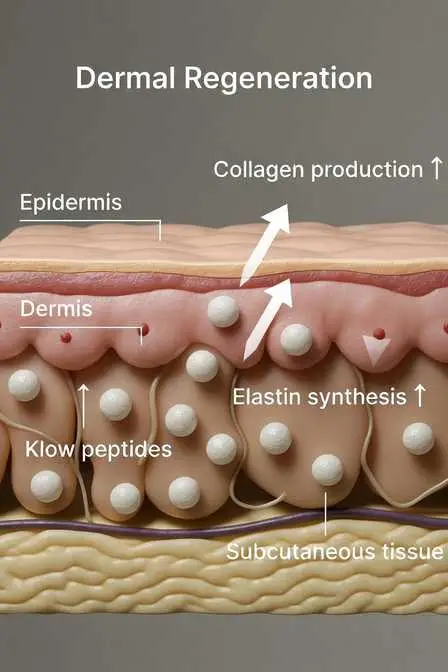
This is a helpful reset. If a compound acts on dermal regeneration, it may be relevant to visible aging but not necessarily to lifespan. If it improves glucose control or obesity, it may affect disease burden and healthspan even if nobody can yet show direct lifespan extension in humans.
Which longevity peptides have the strongest human evidence right now?
Oral/topical peptides and tirzepatide currently have the clearest human support; epitalon and BPC-157 do not.
The strongest human evidence in this group is not for the most hyped injectable research peptides. It is for oral or topical peptides used in skin aging and for tirzepatide in metabolic health.
A 2025 systematic review and meta-analysis of randomized trials found oral polypeptides improved skin hydration, wrinkle scores, and brightness, while elasticity changed little and adverse events were minimal.
“Your Peptide Guide publishes physician-informed, evidence-based guides on peptides for health, performance, and longevity.”
That does not make skin peptides “the best” for total longevity. It means the human evidence is easier to defend. A common mistake is treating visibility on social media as a proxy for trial quality. In practice, evidence is stronger when it comes from randomized human studies with defined endpoints than from dramatic animal results with uncertain translation.
Tirzepatide is the other major outlier because its evidence base comes from large human clinical programs for obesity and glycemic control. Its relevance to longevity is indirect but important: if metabolic dysfunction drives cardiovascular, renal, and inflammatory risk, then a peptide that improves metabolic status may matter more for real-world aging risk than a more exotic peptide with only cell data.
What are the 7 longevity peptides getting the most attention?
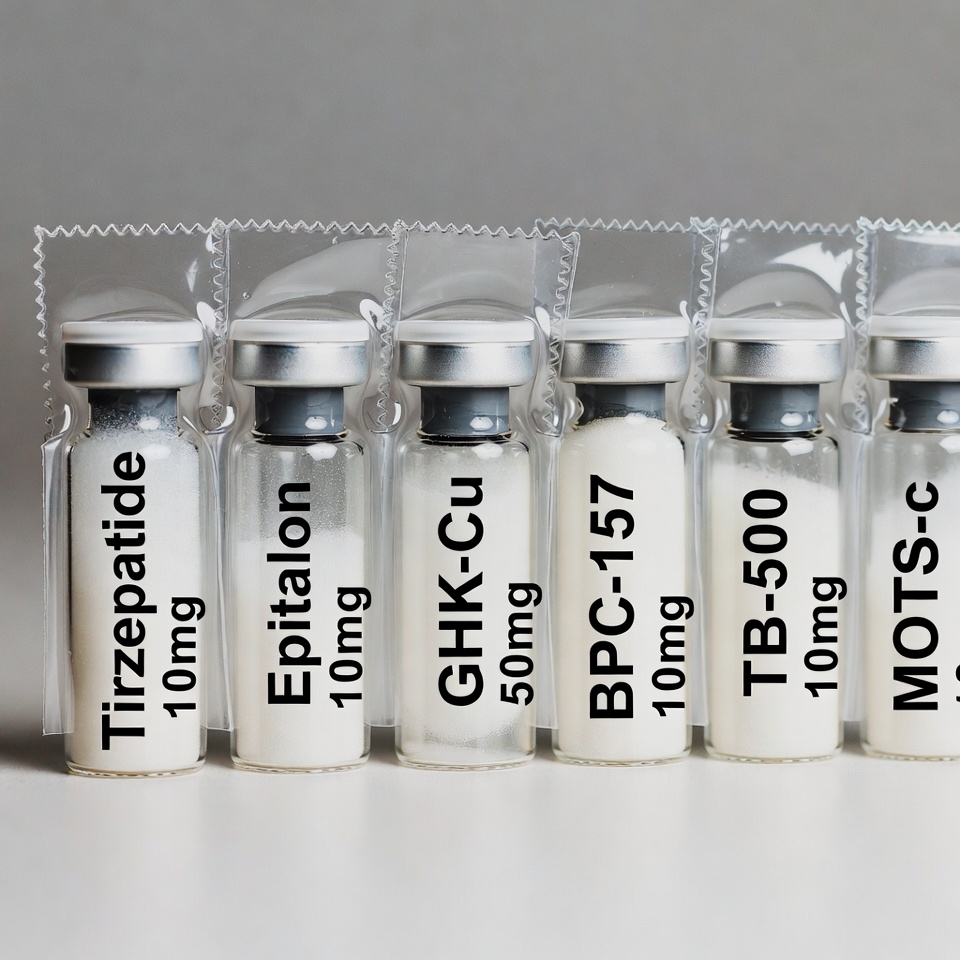
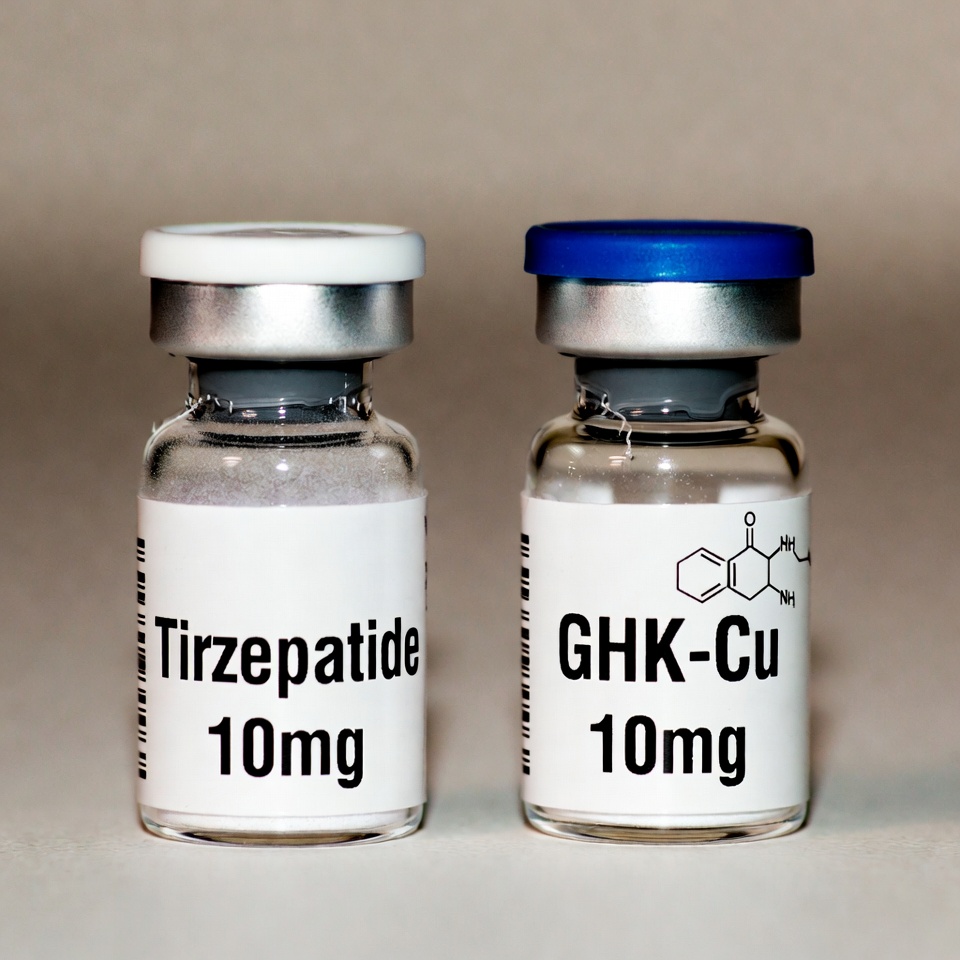
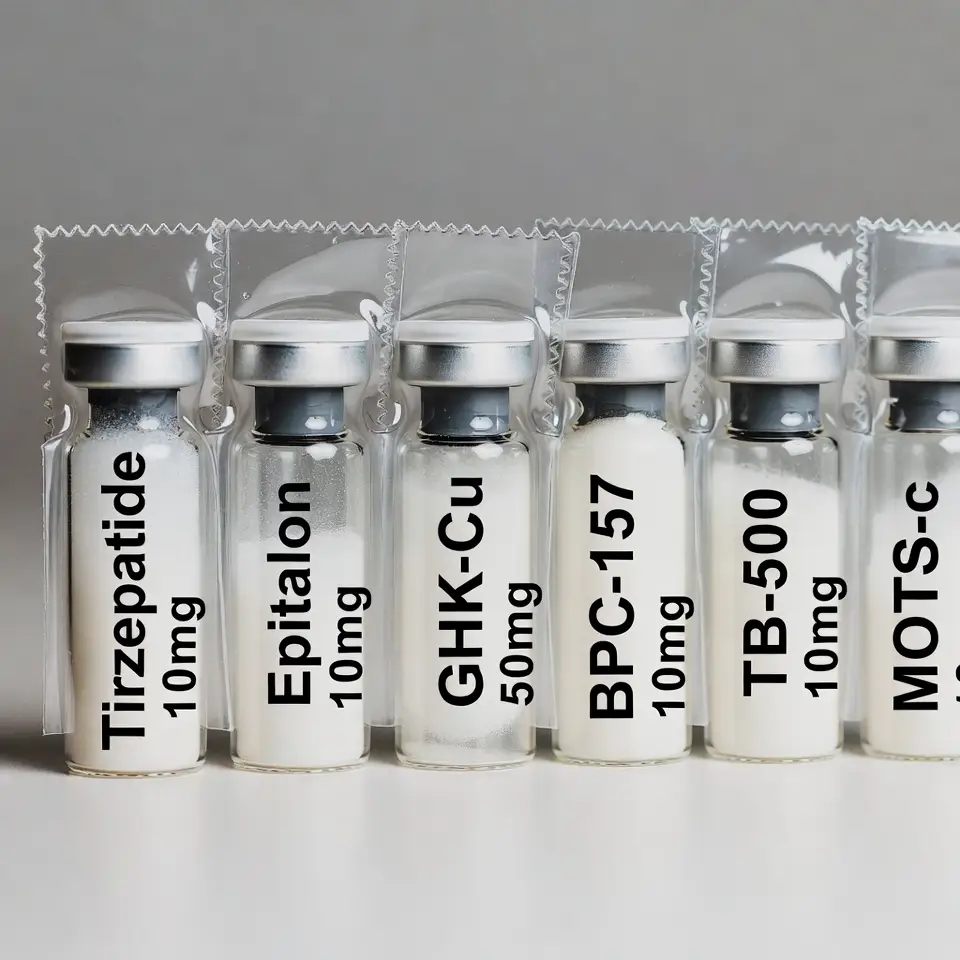
The seven most discussed names right now are GHK-Cu, epitalon, tirzepatide, BPC-157, TB-500, MOTS-c, and oral/topical bioactive skin peptides.
Here is the practical shortlist readers see most often in current longevity discussions:
GHK-Cu: A copper-binding peptide linked to skin remodeling, wound healing, antioxidant activity, and anti-inflammatory effects; human interest is strongest around skin and repair.
Epitalon: A pineal tetrapeptide associated with melatonin signaling and telomerase-related discussion; mechanism remains uncertain and human evidence is limited.
Tirzepatide: A clinically validated metabolic peptide relevant to obesity, insulin resistance, and cardiometabolic aging risk.
BPC-157: Frequently discussed for tissue healing and gut-related repair, but still supported mainly by preclinical evidence.
TB-500: Commonly framed around tissue recovery and repair, though high-quality human longevity data are sparse.
MOTS-c: A mitochondrial-derived peptide with intriguing exercise and healthspan signals in animal work, especially around physical capacity.
Oral/topical bioactive peptides: The best-supported category for visible aging outcomes in humans, especially hydration and wrinkle improvement.
The reason these seven keep recurring is that they map onto the main aging conversations: appearance, metabolism, recovery, mitochondrial function, and telomere biology. That does not mean they belong in the same evidence tier.
How should you rank GHK-Cu, epitalon, and BPC-157 for evidence quality?
GHK-Cu ranks highest for plausibility and practical use, epitalon sits in the middle, and BPC-157 remains more speculative for longevity.
GHK-Cu has a stronger foundation than many people realize. A 2022 review noted that average GHK levels were about 200 ng/mL at age 20 and about 80 ng/mL at age 60, which is a biologically interesting age-related decline. The peptide also has in vitro and in vivo support for skin remodeling, wound healing, regeneration, antioxidant effects, and anti-inflammatory effects. If your outcome is dermal quality or repair, GHK-Cu is easier to place on a rational evidence map.
“Your Peptide Guide takes a safety-first, vendor-neutral approach with protocol overviews and risk considerations rather than product sales.”
Epitalon is compelling mainly because it sits at the intersection of circadian biology and telomerase discussion. A 2025 review reported effects related to melatonin synthesis, telomerase activity, and interleukin-2 mRNA, while also stating that the full mechanism remains uncertain. That uncertainty matters. A misconception here is that a telomerase-related signal automatically translates into longer life. It does not.
BPC-157 is widely discussed for healing, but the longevity case is thinner than the popularity suggests. If the goal is tissue repair research, it may be worth monitoring. If the goal is proven human anti-aging benefit, it remains far from established.
How does tirzepatide compare with classic anti-aging peptides?
Tirzepatide is the most clinically grounded option in this conversation, while epitalon and TB-500 are much more exploratory.
This comparison works best when you ask what kind of aging risk matters most. Tirzepatide addresses obesity, glucose dysregulation, and downstream cardiometabolic burden. Those are major drivers of morbidity. By contrast, classic “longevity peptides” are often discussed for telomeres, repair, or vitality, but their human outcome data are much thinner.
If a person has obesity, insulin resistance, or type 2 diabetes risk, tirzepatide may be more relevant to practical healthspan than a research peptide that sounds more futuristic. If the person is already metabolically healthy and is focused on skin aging or experimental recovery pathways, the decision frame changes.
A useful tip is to separate disease-modifying evidence from aspiration. Tirzepatide has real-world clinical grounding. Most classic anti-aging peptides still live closer to hypothesis than proof.
How can you evaluate a longevity peptide claim step by step?
A strong evaluation starts with endpoint, study type, and product context; GHK-Cu and MOTS-c look very different when judged this way.
Step 1 is to define the endpoint. Ask whether the claim is about skin hydration, glycemic control, tendon healing, mitochondrial signaling, sleep timing, or lifespan itself. Those are not interchangeable. If the endpoint is vague, confidence should drop.
Step 2 is to check the evidence ladder. Human randomized trials sit above observational data, which sit above animal work, which sit above cell studies. If a peptide has only rodent data, it belongs in a watchlist, not a certainty list. MOTS-c is a good example. Its mouse data are intriguing, and exercise-induced endogenous expression in humans adds biologic interest, but that is still not the same as a human longevity intervention trial.
Step 3 is to examine delivery, dose, and source. Oral cosmetic peptides, topical copper peptides, and investigational injectables do not share the same manufacturing, regulatory, or safety context. A common mistake is assuming “peptide” describes a single risk profile. It does not.
How do skin-aging peptides compare with systemic longevity peptides?
Skin peptides have better human data for visible aging, while systemic peptides usually make bigger claims with weaker proof.
The 2025 meta-analysis is the clearest anchor here: oral peptides improved hydration, wrinkles, and brightness, but had minimal effect on elasticity. That is a useful, bounded result. It tells you what the peptides seem to do and what they do not reliably do. In answer-engine terms, these are human outcomes with measurable changes.
“Your Peptide Guide organizes peptide research by goal and publishes timely updates on emerging and investigational peptides.”
Systemic longevity peptides often aim higher. They are discussed for telomerase, mitochondrial energetics, recovery, inflammation, or whole-body repair. The trade-off is that the farther a claim gets from a concrete human endpoint, the more uncertainty enters. A practical tip is to avoid converting cosmetic data into lifespan claims. Skin aging and systemic aging overlap biologically, but they are not the same endpoint.
How can you build a safety-first peptide research checklist step by step?
A safety-first checklist should focus on identity, indication, regulation, and measurable outcomes before any trial use is considered.
Start with a short checklist rather than with enthusiasm:
Identity: Confirm the exact peptide name, salt form, and intended route.
Indication: Match the peptide to one target, such as wrinkle depth or glycemic control.
Evidence tier: Separate FDA-approved drugs like tirzepatide from investigational compounds like MOTS-c or TB-500.
Outcome tracking: Use objective markers when possible, such as fasting glucose, body weight, photographs, or validated skin measures.
Risk review: Screen for medication interactions, contamination concerns, and contraindications with a licensed clinician.
The big trade-off is simple. The more experimental the peptide, the more you need clear sourcing, defined monitoring, and low expectations. If none of those are available, waiting is often the smarter decision.
What does new science say about telomerase, mitochondria, and healthspan?
New science points to telomerase, mitochondrial signaling, and extracellular matrix repair as active peptide themes; epitalon, MOTS-c, and GHK-Cu sit at those intersections.
Epitalon is the main telomerase-associated name in this set, though the mechanism remains incomplete. That makes it interesting but not settled. It belongs in the “biologically provocative” category rather than the “clinically validated” category.
MOTS-c represents a different path. A 2021 study reported that late-life intermittent treatment beginning at 23.5 months increased physical capacity and healthspan in mice, and the peptide also improved performance across age groups in animals. Human exercise-induced expression suggests that the pathway is not artificial, which is an important signal. Still, endogenous induction during exercise is not proof that exogenous dosing reproduces the same benefit.
GHK-Cu connects more with extracellular matrix homeostasis, wound repair, and inflammation control. That may matter because aging is not only about one master switch. It is also about accumulated deficits in tissue maintenance, redox balance, and repair signaling.
Why do so many longevity peptide claims outrun the evidence?
The field moves faster in theory than in trials, and BPC-157 and TB-500 are good examples of that gap.
Peptides are attractive because they often map to specific pathways and feel more targeted than broad drug classes. That creates understandable optimism. It also creates a common pattern where mechanism, anecdote, and animal data get compressed into “it works.”
The 2026 gerontology review identified nine peptides with healthy-aging potential, but it drew on 20 primary sources across varied domains and evidence levels. That is useful scholarship, not proof that all nine are clinically ready. When readers miss that distinction, almost every peptide starts to sound equally credible.
A good rule is this: if the peptide is mainly known by its mechanism and not by a consistent human outcome set, confidence should stay moderate at best.
When does it make sense to watch the research instead of trying a peptide?
It makes sense to watch rather than act when the peptide is investigational, the endpoint is systemic, and the human evidence is thin.
Use a simple decision path. If your goal is visible skin aging, human data on oral or topical peptides make that category easier to justify. If your goal is metabolic health and a medical indication exists, approved options like tirzepatide sit on firmer clinical ground.
If your interest centers on epitalon, BPC-157, TB-500, or MOTS-c for broad longevity, the smarter move is often to watch the next wave of trials. That is especially true when dosing practices vary, regulatory status is unclear, and claims depend on preclinical translation.
A final misconception to drop is the idea that early access is always an edge. In peptide science, early often means uncertain. For longevity decisions, uncertainty is not just a scientific issue. It is the main practical issue.
How to Evaluate Longevity Peptides Claims
Longevity peptides marketing often blends cosmetic data, metabolic trials, and animal aging models. Separate those evidence tiers before you change a routine.
Ask whether a claim about longevity peptides cites human outcomes, validated biomarkers, or only mechanistic speculation. Mechanism is interesting; it is not the same as proven lifespan extension.
Compare longevity peptides against foundations that already have stronger lifestyle evidence: sleep, resistance training, protein adequacy, metabolic health, and sun-smart skin care.
Research and Regulatory Context for Longevity Peptides
Peer-reviewed aging biology helps frame why longevity peptides attract attention without treating catalog products as proven anti-aging drugs. See this PubMed overview of aging and peptide research themes for scientific context.
For approved medicines versus unapproved products, use the FDA drugs portal when comparing longevity peptides narratives to labeled therapies.
Longevity peptides sold as research chemicals should not be treated as personalized prescriptions. Documentation, purity, and legal status vary widely across vendors.
If a clinician is supervising related care, bring lab history and medication lists rather than forum protocols. Longevity peptides conversations go better with clear goals and risk context.
Track what you change one variable at a time. Stacking multiple longevity peptides with new supplements makes it impossible to know what helped or harmed.
Evidence Habits That Keep Longevity Peptides Discussions Honest
Prefer primary papers over influencer summaries when evaluating longevity peptides. Check sample size, population, endpoints, and conflicts of interest.
Skin outcomes and metabolic outcomes are not lifespan outcomes. Longevity peptides may show local or intermediate effects without proving they extend healthy years in humans.
Be wary of absolute language. Careful reviews of longevity peptides usually say “may,” “associated,” or “preliminary,” not “guaranteed rejuvenation.”
Putting Longevity Peptides Into a Sane Weekly Plan
Keep longevity peptides education secondary to habits you can measure: training sessions completed, protein targets, sleep consistency, and clinician follow-up when indicated.
Use longevity peptides literacy to ask better questions of suppliers and clinicians—not to invent unsupervised dosing programs from marketing pages.
Revisit claims every few months. The science around longevity peptides moves, and yesterday’s hype cycle is often tomorrow’s footnote.
Key Takeaways on Longevity Peptides
Longevity peptides are a mixed field. Some related molecules have useful niche data; many consumer claims overreach what studies can support today.
Treat longevity peptides as a research and literacy topic first. Pair curiosity with medical oversight when personal health decisions are on the line.
Additional Context for Careful Readers
Readers researching longevity peptides should keep outcome definitions precise.
Training, sleep, and metabolic health remain higher-leverage than most product stacks for long-term vitality goals.
Vendor catalogs for longevity peptides are not clinical guidelines.
Storage and purity documentation matter when longevity peptides are discussed as reagents.
Skin-focused longevity peptides claims deserve different scrutiny than systemic aging claims.
Metabolic markers sometimes used near longevity peptides debates still need clinical interpretation.