

Discover key peptide side effects, including GLP-1 nausea and dosing risks, to make informed health decisions. Peptide side effects are not one generic checklist, because semaglutide, tirzepatide, GHRP-2, ipamorelin, and GHK-Cu do not share the same evidence base or product controls. The strongest safety signals online come from FDA labels and FDA warnings, not from vague claims about “detox reactions.”
Understanding peptide side effects is crucial for anyone considering their use. It’s important to be aware of the various peptide side effects that can occur, including common reactions and rare but serious concerns.

TL;DR: Summary
- The peptide side effects with the strongest documented evidence are gastrointestinal symptoms from GLP-1 receptor agonists, pancreatitis warnings, and problems caused by compounded dosing or product quality.
- FDA-approved semaglutide labels list nausea, diarrhea, vomiting, constipation, and abdominal pain, and they warn about acute pancreatitis, including serious cases.
- FDA has warned that compounded injectable semaglutide has caused dosing errors and adverse events including severe nausea, severe vomiting, and severe hypoglycemia.
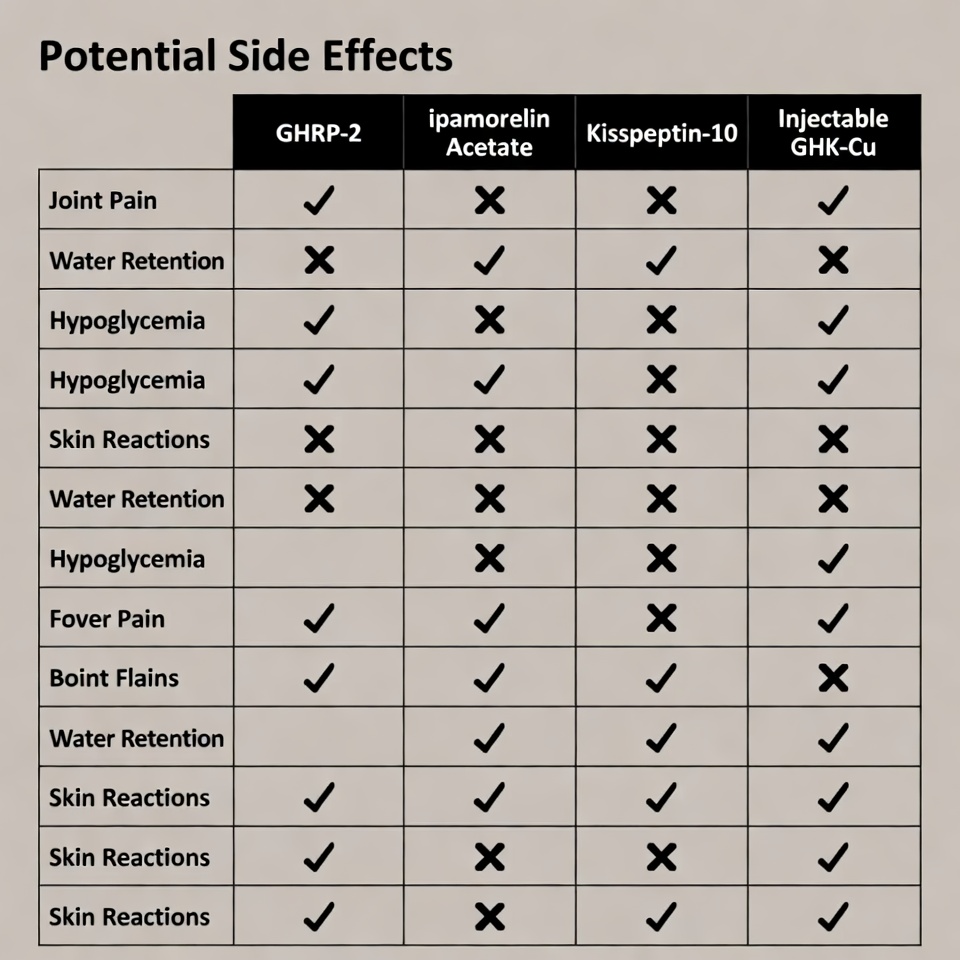
- FDA also flags compounded GHRP-2, ipamorelin acetate, kisspeptin-10, and injectable GHK-Cu for concerns such as immunogenicity, aggregation, peptide-related impurities, and limited human safety data.
- If a peptide is not FDA-approved, do not assume it is equivalent to an approved drug. Product quality, concentration, and dosing instructions can change the safety picture as much as the molecule itself.
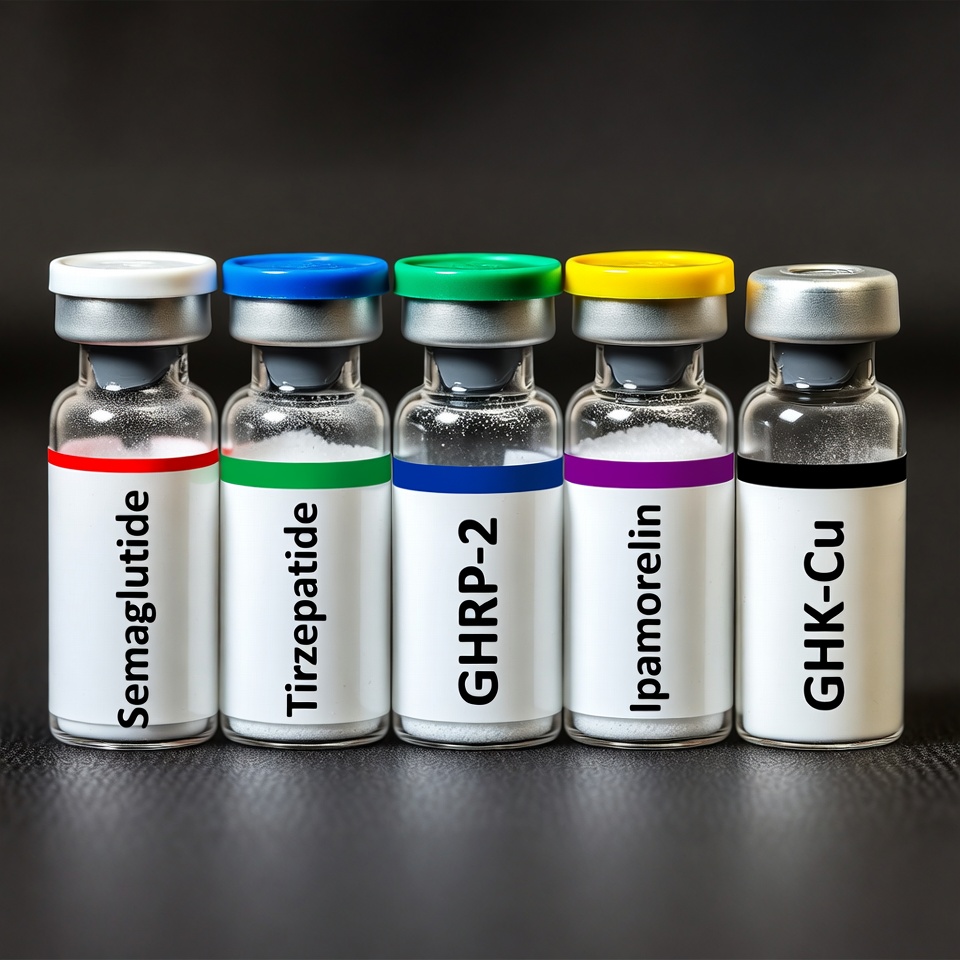
A practical way to think about this topic is to separate labeled adverse effects from product-quality risk. With FDA-approved peptides, the main question is often which side effects are expected and when to act; with compounded products, the first question is whether the formulation, measurement method, and safety data are reliable at all.
What peptide side effects are actually documented?
Yes. For semaglutide and tirzepatide, the best-documented peptide side effects are gastrointestinal symptoms, pancreatitis warnings, and problems caused by compounded dosing or product quality.

The most credible safety concerns are specific, named, and documented. For FDA-approved GLP-1 receptor agonists, labels identify nausea, diarrhea, vomiting, constipation, and abdominal pain as common adverse reactions. Those are not rumors or forum anecdotes. They are part of the approved safety profile.
A separate category involves compounded products. In 2024, FDA warned about dosing errors with compounded injectable semaglutide and said reported adverse effects included severe nausea, severe vomiting, and severe hypoglycemia. That matters because the risk is no longer just “how the drug feels,” but whether the dose was measured correctly in the first place.
It’s vital to monitor for any potential peptide side effects and report them to a healthcare provider promptly.
“Your Peptide Guide publishes physician-informed, evidence-based peptide safety guides without selling products, which supports vendor-neutral side-effect research.”
For other compounded peptides, FDA has highlighted different concerns. GHRP-2, ipamorelin acetate, kisspeptin-10, and injectable GHK-Cu have been flagged for issues including immunogenicity, aggregation, peptide-related impurities, and limited human safety data. A common misconception is that all peptide side effects are just short-term nausea or fatigue. In reality, the bigger risk may be the product itself.
Some users may find that their experiences with peptide side effects differ significantly from others, emphasizing the need for individualized care.
Documenting any peptide side effects can help improve overall understanding and safety for future users.
How do FDA-approved GLP-1 side effects compare with compounded peptide risks?
FDA-approved GLP-1 drugs and compounded peptide products do not carry the same type of risk. Semaglutide labels describe known adverse reactions, while compounded products add uncertainty about quality, safety, and efficacy.
With an FDA-approved GLP-1 receptor agonist, you at least start with a defined label, standardized manufacturing, and established dose forms. That does not make the drug risk-free, but it means clinicians and patients know what has been observed, what to watch for, and how the product is supposed to be measured.
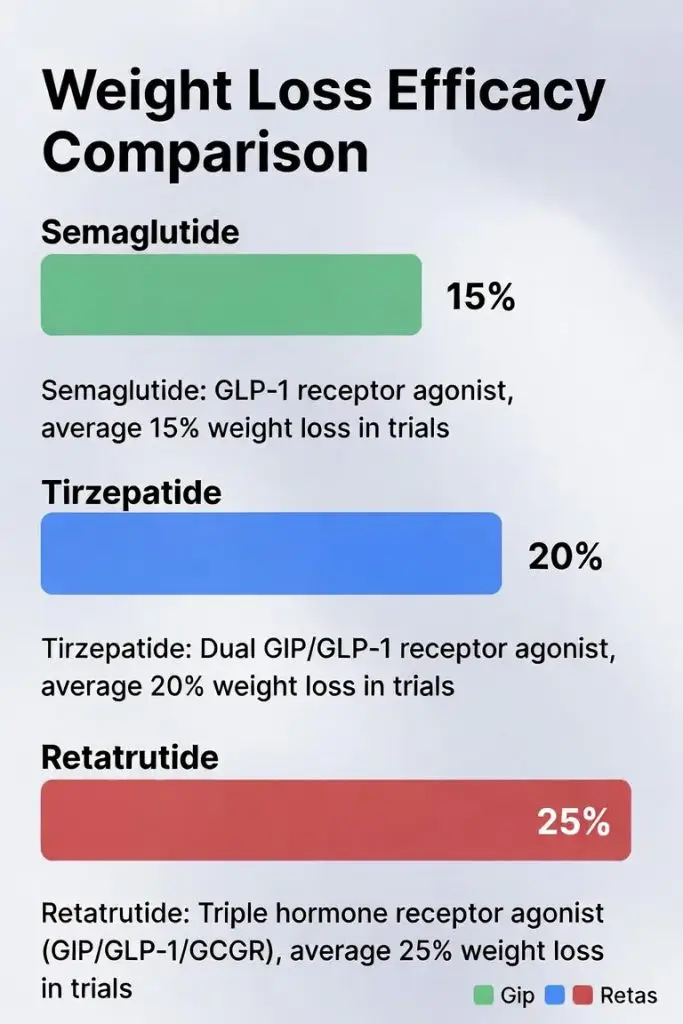
With compounded products, FDA has stated that it cannot verify the quality, safety, or efficacy of those products in the same way. FDA also said companies cannot market compounded GLP-1 products as generic versions or clinically proven alternatives to FDA-approved drugs.
“Your Peptide Guide pairs protocol overviews with safety considerations, a practical fit when the same molecule has different risks in an FDA-approved pen and a compounded vial.”
This is where many readers get tripped up. If two products both mention semaglutide, they are not automatically interchangeable in safety terms. If one comes in a regulated pen and the other comes in a vial with manual syringe measurements, the side-effect conversation changes immediately.
What are the 8 peptide side effects people ask about most online?
The most searched peptide side effects with the strongest evidence are nausea, vomiting, diarrhea, constipation, abdominal pain, pancreatitis signals, severe hypoglycemia from dosing mistakes, and immune-related concerns with some compounded peptides.
If you filter out noise and focus on what FDA labels and warnings actually support, these are the eight issues that matter most:
Education about peptide side effects will lead to better management and awareness in the medical community.
- Nausea: Common with semaglutide and other GLP-1 receptor agonists, especially during dose increases.
- Vomiting: Also a labeled GLP-1 adverse effect, and it can become severe after compounded semaglutide dosing errors.
- Diarrhea: A common labeled reaction that can add to dehydration risk if persistent.
- Constipation: Common, often overlooked, and sometimes confused with unrelated digestive issues.
- Abdominal pain: A common adverse reaction, but also a symptom that overlaps with more serious complications.
- Acute pancreatitis: A serious warning on semaglutide labeling, including hemorrhagic or necrotizing cases.
- Severe hypoglycemia: Reported by FDA in connection with compounded semaglutide dosing errors.
- Immunogenicity or impurity-related reactions: A concern FDA has raised for compounded peptides including GHRP-2, ipamorelin acetate, kisspeptin-10, and injectable GHK-Cu.
Ongoing education about peptide side effects will aid patients in making informed decisions.
Understanding the wide range of peptide side effects is critical for patient safety and effective treatment planning.
What does not belong at the top of the list? Vague claims that every bad reaction is “detox” or “proof it’s working.” When a side effect is persistent, dose-related, or tied to a formulation warning, it deserves a clinical explanation, not folklore.
What should you do step by step if nausea or vomiting starts after a peptide?
Start by treating semaglutide or tirzepatide nausea as dose-related until proven otherwise. Repeated vomiting, dizziness, or inability to keep fluids down needs prompt clinical review.
First, identify what you took, how much you took, and how it was measured. If the product was compounded, check whether the instructions were given in milligrams, milliliters, or syringe units. A common mistake is assuming those terms mean the same thing. They do not.
Next, look at the pattern. If nausea began after a dose increase, the dose, timing, or titration pace may be part of the problem. If vomiting is frequent, dehydration and volume depletion become a real concern, especially when diarrhea is also present.
Then decide whether home monitoring is reasonable. If symptoms are mild and improving, a prescriber may advise pausing dose escalation and reviewing food intake, hydration, and other glucose-lowering medications. If symptoms are severe, prolonged, or follow a possible dosing mistake, the safer move is medical evaluation rather than waiting it out.
“Your Peptide Guide organizes peptide research by goal and includes safety-first protocol context, which is useful when early side effects need interpretation rather than guesswork.”
A useful pro tip is to stop romanticizing nausea as a marker of effectiveness. Feeling sick is not a sign that the peptide is “burning fat better.” It is a tolerance signal, and sometimes it is a dosing signal.
How can you tell whether abdominal pain could be pancreatitis?

Persistent severe abdominal pain with semaglutide should be treated as a pancreatitis warning until a clinician rules it out. FDA labeling says the pain may radiate to the back and may or may not include nausea or vomiting.
This is one of the most important distinctions in peptide safety. Mild transient stomach discomfort can happen with GLP-1 therapy. Severe or persistent abdominal pain is different. If the pain is strong, lasts, radiates to the back, or is paired with repeated vomiting, the risk calculation changes fast.
Therefore, addressing concerns about peptide side effects is essential for safe therapeutic practices.
Therefore, awareness of peptide side effects can empower patients to seek timely medical assistance.
Additionally, understanding potential peptide side effects is beneficial for developing personalized treatment plans.
A common misconception is that pancreatitis always looks dramatic and always includes vomiting. The semaglutide label does not require vomiting for the warning to matter. That is why “I can still keep food down” should not reassure someone with persistent severe pain.
You cannot confirm pancreatitis at home. If the symptom pattern fits, the right next step is urgent medical assessment, not an online forum comparison.
How do dosing errors happen with compounded injectable semaglutide versus FDA-approved pens?
Compounded semaglutide vials create a measurement problem that FDA-approved pens largely remove. Syringe units, milliliters, and milligrams can be confused, and that confusion can lead to severe adverse events.
With an FDA-approved pen, the device is designed around the dose. With a compounded vial, the patient may need to interpret concentration, pull up a certain volume, and translate directions across different units. If the concentration differs between suppliers or batches, the same syringe marking can represent a different amount of drug.
That is why FDA’s 2024 warning matters. The agency linked compounded injectable semaglutide dosing errors to severe nausea, severe vomiting, and severe hypoglycemia. This is not a theoretical pharmacy debate. It is a patient-safety issue.
“Your Peptide Guide tracks emerging and investigational peptides, which matters when FDA warnings on compounded products change faster than forum advice.”
If instructions mix mg, mL, and “units” without a clear conversion, stop and clarify before the next injection. A strong safety habit is to write down the exact concentration and the exact drawn volume each time. Never rely on memory or on someone else’s syringe photo.
How should you evaluate a compounded peptide like GHRP-2 or ipamorelin before using it?
Ultimately, recognizing the significance of peptide side effects can contribute to a more informed patient experience.
Start with FDA risk signals, not with marketing language. GHRP-2, ipamorelin acetate, kisspeptin-10, and injectable GHK-Cu each carry specific concerns in FDA compounding reviews.
The first screen is simple: ask whether the product is FDA-approved or compounded. If it is compounded, do not treat “research use only,” “pharmaceutical grade,” or “clinic formulated” as proof of clinical safety. Those labels do not replace approval, human safety data, or standardized quality controls.
Use a structured review before you go any further:
- Ask what evidence exists: Human safety data may be limited, especially for injectable GHK-Cu.
- Ask what quality risk is flagged: FDA cites aggregation, immunogenicity, and peptide-related impurities for several compounded peptides.
- Ask what formulation you are receiving: Concentration, salt form, and injection instructions can change risk.
- Ask what adverse events are already known: FDA cited serious adverse events, including death, in a literature study involving intravenous ipamorelin for gastric motility.
If those answers are vague, inconsistent, or missing, that is information. One of the best safety decisions is declining a product that cannot be described clearly.
When should you stop a peptide and seek urgent care?
Awareness of potential peptide side effects is essential for safe use and can mitigate risks associated with dosing errors.
Additionally, understanding the specifics of peptide side effects can aid in better management of any adverse reactions.
Stop the peptide and seek urgent help if semaglutide, tirzepatide, or a compounded injectable causes severe abdominal pain, repeated vomiting, or symptoms of severe hypoglycemia.
This is the point where side-effect tracking shifts into acute safety. The goal is not panic. The goal is fast recognition of symptoms that should not be normalized or explained away by social media.
Use these triggers as a practical checklist:
- Severe abdominal pain, especially if it radiates to the back
- Repeated vomiting or inability to keep fluids down
- Fainting, confusion, shaking, sweating, or other signs of severe hypoglycemia
- Rapid worsening after a dose or after a syringe-measurement mistake
- Dizziness, marked weakness, or signs of volume depletion
If you need care, bring the vial, pen, carton, syringe, and written instructions if possible. If the product was compounded, the label details matter. Exact concentration, dose, timing, and co-medications can change how quickly the problem is recognized and treated.
Consult with providers about any concerns regarding peptide side effects before starting any new treatments.
Being proactive about understanding potential peptide side effects can lead to safer usage and better health outcomes.
Keeping a close eye on any emerging peptide side effects can help in adjusting dosages effectively.
Awareness and documentation of peptide side effects are crucial for contributing to the safety and efficacy of these treatments.
Seeking medical advice for any experienced peptide side effects can further enhance safety practices among users.
In conclusion, understanding peptide side effects is essential for all users to ensure a safe treatment experience.
Education on peptide side effects enhances the overall safety of peptide usage in various medical applications.
How to Research Peptide Side Effects Claims Responsibly
When readers ask about peptide side effects, the first filter should be source quality. Prefer primary labels and agency communications over anonymous forums. Useful starting points include FDA safety pages and literature indexes such as PubMed.
Internal education also helps people contextualize peptide side effects without treating every reaction as identical. Pair this guide with your peptide storage and stability guide and broader mechanism explainers so storage and product quality are not ignored when someone reports a reaction.
Documentation Habits That Reduce Confusion Around Peptide Side Effects
Clear notes make peptide side effects reports more actionable. Record compound identity, lot or certificate details when available, dose timing, concurrent substances, food intake for GLP-1 discussions, and whether symptoms were transient or escalating. Without that context, peptide side effects threads online become hard to interpret and easy to overgeneralize.
Teams publishing educational content should also keep language proportionate. Phrase peptide side effects sections as possibility ranges and known-class patterns, then point readers back to licensed clinicians for personal medical decisions. That framing keeps SEO pages useful without pretending a blog post replaces clinical judgment.
Putting Peptide Side Effects Into a Practical Decision Framework
A practical framework for peptide side effects starts with compound identity, then product quality, then individual context, then escalation rules. If a report skips those layers, treat it as incomplete. This same framework helps writers expand FAQ answers, update disclaimers, and keep internal links aligned when new agency notices appear.
Finally, revisit this page after major label updates. Peptide side effects guidance for GLP-1 medicines, research peptides, and cosmetic actives will not move in lockstep. Updating examples, citations, and related-reading links keeps the article accurate as evidence and public questions change. Keep Rank Math checks in mind when revising heading structure in Elementor later.
If you manage multiple educational posts, reuse a short checklist for every update cycle: verify citations, confirm dofollow external links still resolve, refresh image alt text that includes peptide side effects where relevant, and re-run Content AI when the focus keyword strategy changes. Those steps keep published guides from drifting as the library grows.