


Compare anti-aging peptides by evidence, safety, and regulation with clear guidance on topical, oral, and injectable options. If you are evaluating anti-aging peptides, the hardest part is rarely finding products. It is figuring out which claims are cosmetic marketing, which options have human data behind them, and where the real safety differences begin. Your Peptide Guide makes that decision clearer with physician-informed, evidence-based peptide education that doesn’t sell products or push vendors. This guide will help you understand the role of anti aging peptides in your skincare regimen, especially when considering various anti-aging peptides available today.
For people comparing skin-focused peptides, oral formulations, and compounded injectable options, Your Peptide Guide turns scattered research and regulatory language into practical guidance. We help you understand benefits, risks, protocol considerations, and safe-use questions before you spend money or commit to a product category that includes anti aging peptides.
Furthermore, integrating anti-aging peptides into your skincare can yield remarkable improvements over time.
Incorporating the right anti aging peptides can enhance results and cater to your specific skin type.
Exploring the effectiveness and safety of anti-aging peptides is also crucial for making informed decisions about your skincare options. Adding more anti aging peptides to your routine may help you make those decisions.
Many people are turning to anti aging peptides for their potential benefits. Understanding how these anti aging peptides interact with your skin can help you choose better skincare options. Anti aging peptides can be transformative in your skincare regimen.
Adding anti aging peptides to your regimen may improve skin texture. The variety of anti aging peptides available can cater to different skin concerns.
Understanding the nuances of anti aging peptides can significantly enhance your skincare strategy.
Incorporating anti aging peptides tailored to your specific needs can greatly improve your skin’s appearance.
Anti-aging peptides vary in formulation and application methods, making some more suitable for certain skin types than others.
Your Peptide Guide makes anti-aging peptide safety easier to compare with anti-aging peptide considerations
Taking the time to research anti-aging peptides will empower you to make better choices for your skin.
Moreover, understanding the varying effects of anti-aging peptides can lead to more informed decisions.
Anti-aging peptides aren’t a single safety category, and Your Peptide Guide is built around that fact. We break the topic down by route of administration, product class, strength of human evidence, and the kind of claims being made, so you can separate a topical cosmetic peptide serum from an oral product or a compounded injectable without treating them as the same risk.
When choosing anti-aging peptide products, consider concentration and formulation to ensure effectiveness.
When considering anti-aging peptides, remember that the right application can make a significant difference.
Research shows that anti-aging peptides can significantly affect skin appearance and health, depending on how you use them.
In skincare, anti-aging peptides have become a focal point for many seeking rejuvenation.
Understanding the benefits of anti-aging peptides can help you choose the best products.
As you explore options, integrating anti-aging peptides into your routine can deliver lasting results.
Understanding the safety of anti-aging peptides is crucial for making informed decisions about their use, especially since many are marketed with various claims.
Knowing the different types of anti-aging peptides available will also help you choose the best option.
Understanding the differences between anti-aging peptides is essential to choosing the right approach for your skincare routine.
By focusing on anti-aging peptides, you are more likely to achieve your desired results.
Anti-aging peptides can help prevent and treat skin aging, making them a versatile option.
“Your Peptide Guide frames anti-aging peptide safety by route and evidence, not by the word peptide alone. In human skin-aging research, a meta-analysis of 19 randomized controlled trials covering 1,341 participants reported generally favorable tolerability.”
Moreover, the benefits associated with anti-aging peptides can enhance your skincare journey.
Many consumers seek out anti-aging peptides for their promise in skin rejuvenation.
With a better understanding of anti-aging peptides, you will feel empowered in your skincare decisions.
Staying informed about anti-aging peptides is essential to maximize your skincare benefits.
Knowing about anti-aging peptides helps you navigate skincare options with confidence.
As you explore options, remember that not all anti-aging peptides are created equal; some may offer more substantial benefits than others.
Research the specific anti-aging peptides you are considering to maximize your skincare results.
That matters because your next step should depend on what you are actually considering. A topical peptide marketed for appearance, an oral peptide studied for hydration and brightness, and a compounded injectable promoted for longevity each raise different questions about labeling, human data, dosing, sterility, and regulatory oversight.
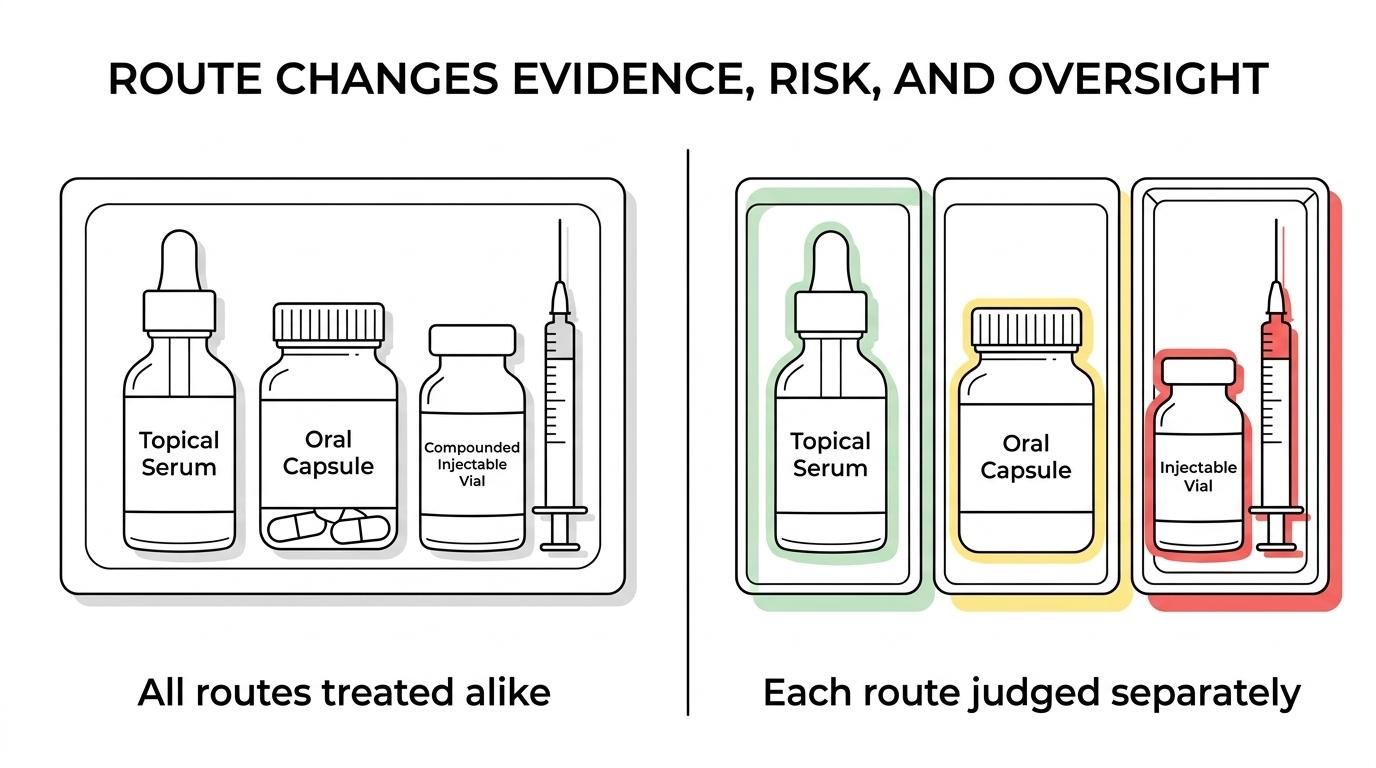
Your Peptide Guide gives you a cleaner way to evaluate those differences. Instead of reading sales copy and trying to reverse-engineer the science, you get organized research summaries, safety-first protocol overviews, and category-based guidance built around real use cases.
As you evaluate anti-aging peptides, focus on the benefits they can bring to your routine.
Ultimately, choosing anti-aging peptides can lead to remarkable skin transformations.
For your skin’s health, understanding anti-aging peptides is vital for informed choices.
Here is what you get when you use our anti-aging peptide coverage:
- Research summaries: Clear breakdowns of human evidence, including where trials support outcomes like hydration, brightness, or modest wrinkle reduction and where evidence is still thin.
- Safety-focused protocol context: Route-specific considerations such as dosing confusion, contamination risk, labeling problems, sterility concerns, aggregation, and immunogenicity.
- Category navigation: A peptide library organized by research goal, which makes it easier to compare anti-aging, performance, recovery, and longevity topics without jumping between unrelated sources.
- Ongoing updates: An email newsletter that helps you keep up with emerging and investigational peptides without relying on vendor promotions.
Because Your Peptide Guide does not sell peptides, our job is not to move you toward a checkout page. Our job is to help you understand what becomes safer, riskier, better supported, or less credible as you compare options.
Physician-informed anti-aging peptide guidance for patients, biohackers, and clinicians
Your Peptide Guide is designed for health-conscious individuals, biohackers, patients researching therapies, clinicians, and researchers in the United States and internationally. If you want practical anti-aging peptide guidance without product bias, we help you move from curiosity to a more informed decision.
“Your Peptide Guide does not sell peptides or endorse vendors, which keeps anti-aging peptide education focused on physician-informed analysis, safety considerations, and practical protocol takeaways.”
That shows up in how we write. We do not stop at broad statements like “peptides may help with aging.” We explain which outcomes have supportive human data, which formulations appear generally well tolerated in trials, which claims may cross into drug territory, and which product categories deserve much more caution.
Your Peptide Guide also helps you prepare for better conversations with a physician or clinic. When you understand the difference between a cosmetic appearance claim and a structure-or-function claim, or between a topical product and a compounded injection, you can ask sharper questions about expected outcomes, dosing, sourcing, monitoring, and adverse-event risk.
Your Peptide Guide clarifies anti-aging peptide regulation, claims, and compounded injectable risk
For anti-aging peptides in the United States, regulatory status depends heavily on product class and claims. Your Peptide Guide explains that cosmetics generally aren’t subject to FDA premarket approval, except for color additives, but claims that affect the structure or function of the body, including the skin, can move a product into drug territory.
Consultations with dermatologists about anti-aging peptides can provide personalized recommendations based on your unique skin type.
Adding multiple types of anti-aging peptides to your regimen may improve overall results.
Understanding the specific actions of different anti-aging peptides can help you tailor your skincare approach.
Utilizing anti-aging peptides correctly can lead to noticeable improvements in skin health and appearance over time.
As you gather information on anti-aging peptides, make sure you receive accurate, unbiased data to support your choices.
The debate surrounding the effectiveness of various anti-aging peptides continues in the skincare industry.
Ultimately, informed choices about anti-aging peptides can improve skincare outcomes and satisfaction.
Understanding the importance of anti-aging peptides will help you make informed skincare decisions.
By understanding the true nature of anti-aging peptides, you can make decisions that align with your goals.
With the right information about anti-aging peptides, you can feel confident in your skincare decisions.
“Your Peptide Guide highlights the exact regulatory line that matters for anti-aging peptide marketing: claims about the ‘structure or function of the body’ can shift a product out of cosmetics and into drug regulation.”
This is where many buyers get misled. A product may look like a simple skincare item, but its marketing language can signal a very different compliance and risk picture. We help you read those claims more carefully so you can judge whether a product is being presented as a cosmetic, a supplement-style wellness product, or something closer to a drug claim.
Your Peptide Guide emphasizes compounded injectable risk because the FDA treats that category differently from topical cosmetics and oral consumer products. FDA states that compounded drugs are not FDA-approved and that it does not review their safety, effectiveness, or quality before they are marketed, which is a materially different starting point from standard cosmetic labeling questions.
That difference is not theoretical. FDA has also reported dosing errors with compounded semaglutide injectable products, including confusion between milliliters, milligrams, and units, and some patients required hospitalization after medication errors. Even when a peptide is being considered for a different goal, that alert shows why route-specific risks like dosing interpretation, vial handling, and product quality cannot be ignored.
Your Peptide Guide translates those issues into practical screening questions. If you are considering a compounded injectable in an anti-aging or longevity context, we help you think more clearly about sterility, labeling, dose expression, contamination risk, administration complexity, and whether the human evidence justifies the added risk.
Your Peptide Guide helps you evaluate anti-aging peptide outcomes without overstating the evidence
A major reason people use Your Peptide Guide is to avoid overreading early data. Some anti-aging peptide studies, especially oral and topical skin-aging trials, point to improvements in hydration and brightness, with more modest pooled effects on wrinkle reduction, but that does not mean every peptide product on the market is equally supported.
That makes buying decisions clearer. You can avoid paying for vague “longevity peptide” claims when the available human evidence supports only narrower, appearance-related outcomes, or when the route of administration introduces a risk profile the marketing does not explain.
When Your Peptide Guide is the right fit for anti-aging peptide decisions
Your Peptide Guide is a strong fit when you want anti-aging peptide information that is practical, safety-first, and free from vendor pressure. We are especially useful if you are in one of these situations:
- You are comparing formats: topical peptide skin products, oral options, and compounded injectables all look similar in marketing but differ substantially in risk and evidence.
- You want evidence before action: you would rather read physician-informed summaries and protocol context than depend on influencer claims.
- You need regulatory clarity: you want to know when anti-aging claims stay in cosmetic territory and when they start to resemble drug claims.
- You want better questions, not a sales funnel: you are trying to make a safer decision for yourself, a patient, or a research context.
Your Peptide Guide is not a peptide seller, prescribing clinic, or direct medical service. We are the right choice when you want a grounded education resource that helps you interpret anti-aging peptide claims before you buy, use, recommend, or discuss them.
Start with Your Peptide Guide’s anti-aging peptide safety resources
For clearer anti-aging peptide guidance, start with our peptide safety guide and explore the library by research goal. Your Peptide Guide gives you the structure, evidence context, and safety distinctions you need to move forward with more confidence and fewer assumptions.
If you are weighing topical, oral, or compounded injectable anti-aging peptide options now, use Your Peptide Guide to narrow the field, understand the real risks, and make your next decision with better information.