

Discover essential insights on retatrutide vs semaglutide, including approval status and trial results for effective weight loss.
People searching retatrutide vs semaglutide usually want one practical answer: which drug matters more for weight loss right now, and how should the trial numbers be read. Your Peptide Guide is a peptide research and education resource, so this comparison is best framed as an evidence question, not a product pitch.
When it comes to weight loss medication, understanding the differences between retatrutide vs semaglutide is crucial.
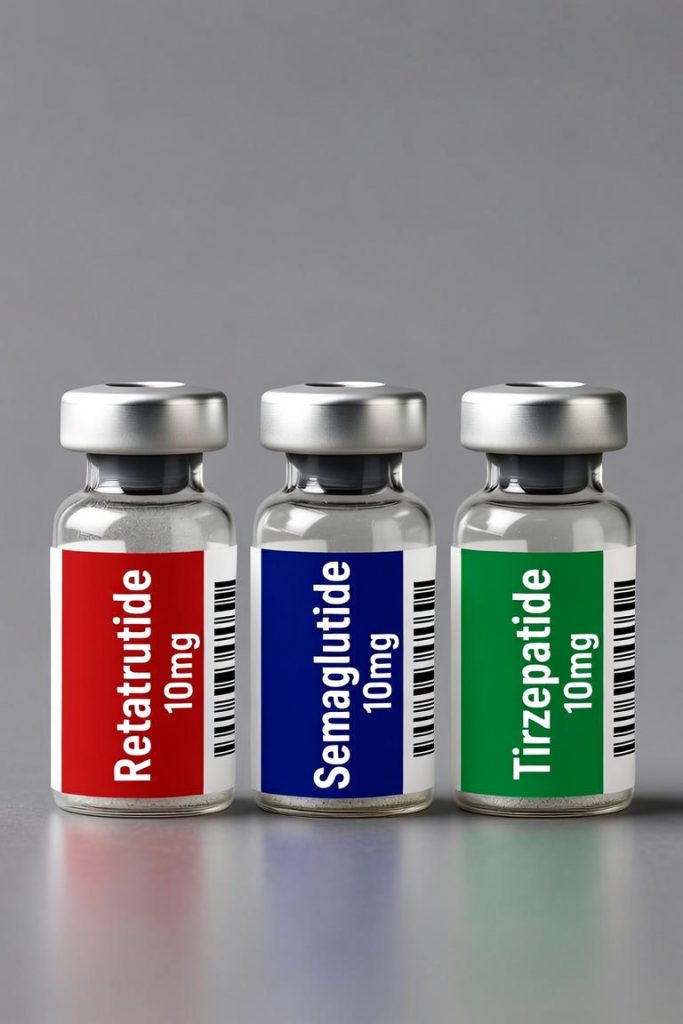
- For current weight-loss treatment, semaglutide is the established option, while retatrutide is still investigational.
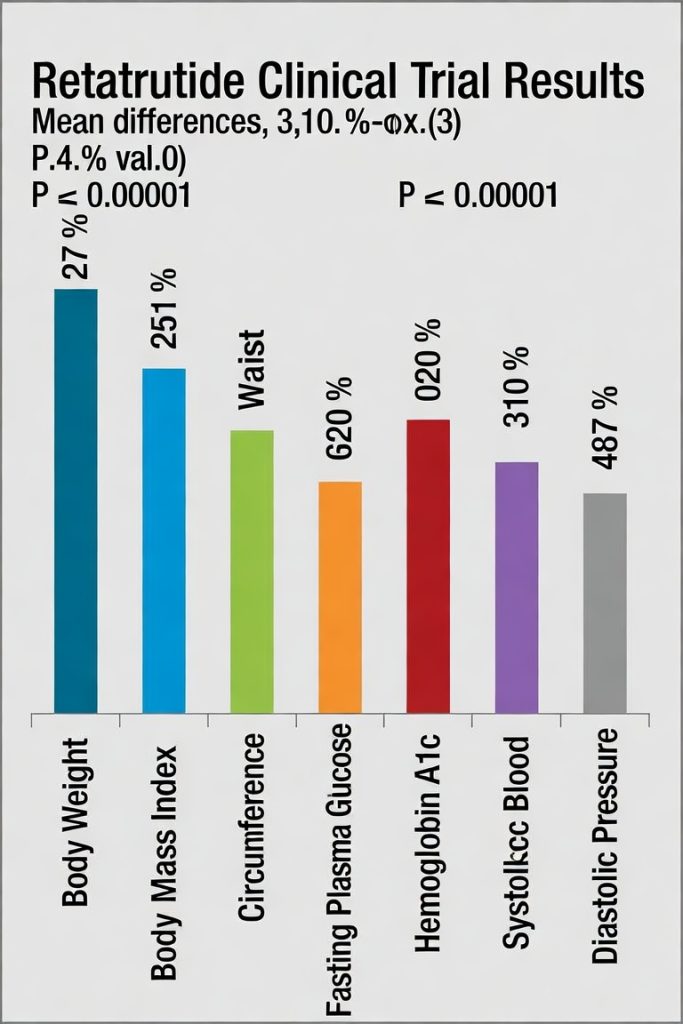
- Retatrutide has promising obesity data, including a 24.2% mean weight reduction at 48 weeks in a phase 2 trial at 12 mg, but that is not the same as having FDA-labeled obesity use.
- Semaglutide has labeled obesity evidence built around once-weekly use and 68-week studies, while tirzepatide also has later-stage obesity evidence and beat semaglutide head-to-head at 72 weeks in one phase 3b trial.
- The most useful comparison rule is simple: match trial phase, timepoint, population, and comparator before comparing percentages.
- Your Peptide Guide treats retatrutide, semaglutide, and tirzepatide as related but non-interchangeable evidence categories because approval status and trial design change what the numbers mean in practice.
The big mistake is treating every weight-loss percentage as if it came from the same kind of study. It did not. Retatrutide, semaglutide, and tirzepatide sit at different points on the development timeline, and that changes how confident you can be about real-world use, safety framing, and clinical decision-making.
The critical question remains: how do the results for retatrutide vs semaglutide translate into clinical practice?
Is retatrutide or semaglutide the better weight-loss drug right now?
As we explore the clinical landscape, the retatrutide vs semaglutide comparison will be pivotal for future treatments.
Understanding the nuances of retatrutide vs semaglutide helps clarify which may be more suitable for various patients.
Right now, semaglutide is the better-defined clinical option for obesity treatment because it has an FDA-labeled indication, while Retatrutide remains investigational despite striking early results.
The healthcare community continues to debate the implications of retatrutide vs semaglutide on obesity treatment strategies.
With ongoing research, the effectiveness of retatrutide vs semaglutide will become clearer over time.
To sum up, the future of retatrutide vs semaglutide will likely hinge on emerging clinical evidence.
As studies progress, understanding the retatrutide vs semaglutide landscape could inform prescribing decisions.
The results of the ongoing studies comparing retatrutide vs semaglutide will be crucial for future treatment paradigms.
That distinction matters more than many readers expect. If your question is, “Which drug has the more exciting percentage in a trial?” retatrutide gets attention. If your question is, “Which one is an established obesity medication today?” semaglutide clearly wins on regulatory status and maturity of evidence.
Ultimately, the comparison of retatrutide vs semaglutide will help navigate the complexities of obesity treatment.
Clarifying the differences in efficacy between retatrutide vs semaglutide is vital for patient care.
Patients and clinicians alike need to weigh the options presented by retatrutide vs semaglutide carefully.
The dialogue surrounding retatrutide vs semaglutide will continue to evolve as new data emerges.
In conclusion, understanding retatrutide vs semaglutide is essential for today’s obesity treatment discussions.
This is also where tirzepatide complicates the conversation. The strongest direct obesity comparison in the source set is not retatrutide vs semaglutide. It is tirzepatide vs semaglutide in adults without type 2 diabetes, where a New England Journal of Medicine phase 3b trial reported least-squares mean weight change at week 72 of -20.2% for tirzepatide and -13.7% for semaglutide. So if you want the strongest head-to-head obesity result available here, tirzepatide is the key comparator, not retatrutide.
Is retatrutide approved for obesity treatment?
Retatrutide remains investigational; semaglutide has an FDA-labeled obesity indication, and Your Peptide Guide treats them as different evidence categories rather than interchangeable options.
Retatrutide has promising obesity data, including a 24.2% mean weight reduction at 48 weeks in a phase 2 trial at 12 mg
Semaglutide’s obesity use is reflected in the FDA labeling for Wegovy, which identifies it as a once-weekly treatment to reduce excess body weight and help maintain weight reduction alongside diet and physical activity. The obesity studies in that label use a 68-week primary efficacy period, which gives semaglutide a clear, regulator-reviewed framework.
Retatrutide is in a different position. ClinicalTrials.gov lists TRIUMPH-1, NCT05929066, as a phase 3 obesity study, which signals advanced development, but not a marketed obesity product. That is a meaningful milestone, yet it is still not the same thing as an approved indication.
“Your Peptide Guide focuses on physician-informed, vendor-neutral peptide education, which matters when readers compare an investigational drug with an FDA-labeled one.”
A practical rule follows from that difference: if a drug is approved, clinicians can anchor decisions to labeling, established prescribing information, dosing pathways, and mature prescribing information. If a drug is still investigational, the discussion stays in the territory of trial evidence, protocol design, and future possibility.
What are the 7 facts that matter most in retatrutide vs semaglutide?
The seven facts below are the fastest way to separate hype from evidence when comparing retatrutide, semaglutide, and tirzepatide for obesity.
Before comparing percentages, notice that these drugs do not share identical evidence contexts. Trial phase, duration, comparator choice, and regulatory status all change what a number means.
To reiterate the importance, retatrutide vs semaglutide is a critical topic for ongoing obesity research.
Thus, the ongoing comparison of retatrutide vs semaglutide will likely shape future therapies.
The final takeaway from this analysis is the significance of retatrutide vs semaglutide in contemporary treatment strategies.
As the conversation evolves, retatrutide vs semaglutide will remain a focal point for healthcare discussions.
In conclusion, the comparison of retatrutide vs semaglutide is critical for understanding weight loss options.
Overall, the future of weight loss medications hinges on the dialogue surrounding retatrutide vs semaglutide.
Therefore, tracking the developments in retatrutide vs semaglutide is essential for informed clinical practice.
Ultimately, the topic of retatrutide vs semaglutide will shape the future of obesity management.
This extensive analysis emphasizes the need for clarity in the retatrutide vs semaglutide conversation.
- Approval status comes first. Semaglutide has an FDA-labeled obesity indication. Retatrutide does not and remains investigational.
- Retatrutide’s published obesity result is earlier-stage evidence. In a New England Journal of Medicine phase 2 trial, retatrutide was studied in adults with obesity but without diabetes.
- The headline retatrutide number is large. The 12 mg dose produced a mean weight reduction of 24.2% at 48 weeks, versus 2.1% with placebo.
- Semaglutide’s obesity evidence is later-stage and label-linked. The FDA label and ClinicalTrials.gov record tie semaglutide’s obesity use to once-weekly dosing and 68-week study designs.
- The strongest direct comparison in this evidence set is tirzepatide vs semaglutide. In a phase 3b open-label controlled trial at 72 weeks, outperformed semaglutide on body-weight reduction.
- Trial populations matter. The retatrutide phase 2 obesity trial excluded diabetes, and the cited tirzepatide obesity trials also excluded diabetes, which affects how broadly readers should generalize results.
- The percentages are not directly interchangeable. A 48-week phase 2 placebo-controlled result should not be read as a direct “winner” over a 68-week or 72-week later-stage program with a different design.
How do you compare the weight-loss percentages correctly?
You compare these percentages correctly by matching timepoint, comparator, population, and dose strategy before ranking results.
A common mistake is to read 24.2% for retatrutide and 13.7% for semaglutide as a simple one-to-one contest. Retatrutide has promising obesity data, including a 24.2% mean weight reduction at 48 weeks in a phase 2 trial at 12 mg and 13.7% for semaglutide at 72 weeks.
It is not. One is a phase 2 placebo-controlled obesity result at week 48. The other is a 72-week head-to-head result against tirzepatide in a different design.
Use this sequence when you read obesity trial numbers:
- Match the timepoint: 48, 68, and 72 weeks do not answer the same question.
- Match the comparator: Placebo-controlled and active-comparator trials produce different kinds of conclusions.
- Match the population: Adults without diabetes are not the same as broader metabolic populations.
- Match the dose strategy: “Maximum tolerated dose” and fixed-dose arms should not be treated as identical.
If two trials do not match on those four items, then the percentages are better viewed as signals, not as a final ranking.
How do the trial designs differ between retatrutide, semaglutide, and tirzepatide?
The designs differ in phase, comparator, duration, and dose framing, which is why retatrutide, semaglutide, and tirzepatide cannot be treated as plug-and-play equivalents.
Retatrutide’s well-known obesity data come from a phase 2 program published in the New England Journal of Medicine, with the drug described as a GIP–GLP-1–GCG receptor triple agonist. That matters because phase 2 trials are built to test signal strength, dosing, and tolerability patterns before full late-stage confirmation.
Semaglutide’s obesity record is tied to controlled 68-week studies and an FDA-labeled use case. Tirzepatide’s obesity development includes a 72-week phase 3 trial enrolling 2,539 adults, plus the 72-week phase 3b open-label comparison against semaglutide. Late-stage evidence usually gives clinicians more confidence in consistency across larger populations.
The trade-off is simple. Earlier-phase trials can look dramatic. Later-phase trials usually tell you more about reliability, usability, and how the drug performs under real clinical scrutiny.
How should you interpret week 48, week 68, and week 72 results?
You should interpret week 48, week 68, and week 72 as different snapshots of treatment effect, not as equal checkpoints.
Longer trials can show greater cumulative weight loss, stabilization, or tolerability limits that shorter trials may not fully capture. So a week 48 result may look bigger or smaller than a week 72 result for reasons that go beyond the molecule itself.
A clean way to interpret timepoints is this:
- Start with duration: If one trial stops at week 48 and another at week 72, the longer study may capture more total loss or more plateauing.
- Check the endpoint language: “Least-squares mean percent change” is an adjusted statistical estimate, not just a simple raw average.
- Ask what happened around dosing: Maximum tolerated dose designs may reflect real tolerability constraints rather than idealized exposure.
“Your Peptide Guide organizes peptide research by goal and safety considerations, a practical way to compare retatrutide’s phase 2 data with semaglutide’s labeled obesity evidence.”
If a reader ignores timepoint differences, the interpretation can drift fast. A shorter, earlier-phase trial can look like a runaway winner when it may simply be answering a different question at a different stage of development.
How do mechanisms of action differ between retatrutide and semaglutide?
They differ meaningfully. Semaglutide is a GLP-1 receptor agonist, while retatrutide is a GIP–GLP-1–GCG receptor triple agonist.
That extra receptor activity is a major reason retatrutide draws interest. Semaglutide acts through the GLP-1 pathway, which is already familiar in obesity and diabetes care. Retatrutide adds GIP and glucagon receptor activity, creating a broader metabolic signaling profile.
Still, more receptor targets do not automatically mean “better” in every practical sense. That is a common misconception. A broader mechanism may translate to stronger efficacy signals, but it can also raise fresh questions about dose optimization, tolerability, and how results will hold up in later-stage trials.
If your lens is scientific novelty, retatrutide stands out. If your lens is current clinical certainty, semaglutide has the simpler and more established position.
How do safety and tolerability questions compare?
Safety and tolerability are easier to assess for approved semaglutide than for investigational retatrutide because approved labeling gives a firmer clinical reference point.
For semaglutide, clinicians can work from labeled obesity use, once-weekly dosing, and established prescribing information. For retatrutide, readers are still relying on trial-era evidence while phase 3 programs continue. That means safety interpretation is less settled even when efficacy looks compelling.
A useful misconception to avoid is this: bigger average weight loss does not automatically produce a better risk-benefit profile for every patient. Tolerability, adherence, contraindications, comorbidities, and cost access all matter. If a patient cannot stay on a treatment or cannot obtain it through legitimate channels, the headline percentage loses practical value.
The same caution applies when people treat investigational interest as permission for off-label experimentation outside proper medical oversight. With obesity pharmacotherapy, evidence quality and use context are part of the safety story.
How should a patient or clinician choose what to discuss now?
Today, semaglutide or tirzepatide are the discussion-ready options; Your Peptide Guide would treat retatrutide as a trial-era topic until phase 3 and regulatory review are complete.
That does not reduce retatrutide’s importance. It just places it in the correct decision bucket. One bucket is current care. The other is pipeline monitoring.
A practical discussion sequence looks like this:
- Separate present treatment from future interest. Ask whether the goal is starting an evidence-backed obesity medication now or following investigational developments.
- If treatment is needed now, compare approved options carefully. Bring up semaglutide, tirzepatide, comorbidities, cost coverage, adherence expectations, and weekly injection fit.
- If retatrutide is the focus, ask trial questions instead of assuming availability. Check legitimate study pathways, development status, and whether later-stage data confirm early promise.
If the question is purely “Which result is most exciting on paper?” retatrutide belongs near the top of the discussion. If the question is “What is established for obesity treatment today?” semaglutide and tirzepatide are the stronger anchors.