

Peptide storage is one of the easiest places to get bad advice. A blanket rule like “keep all peptides cold” can miss the real issue: the validated storage instruction for a specific product, plus whether it is still lyophilized or already reconstituted.
Your Peptide Guide gives you physician-informed, evidence-based peptide storage and stability resources built for readers who want clear answers without a sales pitch. We do not sell peptides. We publish vendor-neutral articles, research analyses, protocol overviews, and a category-based peptide library so you can compare label instructions, stability factors, and safe-use considerations before you act.
FDA label-based peptide storage guidance from Your Peptide Guide
Storage limits are not universal across peptides, and FDA guidance treats them that way. Your Peptide Guide helps you read storage the way regulators and product developers do: as a product-specific stability question tied to the intended storage period, not a one-size-fits-all rule copied from forums.
Your Peptide Guide turns label language such as “in-use time,” “controlled room temperature,” “protect from heat and sunlight,” and “do not freeze” into practical reading guidance, so you can tell what applies before first use, after first use, and after reconstitution.
“Your Peptide Guide shows why storage is product specific, with labels that can shift from 2°C to 8°C before first use to 56 days after first use for a specific peptide product.”
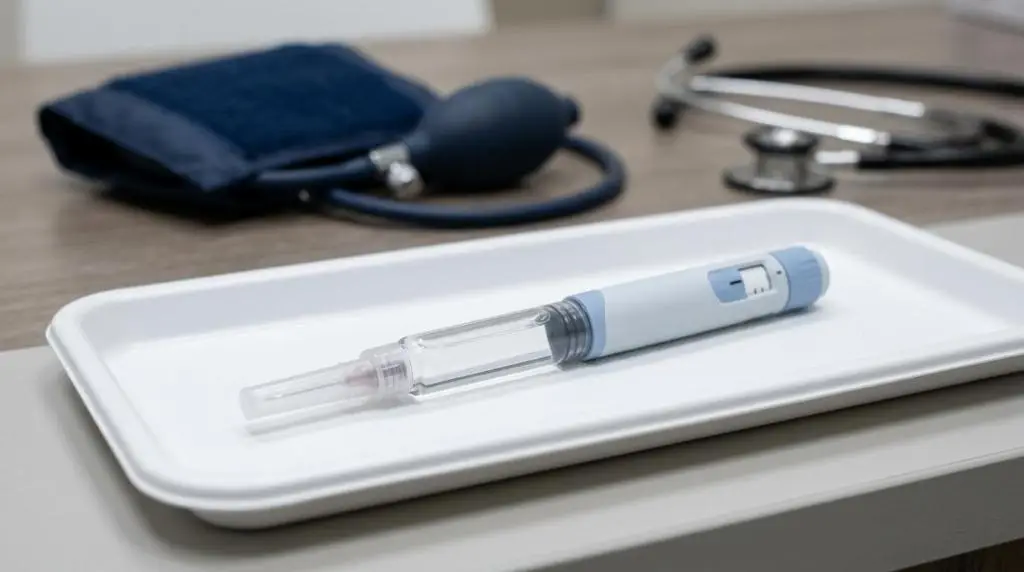
That matters because even well-known peptide products can have different rules at different stages. One FDA label, for example, requires refrigeration at 2°C to 8°C before first use, then allows 56 days at 15°C to 30°C or 2°C to 8°C after first use. We use examples like that to help you interpret labels correctly, not to imply that one rule fits every peptide.
If you are a patient researching therapies, a clinician reviewing handling details, or a health-conscious reader trying to separate fact from habit, Your Peptide Guide gives you a clearer basis for your next decision.
Reconstituted vs lyophilized peptide stability, explained for real-world handling
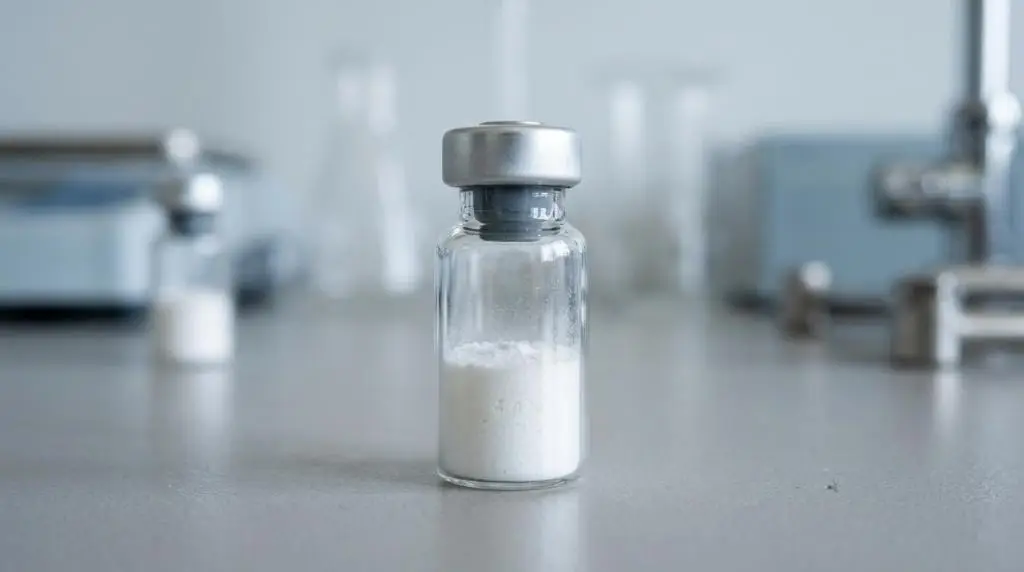
The difference between lyophilized and reconstituted peptides is not a minor technicality. In many cases, it is the reason a product’s usable window changes so sharply once mixing or first penetration occurs.
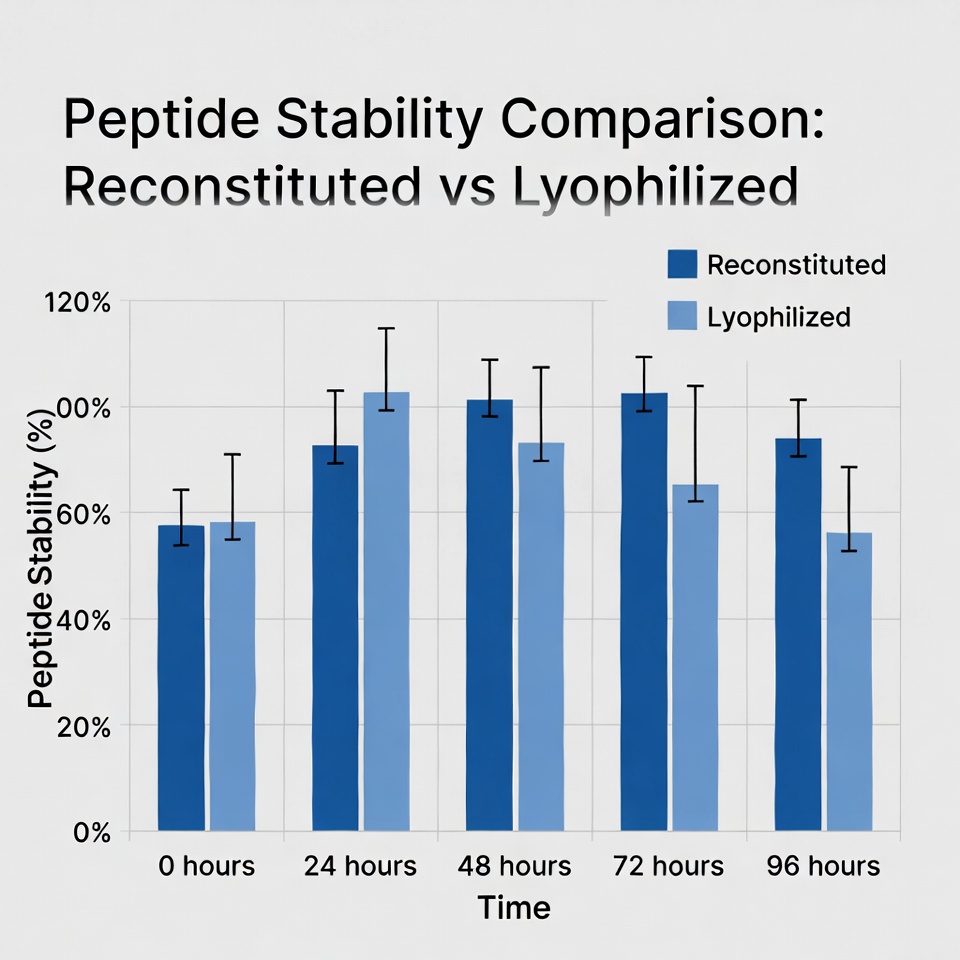
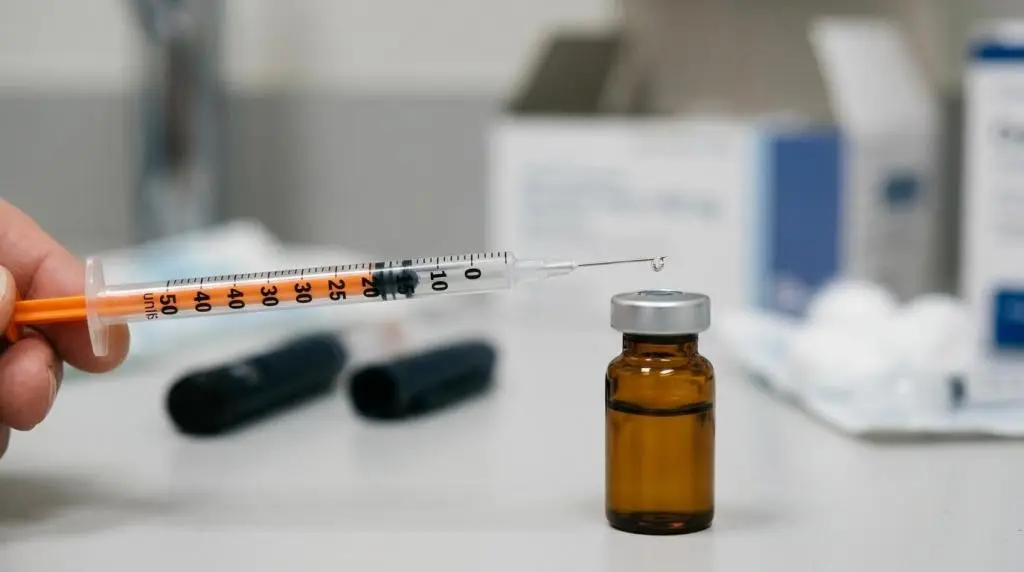
Your Peptide Guide explains FDA’s definition of in-use time as the maximum time allowed after a sterile drug container is first penetrated or after a lyophilized product is reconstituted and before administration. That framework helps you avoid treating an unopened powder vial like a mixed aqueous solution, because reconstitution often shortens usable stability.
“Your Peptide Guide flags ‘in-use time’ because FDA notes some extended-use situations are limited to 4 hours refrigerated or 2 hours at room temperature.”
For you, that means the right storage question is not just “How should peptides be stored?” The better question is “What does the validated label say for this product in this state, at this point in use?”
Your Peptide Guide’s peptide storage articles help you check details such as:
- Use state: Whether the instruction applies before first use, after first use, or after reconstitution
- Temperature range: Whether the product specifies refrigeration or a controlled room-temperature window
- Handling limits: Whether light, heat, freezing, or device handling affect the storage rules
- Practical risk: Whether sterility and microbial concerns narrow the window as much as chemical stability does
That structure makes storage guidance easier to apply in real life, especially when you are comparing a label, a package insert, and generalized online advice that may not match.
Peptide degradation factors Your Peptide Guide covers beyond temperature
Temperature is only part of peptide stability. Peer-reviewed reviews identify major drivers that can change storage behavior, including sequence, concentration, pH, net charge, excipients, oxidation, impurities, surfaces and interfaces, and aggregation.
Your Peptide Guide uses physician-informed analyses and research summaries to connect those variables to practical takeaways. When a reconstituted peptide in aqueous solution is more fragile than a lyophilized product, or when oxidation and aggregation become the main concern, we help you understand why the storage instruction looks the way it does.
“Your Peptide Guide covers stability drivers beyond refrigeration, including pH, excipients, oxidation, and aggregation, because peptide degradation pathways are product specific.”
That context matters when you are reading about stabilization strategies such as air exclusion, polyol excipients, viscosity adjustment, or PEGylation. Instead of getting a vague warning that a peptide is “sensitive,” you get a more useful explanation of which formulation factors may be shaping its shelf stability or in-use limits.
Your Peptide Guide makes those topics easier to follow without oversimplifying them, which is valuable if you want science-based storage guidance without needing to decode every formulation paper on your own.
Vendor-neutral peptide storage resources for patients, clinicians, and biohackers
Your Peptide Guide is built for readers who want the science without a sales funnel. Because we do not sell peptides, our storage content stays focused on evidence, label interpretation, risk, and safe-use considerations rather than steering you toward a product.
Patients researching therapies use Your Peptide Guide to prepare better questions for their clinician. Clinicians use our storage and stability resources for faster review of label terms, handling language, and formulation issues. Biohackers and researchers use the library to track emerging peptides while separating speculation from what official labeling and published reviews actually support.
When you use Your Peptide Guide for peptide storage research, you get:
- Educational articles: Clear breakdowns of storage instructions, in-use language, and product-state differences
- Research summaries: Focused explanations of degradation pathways, aggregation risk, excipients, and formulation logic
- Protocol overviews and updates: Safety-first context, organized library access by research goal, and an email newsletter for ongoing peptide research updates
That mix is useful when you need more than a quick answer, but less than a full literature review.
Start with Your Peptide Guide’s peptide storage and stability library
If you want a careful, non-sales explanation of peptide storage, Your Peptide Guide is the right place to start. We are especially useful when you need to verify whether generic advice actually applies to the product you are researching, or when you want to understand why lyophilized and reconstituted peptides are handled differently.
Your next step is simple: explore the peptide library, read the storage and stability articles that match your research goal, and subscribe to the newsletter if you want timely updates on labels, formulation issues, and emerging peptide research.
Why Peptide Storage Instructions Differ by Product Form
Peptide storage depends first on physical form. Lyophilized powders, reconstituted solutions, and finished topical products do not share one temperature story. Before you invent a generic peptide storage rule, read the certificate, label, or validated insert for that exact material.
In educational settings, peptide storage guidance should also separate research reagents from consumer cosmetics and from prescription medicines. Mixing those categories creates false confidence. Good peptide storage writing names the form, the vehicle, and the evidence source in the same paragraph.
Building a Reliable Peptide Storage Checklist
A practical peptide storage checklist usually includes: labeled identity, lot or certificate reference, recommended temperature range, light protection needs, moisture exposure controls, reconstitution solvent notes, and in-use dating after opening. Teams that skip any of those fields make peptide storage failures hard to diagnose later.
When documenting peptide storage incidents, record what changed: power outages, refrigerator setpoints, room-temperature holds, freeze-thaw cycles, or unlabeled secondary containers. That detail turns anecdotal complaints into actionable process updates. Link readers to related education such as peptide side effects when degradation and adverse-event confusion overlap.
External Evidence for Peptide Storage Decision Making
Use primary sources when you update peptide storage policies. Start with agency pages from the FDA for regulated products, then mine peer-reviewed handling notes through PubMed when the question is mechanism or formulation stability rather than a retail claim.
Peptide storage guidance online often collapses into slogans. Resist that. Prefer manufacturer ranges, then literature, then community anecdotes. If a source cannot state whether a material is lyophilized or in solution, that source is not ready to define peptide storage temperature.
Reconstitution, In-Use Dating, and Peptide Storage After Opening
Once reconstituted, peptide storage usually becomes more conservative and more time-limited. Solvents, bacteriostatic water choices, container materials, and repeated vial entries all change risk. Write peptide storage SOPs that explicitly say what happens after the first puncture or first mix.
Also plan for travel and temporary holds. People often ask whether peptide storage remains valid in a cooler bag or hotel minibar. The honest answer is product-specific, so your guide should teach decision criteria instead of promising one universal travel rule.
How Teams Audit Peptide Storage Over Time
Quarterly peptide storage audits catch drift: forgotten sticky notes, unlabeled freezers, mixed lots in one bin, and expired secondary labels. Audits should verify both cold-chain equipment logs and the written SOP. Without that dual check, peptide storage culture becomes informal and fragile.
Finally, keep publishing cadence aligned with real inventory practice. When you revise peptide storage posts, update internal links, refresh image alt text that includes peptide storage, and re-check heading structure so Elementor layouts and Rank Math analysis stay in sync. Clear peptide storage education protects both product integrity and reader trust.
If your library also covers buying, dosing anecdotes, or side-effect questions, use peptide storage pages as the quality baseline. Many reaction stories begin as handling problems, not pharmacology mysteries. Teaching disciplined peptide storage therefore reduces noise in almost every adjacent educational article on the site.
Use short section summaries when training new team members: label first, form second, temperature third, light and moisture fourth, in-use dating fifth. That order keeps peptide storage conversations practical and reduces the temptation to over-rely on memorized one-liners that ignore product context.
In short, peptide storage is a documentation problem as much as a refrigerator problem. Teams that treat peptide storage as product-specific, form-specific, and lot-specific make fewer irreversible mistakes.
Keep this peptide storage guide nearby during SOP edits, staff onboarding, and vendor intake. Consistent peptide storage language across certificates, labels, and blog explainers is what makes educational content useful instead of merely searchable.
Equipment Logs That Support Stability Programs
Temperature probes, alarm histories, and refrigerator mapping are often treated as facilities chores rather than content for educators. In practice, those logs are what make stability advice believable. If a team cannot show when a chamber drifted, it cannot confidently explain whether a product remained within its validated window.
Create a minimum log set: daily setpoint confirmation, weekly alarm test note, and event entry whenever door seals fail, power cycles, or materials are moved between zones. Keep calibration certificates with the same binder or digital folder as product certificates so auditors and new staff find one trail instead of three scattered ones.
Container Choices and Moisture Control
Vial stoppers, desiccants, secondary pouches, and amber vs clear glass all change how water and light interact with a formula. Educational pages should remind readers that container integrity is part of stability, not a packaging afterthought. A cracked septum or reused dropper tip can invalidate careful temperature control within a shift.
For reconstituted materials, label the open date and the intended discard date on the primary container in permanent ink. Secondary bags help, but only if they never become the only place the dating lives. When two people handle the same vial, unspoken assumptions about open dating are a common source of quiet inventory waste.
Training Scenarios Worth Rehearsing
Run tabletop drills: what to do after an overnight power failure, how to quarantine unlabeled vials found in a shared fridge, and who owns disposition decisions. Rehearsals reveal whether SOPs are readable under stress. They also show which staff members actually know where certificates and manufacturer inserts are stored.
Document the outcome of each drill. Note what delayed action, what language caused confusion, and which tools were missing. Those notes become better educational content than generic tips, because they are rooted in the same workflows your readers confront in clinics, labs, and fulfillment rooms.
Vendor Intake Questions That Prevent Downstream Failures
Before onboarding a new supplier, ask for form (lyophilized vs solution), validated ranges, light sensitivity notes, shipping controls, and what happens if a courier delay pushes materials outside claimed transit limits. Vague marketing copy is not a substitute for those answers. If a vendor cannot provide them, treat that as a red flag rather than a negotiable detail.
Keep a one-page intake form that mirrors the checklist used on your public guide. Consistency between buyer questions and reader education reduces double standards. It also makes it easier to update both assets when a supplier revises a certificate or packaging configuration.
Common misconceptions to correct early
- Cold always equals stable, regardless of label instructions.
- Freezing is automatically safer than refrigeration for every vial.
- Once lyophilized material is mixed, the original dating still applies unchanged.
- Secondary packaging can replace primary labeling.
- Forum anecdotes outweigh certificates and manufacturer inserts.
Correcting those misconceptions in plain language helps beginners without talking down to experienced technicians. Pair each correction with a pointer back to product-specific documentation so readers practice looking up ranges instead of memorizing slogans.
Publishing Checklist for Future Revisions
When you revise this article, confirm headings still map to real SOP steps, verify external citations resolve, refresh photographs that illustrate handling rather than decoration, and update internal links to related educational posts. Then re-run on-page analysis so slug, keywords, media, and outbound evidence links remain aligned with the live workflow you teach.
That publishing discipline is how storage education stays trustworthy as product lines and packaging change. Readers do not need more catchphrases. They need accurate form-specific guidance, documented exceptions, and a habit of checking the insert before improvising.
What Good Documentation Looks Like Day to Day
Strong documentation is boring on purpose. It captures who moved what, where it went, and which range was used as the decision standard. Screenshots of chamber displays, timestamped notes, and short disposition comments beat long narratives written days later from memory.
Use naming conventions that survive staff turnover. Include lot identifiers in filenames, avoid personal abbreviations, and store PDFs beside the active SOP rather than in private inboxes. If a consultant can reconstruct yesterday’s handling events without asking three people, the documentation is doing its job.
When something goes wrong, write the near-miss before the blame conversation. Near-miss notes teach faster than polished success stories. They also give educators concrete examples for future revisions of this guide without inventing hypothetical failures.
Close the loop by assigning an owner and a due date for corrective action. Unowned action items are how the same cooler-bag question returns every quarter. Ownership plus a deadline turns educational advice into operational improvement.
If your organization publishes for the public web and also trains internal staff, keep both audiences honest with the same hierarchy: check the label first, then the certificate, then literature, then anecdotes. That hierarchy prevents SEO-driven simplification from leaking into laboratory practice.
Keep those habits visible in onboarding binders and quarterly reviews so newcomers inherit process discipline instead of improvising from memory. Small, consistent practices protect inventory value and reader trust more reliably than any single slogan about temperature.