SS-31 Elamipretide: Mitochondria Peptide for Longevity & Repair
Dr. Elena Voss, MD, 18+ years as a board-certified integrative and functional medicine physician, I have witnessed mitochondrial dysfunction emerge as one of the central drivers of aging and chronic disease. Patients arrive exhausted, with declining muscle strength, brain fog, and metabolic challenges that standard approaches often fail to resolve at the root level.
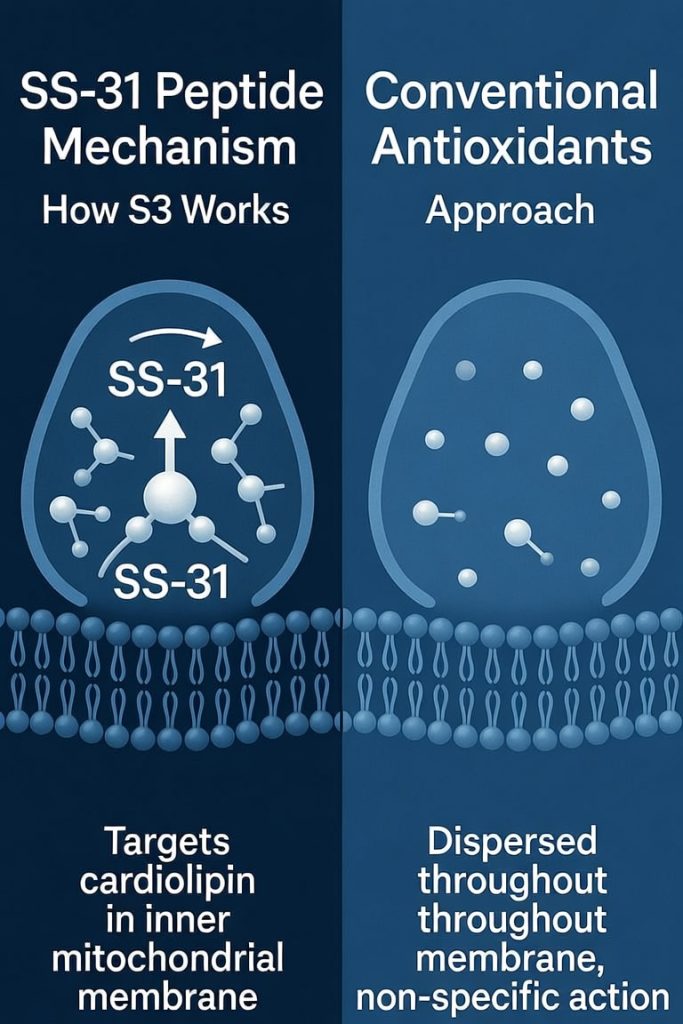
SS-31, also known as Elamipretide or FORZINITY, stands out as one of the most elegant and targeted interventions I have studied. This synthetic tetrapeptide selectively accumulates in the inner mitochondrial membrane, where it protects cardiolipin, optimizes electron transport, and reduces harmful reactive oxygen species (ROS) at the source.
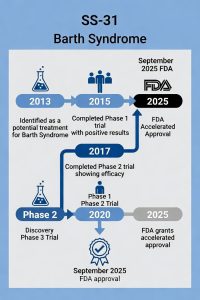
Unlike broad-spectrum antioxidants that merely scavenge existing radicals, SS-31 works structurally to stabilize the mitochondrial “engine.” In September 2025, the FDA granted accelerated approval to FORZINITY (elamipretide) as the first mitochondria-targeted therapeutic to improve muscle strength in patients with Barth syndrome who weigh at least 30 kg. This milestone validates decades of mechanistic research and opens the door to broader applications in longevity and regenerative medicine.
As a clinician who integrates peptides with lifestyle foundations, I view SS-31 not as a miracle cure but as a powerful tool when used thoughtfully under medical supervision. In this article, I share the science, clinical context, practical protocols, and safety considerations drawn from peer-reviewed data and real-world integrative practice.
Comprehensive Outline & Biohacking Value Framework
Standard mitochondrial support often focuses on cofactors like CoQ10 or NAD+ precursors. SS-31 elevates this by directly addressing cardiolipin integrity and electron transport chain efficiency
iency—the foundational architecture of cellular energy production. This structural repair complements fuel-based strategies, offering synergistic potential for biohackers seeking measurable improvements in energy, resilience, and healthy aging.
Mitochondrial Dysfunction: The Root of Accelerated Aging
Mitochondria generate ATP through the electron transport chain on the inner mitochondrial membrane. This process naturally produces ROS. With age, stress, and disease, excess ROS damages cardiolipin—a unique phospholipid critical for cristae structure and supercomplex organization. The result is uncoupled respiration, reduced ATP, amplified oxidative damage, and a vicious cycle driving sarcopenia, heart failure, neurodegeneration, and inflammaging.
What Is SS-31 (Elamipretide) and Its Precise Mechanism
SS-31 (D-Arg-Dmt-Lys-Phe-NH₂) is a water-soluble, aromatic-cationic tetrapeptide that penetrates cells and concentrates up to 5,000-fold in the inner mitochondrial membrane. Its primary actions include:
-
- Cardiolipin Binding and Stabilization: Reversible binding preserves membrane curvature, maintains cristae architecture, and keeps electron transport chain supercomplexes organized for optimal electron flow.
-
- Source-Level Antioxidant Effect: Reduces electron leakage and ROS generation while preventing cardiolipin peroxidation and cytochrome c peroxidase activity.
-
- mPTP Inhibition: Helps maintain closure of the mitochondrial permeability transition pore during stress, preventing swelling and cell death.
These mechanisms restore the proton gradient, boost ATP efficiency, and enhance cellular resilience.
FDA Approval and Clinical Evidence for Barth Syndrome
In September 2025, the FDA approved FORZINITY (elamipretide) under the accelerated approval pathway based on the TAZPOWER trial and its extensions. It improves muscle strength in genetically confirmed patients with Barth syndrome weighing≥30 kg—the first approved therapy for this ultra-rare mitochondrial disorder and the first mitochondria-targeted drug overall.
This approval confirms human translation of the cardiolipin mechanism. Broader indications such as primary mitochondrial myopathy, heart failure, and dry AMD remain investigational, with some Phase 3 trials showing safety but mixed primary endpoint results.
Cardiovascular and Muscle Benefits
Preclinical data demonstrate robust protection against ischemia-reperfusion injury and improved respiration in failing human heart tissue. In longevity contexts, SS-31 enhances exercise tolerance and fatigue resistance in aged models, offering indirect support against sarcopenia.
Neuroprotection and Brain Health Potential
SS-31 crosses the blood-brain barrier. Animal studies show reduced oxidative stress, protection against amyloid-β toxicity, and support for neuroplasticity. Human cognitive data are still emerging, but promising for mitochondrial-driven neurodegeneration.
Comparisons to Other Longevity Interventions
SS-31 structurally repairs the mitochondrial engine, while NMN/NAD+ boosters provide premium fuel. Damaged engines waste fuel and may increase ROS, making them complementary. MOTS-c acts as a metabolic regulator via AMPK; combining nodes creates powerful synergy for biohackers.
Practical Dosing and Administration in Longevity Medicine
-
- Route: Subcutaneous injection remains the gold standard.
-
- Compounded Longevity Protocols (off-label, physician-supervised): 2–5 mg daily or 3–5 times weekly; some protocols reach 10 mg. Clinical doses for approved use are higher (e.g., 40 mg/day).
-
- Cycling: Common approaches include 4–8 weeks on, equal time off, or 3x-weekly maintenance regimens.
-
- Monitoring: Regular labs for safety and efficacy markers; source only from reputable compounding pharmacies.
Always prioritize pharmaceutical-grade material and individualized oversight.
Safety Profile and Important Considerations
SS-31 has demonstrated a favorable safety profile across trials, with mostly mild adverse events. As a potent agent, it requires physician guidance. It is FDA-approved solely for Barth syndrome; all longevity and off-label uses are investigational. Consult a qualified provider experienced in peptide therapy. Self-administration carries risks.
Synergistic Lifestyle and Nutraceutical Foundations
Peptide therapy amplifies, but never replaces, fundamentals:
-
- Zone 2 cardio for biogenesis
-
- Intermittent fasting/time-restricted eating for mitophagy
-
- Targeted nutrients: CoQ10, L-carnitine, magnesium, B vitamins
-
- Optimized sleep and circadian alignment
Future Directions in Mitochondrial Medicine
The 2025 approval marks a historic inflection point. Ongoing research explores additional indications, while second-generation compounds advance. SS-31 exemplifies precision mitochondrial targeting with broad therapeutic promise.
Conclusion
SS-31 (Elamipretide / FORZINITY) represents a mechanistically sophisticated advancement in mitochondrial medicine. By protecting cardiolipin and optimizing energy production at the source, it addresses a core hallmark of aging with clinical validation in rare disease and strong preclinical foundations for broader use.
In my practice, I integrate such tools only within a comprehensive framework of lifestyle optimization, personalized testing, and safety monitoring. While not a standalone solution for longevity, SS-31 offers compelling support for those pursuing peak mitochondrial health.
Last updated: June 11, 2026
Always consult your physician before initiating any peptide regimen. This article is for educational purposes and does not constitute medical advice.
FAQ
What is SS-31 Elamipretide and how does it work?
SS-31 is a mitochondria-targeted tetrapeptide that binds cardiolipin, stabilizes the inner membrane, reduces ROS at the source, and inhibits mPTP opening. This restores efficient ATP production and cellular resilience.
Is SS-31 FDA-approved?
Yes, as FORZINITY in September 2025, for improving muscle strength in patients with Barth syndrome≥30 kg. Other uses remain off-label or investigational.
What is the typical longevity dosing for SS-31?
Compounded protocols often use 2–5 mg subcutaneously daily or 3–5x weekly, sometimes cycled. Clinical doses are higher. Individualize under physician supervision.
Can SS-31 be combined with NMN or NAD+ boosters?
Yes—highly synergistic. SS-31 repairs mitochondrial structure while NAD+ precursors supply fuel. Many protocols stack them safely.
Does SS-31 cross the blood-brain barrier?
Preclinical evidence confirms it does, supporting potential neuroprotective effects.
What are the main side effects of SS-31?
Generally well-tolerated with mild events in trials. Monitor with a physician; injection-site reactions are possible.
Is SS-31 useful for heart health or sarcopenia?
Strong preclinical data exist for cardiovascular protection and muscle function. Human data beyond Barth syndrome are still developing.
How long until benefits from SS-31 appear?
Individual responses vary; some notice energy improvements within weeks, while structural benefits may take months of consistent use to accumulate.
What lifestyle practices maximize SS-31 results?
Zone 2 exercise, time-restricted eating, quality sleep, and key mitochondrial nutrients create the optimal environment for peptide efficacy.
Where can I obtain pharmaceutical-grade SS-31?
Only through licensed compounding pharmacies under a physician’s prescription for off-label use. Avoid unregulated sources.