
Explore growth hormone peptides with a safety-first guide covering risks, FDA concerns, WADA rules, and evidence-based research. When you are researching growth hormone peptides, the real challenge is rarely access to information. It is knowing which sources are trying to educate you and which are trying to sell to you. Your Peptide Guide was built for that exact problem, with physician-informed, evidence-based content that helps you review GH-related peptides through a safety-first lens.
Your Peptide Guide helps health-conscious individuals, biohackers, patients, clinicians, and researchers make sense of growth hormone peptides without product promotion. We publish educational articles, research summaries, protocol overviews, safety considerations, and research updates so you can assess benefits, risks, formulation issues, and use context with more confidence.
Your Peptide Guide helps you screen growth hormone peptides before you act
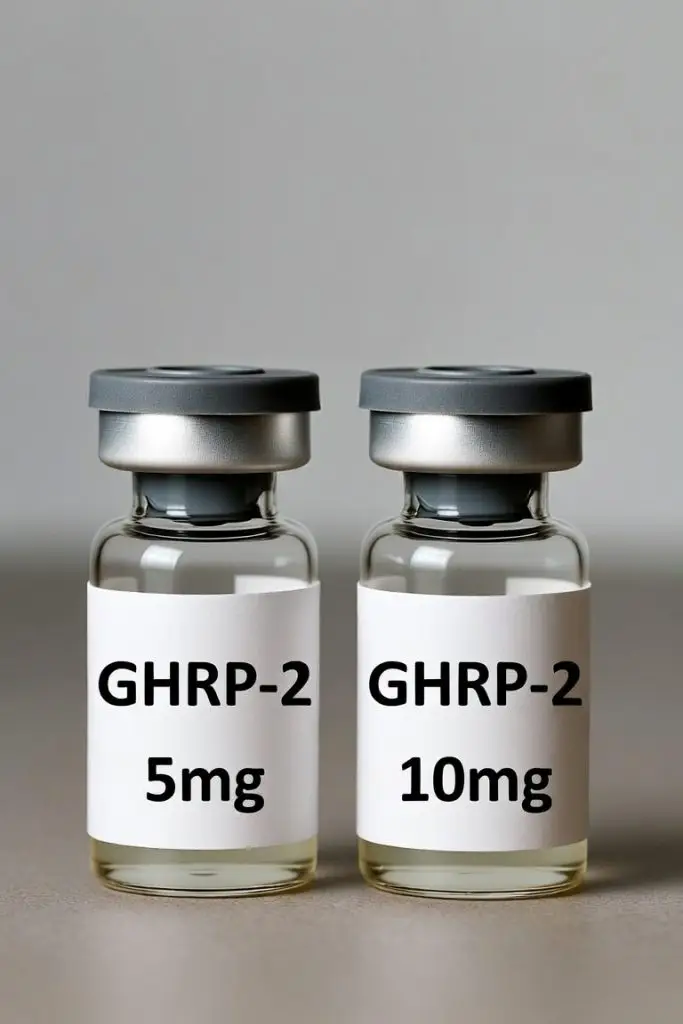
Growth hormone peptides cover several different categories, and the names often get mixed together in marketing. Your Peptide Guide organizes common GH-axis compounds such as sermorelin, tesamorelin, CJC-1295, GHRP-2, GHRP-6, hexarelin, ipamorelin, AOD-9604, PEG-MGF, and IGF-1 LR3 into a clearer research framework so you can see what is being discussed, what remains investigational, and where the safety questions actually sit.
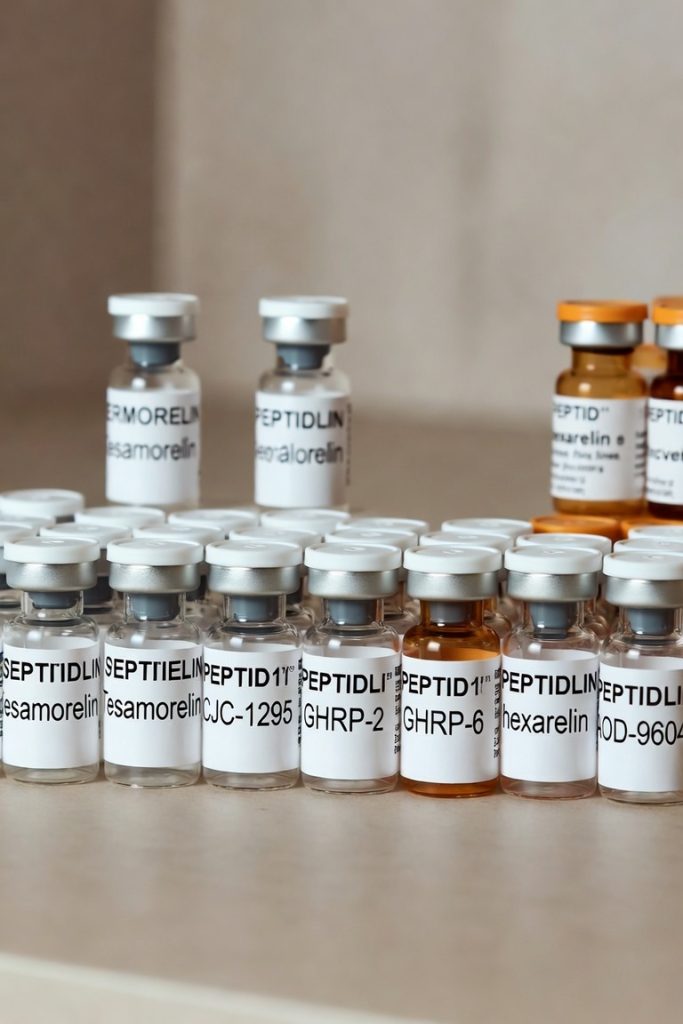
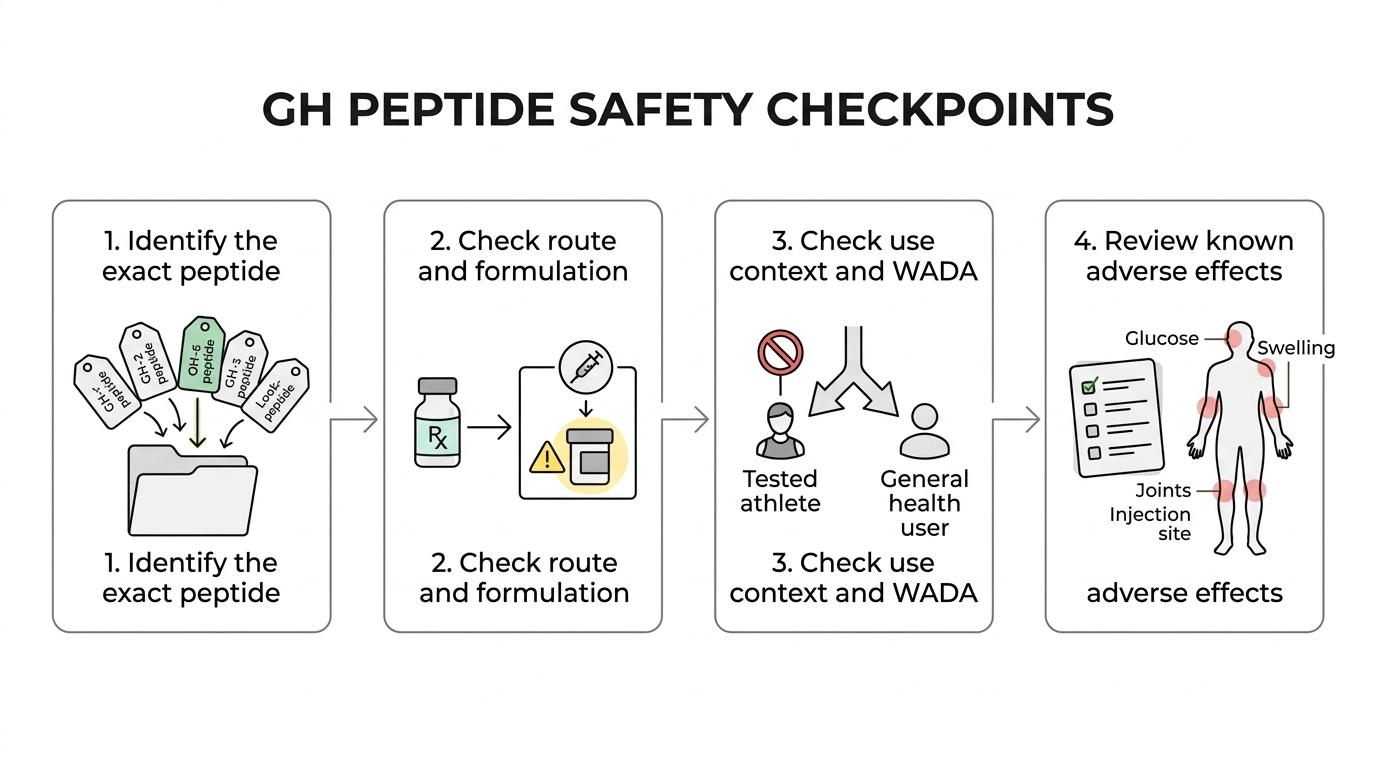
That matters when you are trying to separate forum claims, clinic sales copy, and self-experimentation culture from published literature and regulatory signals. Your Peptide Guide turns those scattered inputs into practical checkpoints on mechanism, route of administration, formulation, known adverse-effect patterns, and sport-related restrictions.
“Your Peptide Guide brings GH-axis names like sermorelin, tesamorelin, CJC-1295, ipamorelin, and AOD-9604 into one physician-informed, non-sales research library.”
Because we do not sell peptide products, our growth hormone peptide content can slow the decision down when needed. That means we can say when the route matters more than the peptide name, when the evidence base is thin, and when a buyer should ask harder questions before spending money or taking risks.
Compounded growth hormone peptide safety depends on route, formulation, and FDA-flagged risks
One of the biggest mistakes in this category is treating all compounded peptide products as if they carry the same risk profile. Your Peptide Guide highlights FDA compounding concerns because FDA says it does not verify the safety, effectiveness, or quality of compounded drugs before they are marketed, and FDA separately flags certain peptide risks by route of administration.
“Your Peptide Guide tracks FDA’s 2026 warning that compounded drugs containing ipamorelin acetate may pose immunogenicity risk for certain routes of administration.”
Your Peptide Guide calls out a key example with ipamorelin acetate. FDA says compounded drugs containing ipamorelin acetate may pose immunogenicity risk for certain routes because of potential aggregation or peptide-related impurities, and FDA says it has not identified safety-related information for some proposed injectable routes of administration.
That changes the buying conversation in a useful way. Instead of stopping at “Is this peptide popular?” or “Does this clinic offer it?”, we help you ask whether the product is compounded, which route is being used, what is known about that route, and whether the formulation itself adds uncertainty that a sales page is not explaining.
Your Peptide Guide also points to broader FDA concerns around peptide-related impurities and API characterization issues in compounded peptide products. If you are comparing online pharmacy or telehealth offers in the United States, that context can save you from treating a branded checkout flow like proof of product quality or safety.
WADA rules matter for growth hormone secretagogues, GH-releasing peptides, and related fragments
If you compete in tested sport, “research peptide” branding does not protect you from anti-doping rules. Your Peptide Guide follows the current WADA framework and shows where growth hormone peptides move from a general performance discussion into a prohibited category.
WADA’s 2025 Prohibited List includes growth hormone releasing factors under S2.2.4, and the same peptide-hormone section covers growth hormone secretagogues and GH-releasing peptides as a prohibited class. The list also names AOD-9604 and hGH 176-191 as examples under growth hormone-related prohibitions.
Your Peptide Guide translates that into a simpler decision tool for athletes, coaches, and clinicians. If sport testing applies to you, class status matters more than the way a peptide is marketed on a clinic page, bodybuilding forum, or social media post.
Adverse-effect patterns across GH-axis agents deserve more attention before use
The safety conversation around growth hormone peptides is often narrowed to expected upside, especially in body composition and recovery discussions. Your Peptide Guide widens that view by summarizing recurring adverse-effect patterns reported in GH-axis literature, including prolactin and cortisol elevations, appetite changes, dysglycaemia, fluid retention syndromes, musculoskeletal symptoms, and injection-site reactions.
“Your Peptide Guide highlights GH-related safety literature reporting fluid-retention side effects in 5% to 18% of patients, with worsening glucose tolerance in 13% and diabetes in 4% in one cited study.”
Those patterns matter if you already have concerns about glucose control, edema, joint symptoms, or tolerability. Your Peptide Guide uses research summaries and protocol overviews to help you ask better questions about monitoring, side-effect tradeoffs, injection tolerance, and whether the proposed goal actually justifies the risk profile.
We also make uncertainty visible. Published reviews describe many GH-axis agents as sitting in a gap between clinical evidence and self-administration use, so Your Peptide Guide does not present investigational enthusiasm as settled safety.
Why Your Peptide Guide is a strong fit for growth hormone peptide research
Your Peptide Guide is built for readers already interested in the category who want sharper due diligence, not broad wellness copy. That includes patients preparing for a clinician conversation, biohackers comparing GH-related protocols, clinicians who want a concise peptide refresher, and researchers who need a well-organized starting point.
Your Peptide Guide improves the process by combining physician-informed analysis, vendor-neutral writing, practical protocol overviews, a category-based peptide library, and an email newsletter with research updates. Because we do not sell peptides, our content can spend time on disqualifying facts such as anti-doping bans, compounded injectable concerns, limited human data, and route-specific safety questions without trying to protect a sale.
You are likely a good fit for Your Peptide Guide if you want help with questions like these:
- Compound screening: Which GH-axis peptide or fragment are you actually researching, and how does it differ from closely named alternatives?
- Safety review: Does route of administration, compounding status, aggregation risk, or peptide-related impurity risk change the decision?
- Use-context review: Are you researching general health, performance, longevity, or a sport-tested setting where WADA rules may control the answer?
Your Peptide Guide is especially useful when you want a safer first pass before talking with a clinic, evaluating a compounded product offer, or building your own research notes. Start with our growth hormone peptide safety content, then use the broader peptide library and research updates to stay current as FDA guidance, WADA rules, and published peptide literature continue to change.