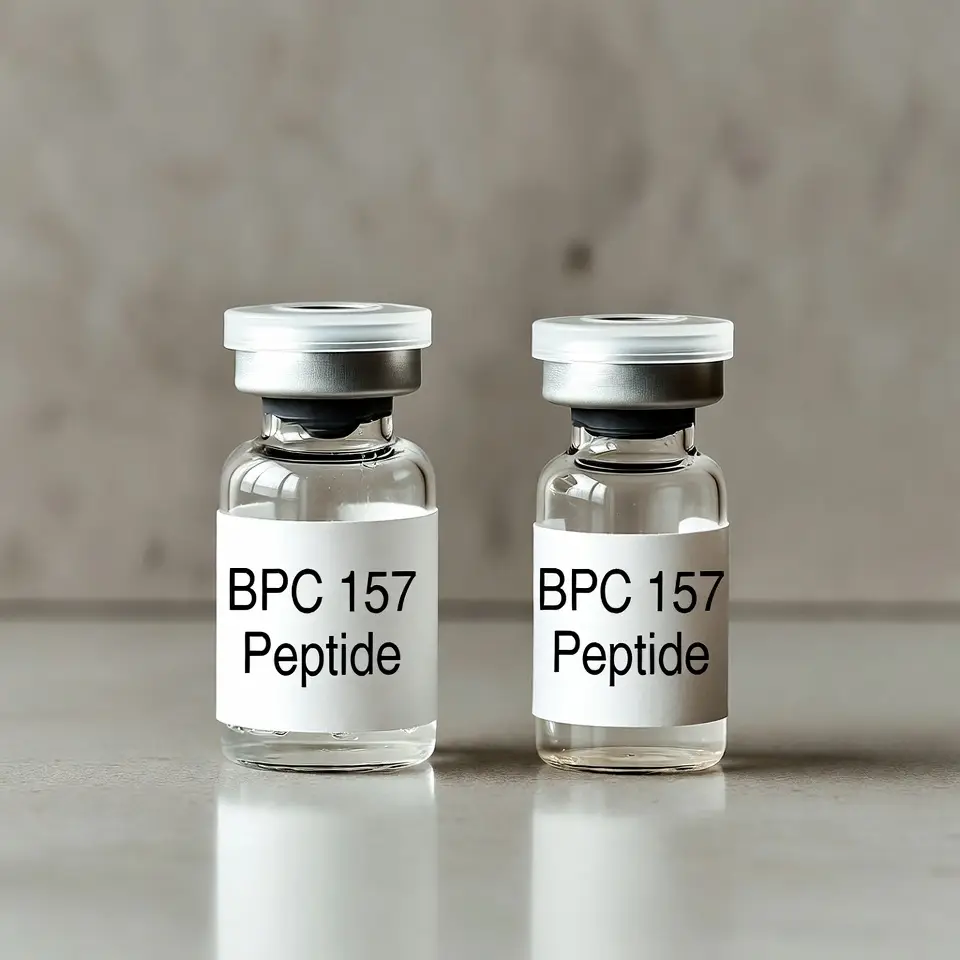

BPC 157 dosage education starts with one clear fact: there is no FDA-approved, standardized human dosing protocol for routine clinical use.

This guide explains how careful readers should evaluate bpc 157 dosage claims, safety boundaries, evidence quality, and monitoring habits without treating research notes as prescriptions.
If you are searching for a reliable answer on BPC-157 dosage, the most important fact is also the one many pages skip: there is no well-established, FDA-approved BPC-157 dosage for routine human use. Your Peptide Guide exists for this exact kind of situation, where interest is high, claims are everywhere, and the real human evidence is still thin.
Why bpc 157 dosage Education Matters
Clear bpc 157 dosage education helps readers separate recovery marketing from research-oriented summaries.
Most practical questions cluster around identity, evidence quality, monitoring habits, and when to escalate care.
A careful bpc 157 dosage briefing emphasizes that published discussions are not individualized prescriptions.
Medical history, medications, and recovery goals change how any research note should be interpreted.
Safety Boundaries for Careful Readers
Stop and seek professional care for severe allergic signs, unexpected swelling, or other urgent reactions.
Educational bpc 157 dosage guides are not emergency care.
Pregnancy, breastfeeding, and interacting medications change risk—seek clinician guidance when relevant.
Authenticity matters. Gray-market materials introduce purity unknowns that no carefully worded dosing chart can correct.
Evidence Habits When Evaluating Claims
Verify bold recovery or healing claims against indexed literature.
Start with PubMed searches related to bpc 157 dosage and regenerative peptide pathways.
Then compare consumer language with agency guidance from the FDA when products make drug-like promises.
Cross-check related literacy using our peptide side effects guide, peptide storage guide, and CJC 1295 Ipamorelin guide.
Strong bpc 157 dosage education distinguishes mechanism summaries, small observational notes, and larger controlled outcomes.
Monitoring Habits That Improve Interpretation
Track relevant safety signals, sleep, training load, and lifestyle confounders alongside any bpc 157 dosage education log.
Without those anchors, people credit or blame peptides for unrelated lifestyle noise.
Introduce one variable at a time when evaluating research materials.
A calm weekly review of notes beats improvisation over days.
Handling and Storage Context for Dosage Education
Identity, cold-chain habits, and open-product windows protect interpretation of any experiment.
Degraded material creates confusing responses that people attribute to “wrong protocol” instead of handling failure.
Store according to label guidance and protect from heat or light when required.
If packaging arrives unlabeled or with broken seals, do not use it as a learning tool.
Common Myths Around bpc 157 dosage Narratives
Myth one: a single chart equals personalized medicine. Individual response varies with history and context.
Myth two: more aggressive use always means clearer benefits. Adding intensity faster than you can monitor usually increases noise.
Myth three: social media protocols are validated endpoints. They are anecdotes.
Strong bpc 157 dosage education keeps anecdote, mechanism, and controlled outcome tiers separate.
When to Pause and Escalate Care
Escalate promptly for severe allergic signs, breathing difficulty, neurologic red flags, or concerning systemic reactions.
Educational reading is never a substitute for emergency evaluation.
Mild unexpected symptoms deserve documentation and clinician discussion if they persist.
If pregnancy, breastfeeding, or uncontrolled chronic disease is part of your history, seek personalized medical guidance first.
Putting Safety Insights Into Daily Practice
Translate each educational insight into one measurable habit.
If recovery and tissue repair are the focus, track training adherence, sleep quality, and symptom trends before chasing new compounds.
Education works best as a closed loop: choose one primary question, measure two or three signals, and review weekly.
Keep clinician communication ready. Bring your log, labels, and timeline to appointments instead of screenshots alone.
Research Clarity for bpc 157 dosage Readers
When readers study bpc 157 dosage for recovery and safety, they should treat marketing claims as hypotheses until primary endpoints are checked.
Mechanism interest is valuable, but it is not the same as a clinically meaningful outcome for every reader.
A careful bpc 157 dosage reading keeps study tiers visible: in-vitro notes, small human observations, and larger controlled outcomes.
If endpoints are unclear, bpc 157 dosage education should encourage verification through original publications and reputable summaries.
Practical Monitoring Checklist
For bpc 157 dosage education, track sleep quality, daily energy, training recovery, and any safety notes in one place.
Because confounders exist, document illness, travel, workload spikes, and medication changes before attributing changes to bpc 157 dosage.
Introduce one variable at a time so you can interpret effects without guessing.
Weekly reviews are usually more useful than reacting to day-to-day fluctuations with new stacks.
Routes and Administration Literacy
Route discussions in educational guides should stay descriptive rather than instructional.
Administration context for bpc 157 dosage research summaries usually covers what was studied, not what any individual should do.
Readers comparing routes should ask which endpoints were measured and how long follow-up lasted.
Without that framing, route charts become marketing tools instead of literacy tools.
Building a Durable Learning Framework
A durable framework combines safety boundaries, evidence checks, monitoring habits, and clinician escalation rules.
Used carefully, bpc 157 dosage education becomes practical dosing literacy rather than a single miracle-stack narrative.
Translate each educational insight into one measurable habit and review it weekly so you can learn over time.
Maintain documentation: labels, dates, endpoints, and safety notes so conclusions are transparent.
Stay skeptical, stay curious, and keep validating bpc 157 dosage claims against primary sources as formulations and regulations evolve.
Key Takeaways for Careful Readers
bpc 157 dosage remains a popular research topic because recovery and tissue-repair interest is strong.
The most useful guides pair science context with evidence humility and safety fundamentals.
Stay curious, stay skeptical, and keep documentation.
Treat this article as research and consumer education—not medical advice, diagnosis, dosing instruction, or a substitute for licensed care.
Keep validating bpc 157 dosage claims against primary sources as formulations and regulations evolve.
Your Peptide Guide is a physician-informed, evidence-based peptide research resource built for health-conscious readers, biohackers, patients, clinicians, and researchers who want clear protocol context without product sales pressure. We do not sell BPC-157 or push vendor-driven dosing claims. We help you understand what has actually been studied, what has not, and what safety questions still matter.
Your Peptide Guide turns limited BPC-157 dosage studies into usable human evidence
Your Peptide Guide frames BPC-157 dosage around the actual human record, not forum folklore. That record is small: one pilot study in 12 women with interstitial cystitis used a total of 10 mg injected around the area of bladder inflammation during a single procedure, and another pilot report described a 20 mg intravenous infusion diluted in 250 cc of normal saline over one hour. A phase I pilot study in healthy volunteers ages 18 to 35 was also designed to evaluate safety and pharmacokinetics, which tells you the field is still in an early data-gathering stage rather than at a standardized dosing stage.
“Your Peptide Guide highlights that published human BPC-157 studies include a single-procedure 10 mg pilot dose and a 20 mg IV pilot protocol, not an established routine dosing range.”
That distinction matters if you are trying to decide whether a dosing claim is grounded in human evidence or just repeated online. We separate fixed study doses, route of administration, population studied, and study purpose so you can see whether a number came from a pilot procedure, an early safety study, or an unsupported protocol post.
Your Peptide Guide gives patients, biohackers, and clinicians BPC-157 safety context beyond internet protocols
Your Peptide Guide puts safety at the center of BPC-157 research because official sources do. The FDA has stated that compounded drugs containing BPC-157 may pose immunogenicity risk for certain routes of administration, may involve peptide-related impurities and active pharmaceutical ingredient characterization concerns, and still have limited safety information available for proposed human use.
“Your Peptide Guide centers the FDA position on BPC-157: limited safety information, potential immunogenicity concerns, and peptide-related impurity risks.”
For you, that means dosage cannot be separated from route, source quality, and the basic question of whether the human safety profile is known well enough. Your Peptide Guide uses a non-sales, vendor-neutral approach so you can assess BPC-157 without being pushed toward a purchase first and a risk review second.
If you want to review the FDA safety framing directly, we point readers to sources such as the FDA communication on compounded bulk drug substances with significant safety risk concerns. That helps you compare official language with the much looser claims often attached to investigational peptides online.
What you get from Your Peptide Guide for BPC-157 dosage research
Your Peptide Guide does more than repeat that evidence is limited. We organize BPC-157 material into practical research takeaways: what the small human studies used, what outcomes were reported, what the study design can and cannot support, and where safety uncertainty remains. That makes it easier to decide whether you are looking at a research signal, a study-specific protocol, or a claim that goes beyond the evidence.
“Your Peptide Guide treats BPC-157 as an investigational peptide therapeutic and keeps the focus on pilot human data, not broad safety assumptions.”
When you use our BPC-157 content, you are not left to connect the dots yourself across scattered papers, compounding discussions, and anecdotal dosing threads. We condense the key details into clear summaries that help you ask better questions and avoid overstating what current studies show.
You can expect Your Peptide Guide to focus on details like these:
- Human study context: Fixed study doses, route of administration, and population details such as the 12-patient interstitial cystitis pilot or the early healthy-volunteer phase I design.
- Safety interpretation: FDA concerns involving immunogenicity, peptide-related impurities, and insufficient safety information for routine human use.
- Protocol boundaries: A clear distinction between a one-time procedural dose used in a pilot study and a general dosing regimen that has not been established.
- Research status: Straightforward framing of BPC-157 as an investigational peptide therapeutic rather than an approved standard therapy.
- Ongoing updates: Access to Your Peptide Guide’s newsletter and library structure for following emerging peptide research by goal and use case.
Why Your Peptide Guide is a strong fit if you want BPC-157 dosage clarity without product bias
Your Peptide Guide is especially useful when you want a safety-first answer before spending time, money, or trust on peptide claims. If you are a patient researching therapies, a biohacker trying to separate evidence from hype, or a clinician scanning the current human data, our content gives you a more disciplined starting point than a product page or social post.
We are also a good fit when you need practical organization. Your Peptide Guide categorizes peptide content by research goal, publishes physician-informed educational articles and analyses, and tracks emerging investigational peptides so you can move from curiosity to a more structured review.
If you are looking for someone to sell you BPC-157, that is not what we do. If you want a cleaner read on dosage claims, safety limits, and the actual state of the human evidence, that is exactly where Your Peptide Guide helps.
Your Peptide Guide helps you make better next-step decisions on BPC-157
The current BPC-157 dosage conversation needs restraint, not exaggeration. Small pilot studies can be useful signals, but they do not create a well-established human dosing standard, and they do not erase the FDA’s safety concerns or the lack of large randomized trials.
Documentation Habits That Reduce Confusion
Keep labels, dates, and observed signals in one log so conclusions stay transparent.
When lifestyle confounders change, note them before attributing outcomes to any peptide narrative.
A short weekly review is usually more informative than reacting to day-to-day fluctuations.
Bring that log to clinician conversations instead of relying on screenshots alone.
Final Safety Recap for bpc 157 dosage Readers
A practical recap returns readers to fundamentals: identity clarity, evidence checks, and escalation rules.
Before trusting any recovery claim, compare wording with indexed literature and note what endpoint was actually measured.
If unexpected symptoms appear or anything feels severe, educational reading should prompt clinician evaluation.
Used with evidence humility, bpc 157 dosage education becomes practical dosing literacy that supports better decisions over time.
Track sleep consistency, training recovery, and any safety notes so you can interpret changes without confusing confounders for effects.
If handling or storage conditions are unclear, education should encourage caution and label-follow storage habits.
A durable bpc 157 dosage learning framework pairs evidence humility with monitoring habits and clinician escalation rules.
Over weeks and months, these habits make recovery progress easier to interpret with less noise.
Finally, stay skeptical of miracle-stack language and keep validating claims against primary literature as formulations and regulations evolve.
Treat this article as research and consumer education—not medical advice, diagnosis, dosing instruction, or a substitute for licensed care.
A durable learning habit is to re-check endpoints, document safety notes, and update your understanding when new research summaries appear.
When evaluating recovery narratives, compare observations against confounders like sleep, training load, and illness so conclusions stay accurate over time.
This approach keeps bpc 157 dosage education grounded, measurable, and safer for careful readers.
Review progress over weeks rather than days, and keep clinician communication ready when symptoms are severe.
A good education rule is to track outcomes consistently, verify claims against primary sources, and keep escalation plans in mind.
Over time, these habits reduce confusion, improve safety literacy, and make recovery progress easier to interpret across weeks and months.
Keep validating bpc 157 dosage claims against primary sources as formulations and regulations evolve.
Stay curious, stay skeptical, and keep documentation whenever you evaluate research-oriented dosing discussions.
A durable bpc 157 dosage learning habit is to review your logs with consistent timing and measurement rules each week, so you can interpret changes consistently over time.
Even when recovery progress feels real, document sleep consistency, training load, and any safety notes so you do not confuse background lifestyle shifts with peptide effects.
Used carefully, bpc 157 dosage education becomes practical dosing literacy rather than a single miracle-stack narrative.
Keep clinician communication ready. Bring your log, labels, and timeline to appointments instead of screenshots alone.
Finally, treat this article as research and consumer education—not medical advice, diagnosis, dosing instruction, or a substitute for licensed care.
A final bpc 157 dosage education habit is to re-check endpoints, document safety notes, and update your understanding when new research summaries appear.
When evaluating recovery narratives for bpc 157 dosage, compare observations against confounders like sleep, training load, and illness so conclusions stay accurate over time.
This approach keeps education grounded, measurable, and safer for careful readers exploring regenerative peptide research.
Review progress over weeks rather than days, and keep clinician communication ready when symptoms are severe or unexpected.
A good bpc 157 dosage education rule is to track your outcomes consistently, verify claims against primary sources, and keep clinician escalation plans in mind. Over time, these habits reduce confusion, improve safety literacy, and make recovery progress easier to interpret across weeks and months.
Stay curious, stay skeptical, and keep validating bpc 157 dosage claims against primary literature as formulations and regulations evolve over time.
Your Peptide Guide gives you a clearer way to evaluate BPC-157 before you treat any number as a meaningful protocol. Explore our BPC-157 research coverage, use the peptide library to compare related compounds, and join the newsletter if you want ongoing updates on investigational peptide science with safety kept in view.