

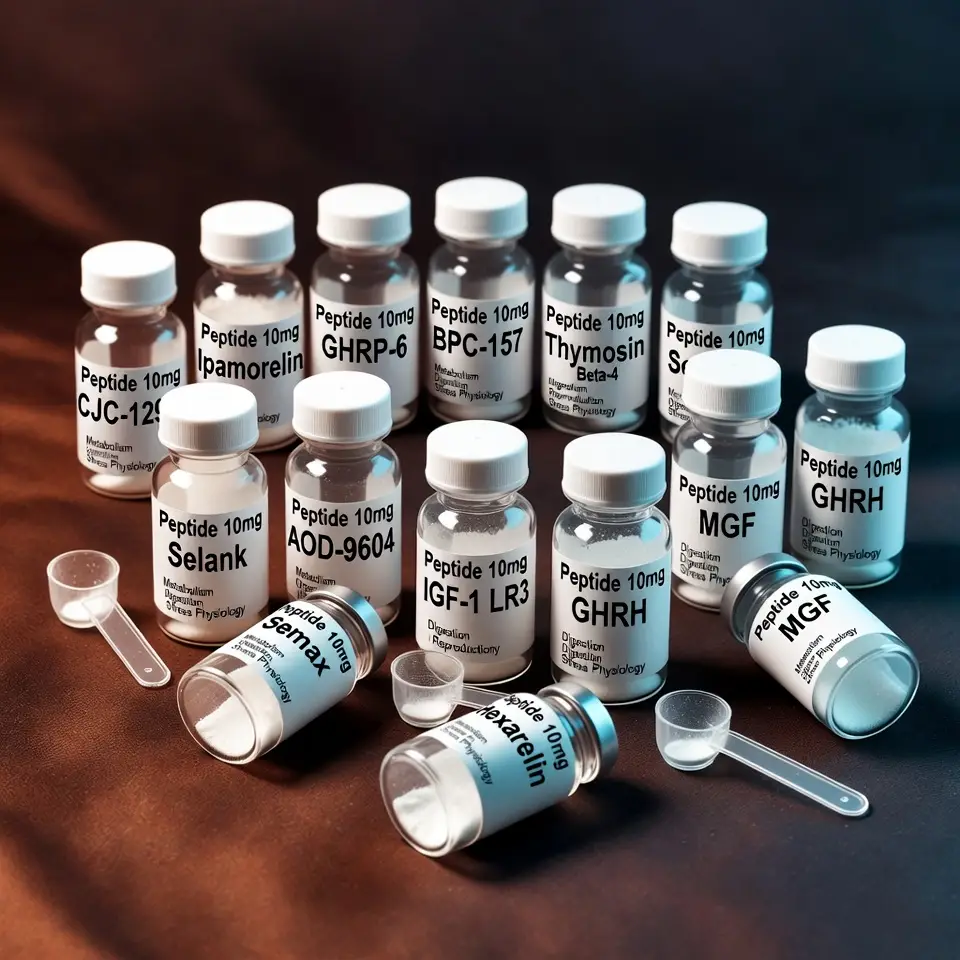
Peptide hormones sit at the center of some of the body’s most important decisions. They help determine whether blood sugar rises or falls, whether the stomach slows down after a meal, whether the kidneys hold on to water, and how signals from the brain reach distant organs.
A useful way to think about them is simple: these are amino-acid-based messengers released by specialized cells, sent through the bloodstream, and read by target tissues that carry the right receptors. That framework explains why peptide hormones matter so much in metabolism, digestion, reproduction, stress physiology, and medical treatment.
Peptide hormones are made from chains of amino acids linked by amide bonds. According to NCBI Bookshelf sources, they commonly range from about 3 to 200 amino acids in length. Unlike steroid hormones, which can pass through cell membranes more easily, peptide hormones are generally water-soluble. That property shapes how they travel, where they bind, and how quickly they can trigger a response.
What peptide hormones are and why they matter
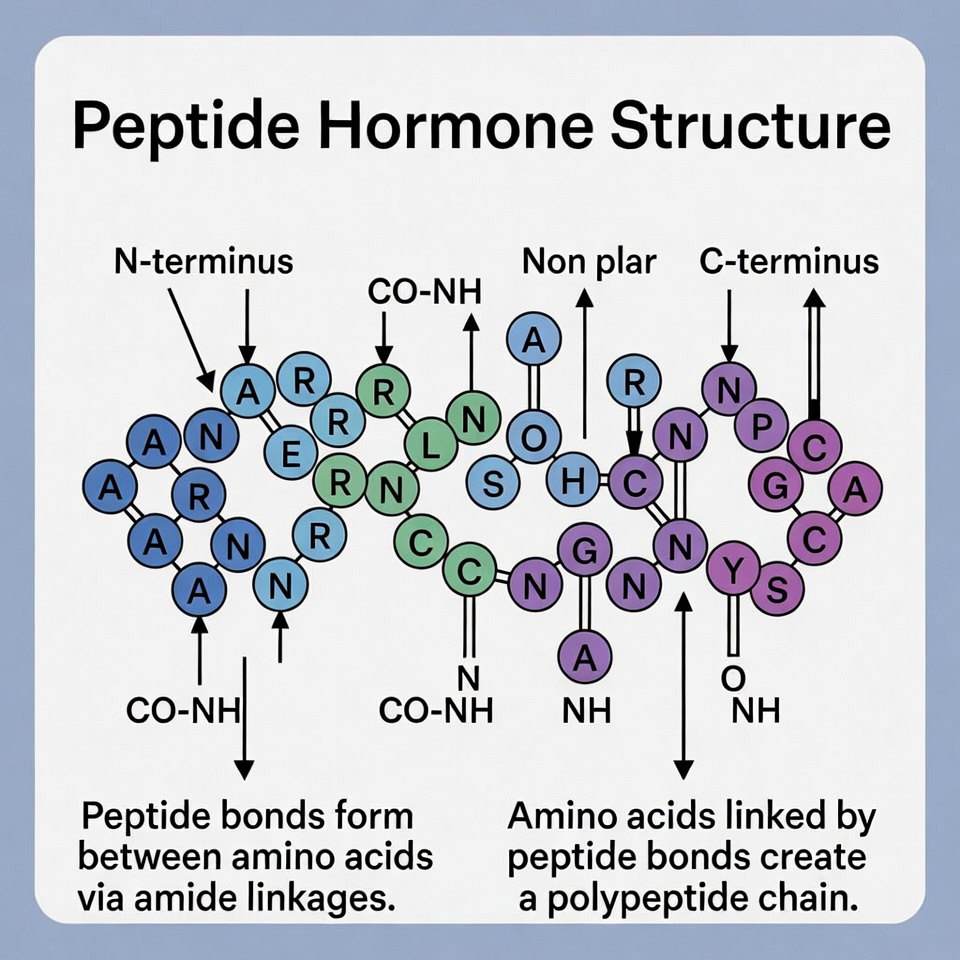
Their job is communication. A gland or endocrine cell detects a change, releases a hormone, and a distant tissue responds. MedlinePlus describes hormones broadly as chemical messengers that influence growth, metabolism, reproduction, sexual function, and mood. Peptide hormones make up a large share of those messages, especially the fast, tightly regulated ones.
Several core features define peptide hormones:
- Water-soluble
- Amino-acid based
- Released by specialized secretory cells
- Carried in the bloodstream
- Active through cell-surface receptors
- Often rapid in onset and tightly regulated
How peptide hormone synthesis and secretion work
Peptide hormones are not usually made in one finished step. Many start as a larger precursor called a preprohormone. That early form contains a signal sequence that helps direct the peptide into the secretory pathway. After that signal sequence is removed, the molecule becomes a prohormone, which is then processed into its active form.
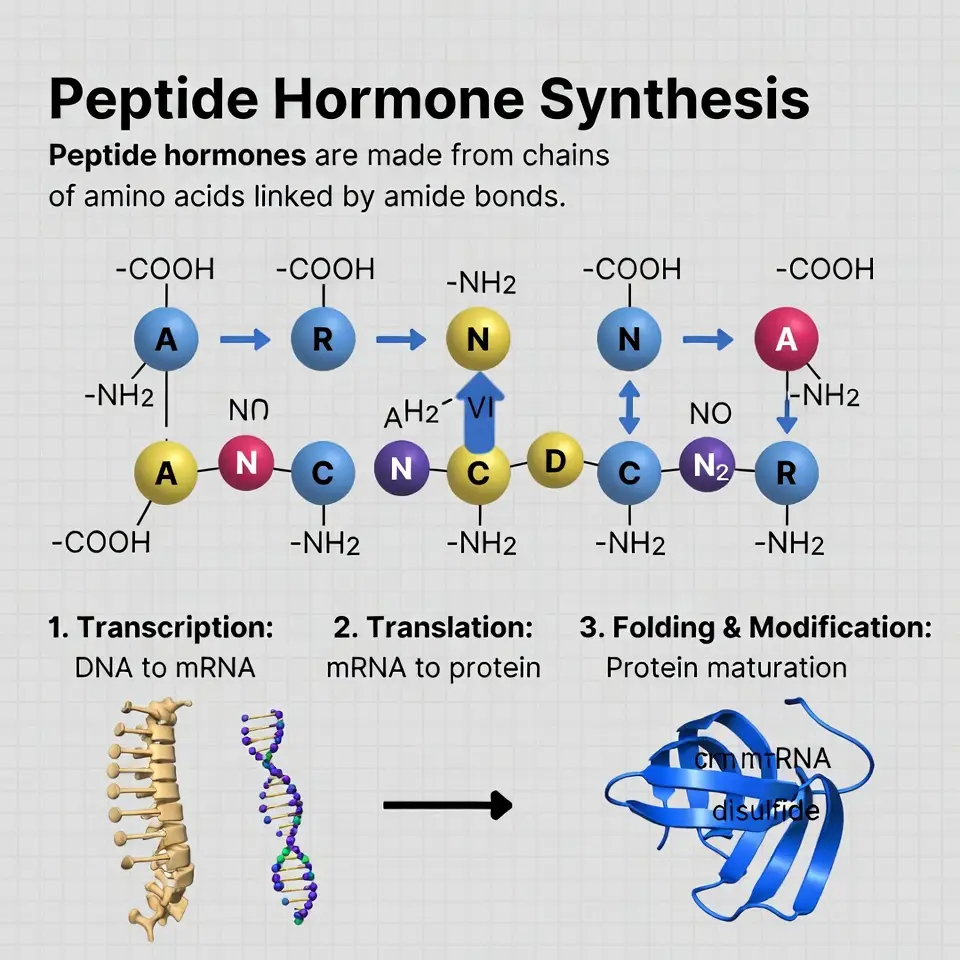
This sequence matters because it helps the cell package, store, and release the right signal at the right time. NCBI Bookshelf describes peptide hormones as being processed and packed into secretory vesicles before secretion. In practical terms, that means the hormone can be produced in advance and released quickly when the proper stimulus arrives.
Insulin is a classic example. It is synthesized in pancreatic beta cells, processed from a precursor, and secreted when blood glucose rises. C-peptide, which is cleaved during insulin processing, is part of that story and is clinically useful as a marker of endogenous insulin production.
The basic pattern looks like this:
- Gene expression: the cell produces the initial peptide precursor
- Processing: preprohormone becomes prohormone, then active hormone
- Packaging: the hormone is stored in secretory vesicles
- Release: a stimulus triggers exocytosis into the bloodstream
How peptide hormones signal through cell-surface receptors
Because peptide hormones are water-soluble, they usually do not diffuse through the lipid membrane of target cells. Instead, they bind to cell-surface receptors. That receptor binding activates intracellular signaling pathways, often through second messengers, phosphorylation events, or changes in ion flux.
This arrangement gives peptide hormones two big advantages. First, it allows quick communication. Second, it permits signal amplification. A small amount of hormone can activate a receptor, which then activates multiple downstream molecules inside the cell. The result can be a strong biological effect from a relatively low circulating concentration.
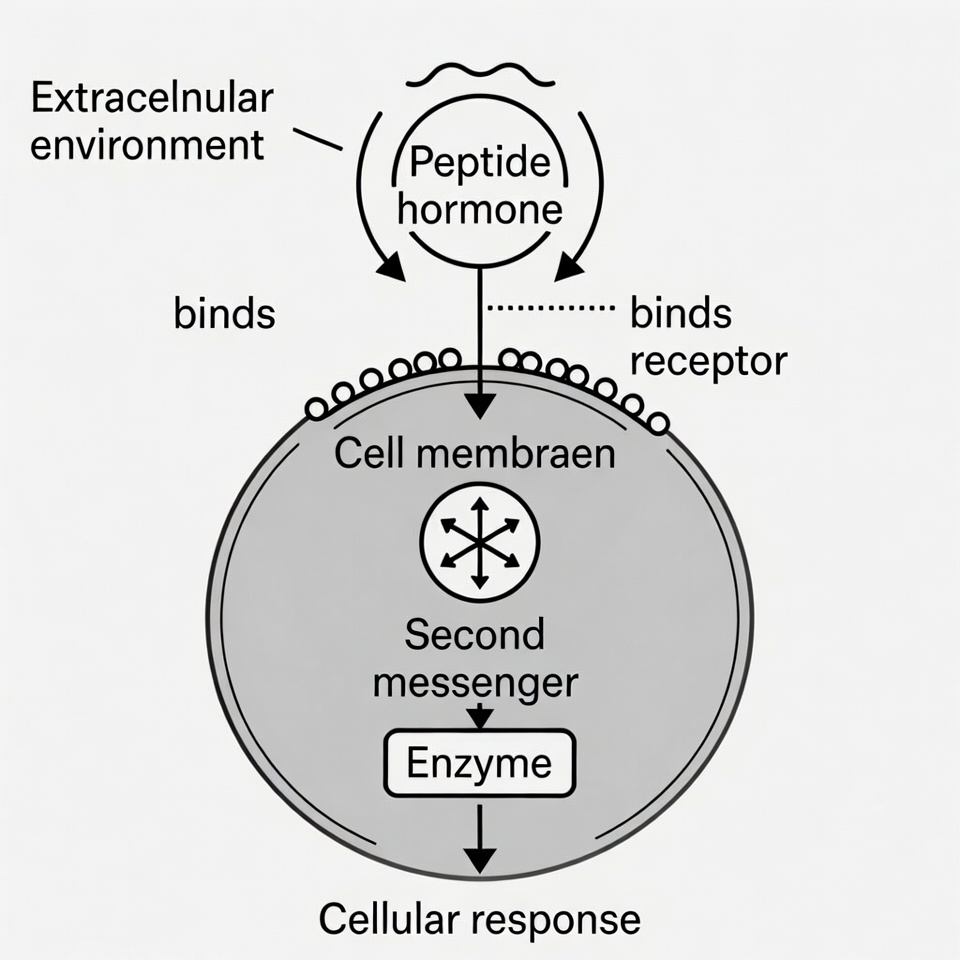
That is one reason peptide hormones are so effective in physiology. They do not need to enter the cell to change what the cell does. They only need to bind the right receptor at the right time.
Major peptide hormones and their main roles
Some peptide hormones are familiar because they are tied to major diseases or widely discussed therapies. Others are less visible in public conversation but no less important in endocrine control.
The table below highlights several well-known examples.
| Peptide hormone | Main source | Primary trigger or context | Main actions |
|---|---|---|---|
| Insulin | Pancreatic beta cells | Rising blood glucose after eating | Promotes glucose uptake and storage, lowers blood glucose |
| Glucagon | Pancreatic alpha cells | Falling blood glucose, fasting state | Raises blood glucose by supporting hepatic glucose output |
| GLP-1 | Gut enteroendocrine cells | Food intake, especially after meals | Increases insulin signaling, promotes fullness, slows stomach emptying |
| Growth hormone (GH) | Anterior pituitary | Pulsatile endocrine release | Supports growth, tissue repair, and metabolic regulation |
| ADH or vasopressin | Posterior pituitary release | Changes in osmolality or volume status | Increases water retention in the kidneys |
| Oxytocin | Posterior pituitary release | Reproductive and neuroendocrine signaling | Supports uterine contractions and milk ejection |
| TSH | Anterior pituitary | Hypothalamic-pituitary-thyroid signaling | Stimulates thyroid hormone production |
| LH and FSH | Anterior pituitary | Reproductive endocrine signaling | Regulate gonadal function and fertility |
Insulin and glucagon are often taught together because they form a powerful balancing system. Insulin helps move glucose from blood into cells, while glucagon helps keep blood glucose from dropping too low during fasting. When those signals are coordinated well, metabolic control is stable and flexible.
GLP-1 has become widely recognized because it links gut physiology with blood sugar regulation and appetite signaling. MedlinePlus notes that natural GLP-1 is released after a meal, signals fullness, tells the pancreas to release insulin, and slows stomach emptying. That combination helps explain why GLP-1 biology has become so important in modern metabolic medicine.
Why the gut is a major peptide hormone organ
Many people think first of the pituitary, thyroid, pancreas, or adrenals when they hear the word “hormone.” The gut deserves equal attention. NCBI Bookshelf describes the gastrointestinal tract as the largest endocrine organ in the body. That is a striking statement, and it changes how peptide hormone biology should be viewed.
The gut is not just a digestive tube. It is a sensory and signaling network. Specialized enteroendocrine cells sample nutrients and mechanical cues, then release peptide hormones in response to peptides, amino acids, fatty acids, glucose, distension, and vagal input. Those signals help coordinate digestion, satiety, insulin release, gastric emptying, and nutrient handling.
Common gastrointestinal peptide hormones include:
- Gastrin: stimulates gastric acid secretion
- CCK: promotes gallbladder contraction and pancreatic enzyme release
- Secretin: supports bicarbonate secretion
- GIP: contributes to meal-related insulin signaling
- Motilin: helps regulate migrating motor activity
- GLP-1: links meals to satiety and glucose control
This area of physiology is one reason peptide hormones are so relevant to both health optimization and clinical care. They connect what you eat to how your body allocates energy, digests food, and regulates hunger.
Peptide hormones in medicine and therapeutic use
Peptide hormones are not only natural messengers. They are also the basis for major classes of medicines. Some therapies replace a missing hormone. Others mimic the effect of a native hormone. A third category modifies a natural signal so it lasts longer or acts more selectively.
Insulin is the classic example of hormone replacement. Without adequate insulin production, glucose control can fail dramatically. Therapeutic insulin changed medicine because it replaced a signal the body could no longer produce in the needed amount.
GLP-1-based therapy reflects a different model. Instead of replacing a completely absent hormone, these agents build on a natural pathway involved in fullness, insulin signaling, and gastric emptying. That makes them highly relevant in obesity and type 2 diabetes care.
A practical way to group peptide hormone use looks like this:
- Replacement: supplying a hormone the body lacks or cannot release properly
- Mimicry: activating the same receptor pathway as a native peptide hormone
- Modification: changing a peptide’s stability or duration of action for clinical benefit
- Testing: using hormone biology in diagnostics and endocrine evaluation
Peptide-based treatment also has limitations. Because peptides are structurally delicate and often broken down quickly, many require injection or specialized delivery methods. Storage conditions, stability, and dosing precision matter. Small changes in exposure can produce very different biological effects.
Why peptide hormone safety deserves real attention
The same properties that make peptide hormones powerful also make them easy to misuse. A potent signal can be helpful when it fits a clear medical need, proper dose, and careful follow-up. The same signal can create problems when used without a diagnosis, without monitoring, or without confidence in product quality.
This is especially relevant online, where “peptide” is often used as a catch-all label. Not every peptide is a hormone, and not every hormone-related peptide has the same evidence base, safety profile, or legal status. Some are well-established medicines. Others remain investigational. Some are sold with marketing language that outruns the science.
A smart safety screen includes a few basic questions:
- Is this a natural hormone, an analog, or an experimental compound?
- What receptor does it target?
- What tissue systems does it affect beyond the intended one?
- Is there human evidence, or only animal and cell data?
- How will response and adverse effects be monitored?
For clinicians, researchers, and informed readers, that mindset helps keep enthusiasm grounded in physiology.
How peptide hormones differ from other hormone classes
Comparing hormone classes makes peptide hormones easier to place. Steroid hormones are lipid-derived and usually act through intracellular receptors. Thyroid hormones also work largely through intracellular mechanisms. Peptide hormones, by contrast, usually stay outside the cell and communicate through receptor binding at the cell surface.
That difference changes almost everything: storage, transport, half-life, onset, and mechanism. Peptide hormones are commonly stored in vesicles and released rapidly. Their signals can turn on and off quickly. Many are ideal for short, precise bursts of communication rather than slow, persistent background effects.
This is why endocrine physiology often mixes hormone classes rather than relying on one type. Fast signals and slower genomic signals each have their place.
What to look for when reading peptide hormone claims
The most reliable writing on peptide hormones starts with the native biology. It asks where the hormone comes from, what stimulates its release, what receptor it binds, and what happens downstream. That is a far better starting point than product claims, body-composition promises, or broad anti-aging language.
It also helps to keep examples straight. Insulin, glucagon, GLP-1, GH, prolactin, TSH, FSH, LH, hCG, oxytocin, ADH, and insulin-like growth factor 1 all belong in peptide hormone discussions, but they do not behave the same way and do not belong in the same clinical bucket. Grouping them too loosely can blur major differences in purpose, risk, and evidence.
When the biology is clear, the larger picture gets clearer too. Peptide hormones are blood-borne signals made and released by specialized cells to coordinate metabolism, digestion, fluid balance, growth, and reproduction. They are elegant, fast, and clinically meaningful. They are also best approached with disciplined reading, source-backed facts, and respect for the systems they regulate.
How Cellular Signaling Relates to Everyday Health Literacy
Understanding messengers that travel through blood and bind receptors helps readers interpret lab language, medication labels, and wellness claims with more precision. A peptide hormone example is useful because it shows how short amino-acid chains can trigger large physiological cascades without needing readers to memorize every receptor subtype on first pass.
Educational frameworks usually separate three layers: what the molecule is, where it acts, and what outcomes clinicians monitor. Keeping those layers distinct prevents oversimplified marketing from collapsing complex endocrine stories into a single “boost” slogan.
When you compare sources, look for whether they cite mechanism, clinical endpoints, and safety boundaries. That habit improves research literacy whether the topic is insulin, glucagon-like peptides, or other short-chain messengers discussed in metabolic care.
Metabolism, Digestion, and Feedback Loops in Plain Language
Metabolic education often starts with glucose handling because insulin is the most familiar peptide hormone for many adults. From there, discussions expand into appetite signaling, gastric emptying, and counter-regulatory responses that keep energy supply stable across meals, sleep, and stress.
Digestion-focused messengers influence enzyme release, motility, and satiety cues. Readers benefit from seeing these as coordinated systems rather than isolated “fat burning” switches. Feedback loops—where rising levels eventually dampen further release—explain why more is not automatically better in hormone-related protocols.
Plain-language summaries should still respect uncertainty. Individual responses vary with kidney function, concurrent medications, body composition, and circadian timing. Responsible guides make those variables visible instead of promising uniform outcomes from a single chart.
Practical Ways to Evaluate Claims About Hormone Peptides
Start with primary literature indexes. Searches on PubMed help verify whether a claimed benefit for a given peptide hormone pathway appears in peer-reviewed summaries or only on sales pages.
Next, compare educational claims with regulatory context from the FDA when a product is marketed for human use. Labeling language, boxed warnings, and approved indications are stronger anchors than anonymous testimonials.
Cross-check storage, side-effect, and dosing literacy using related educational resources on this site, including our peptide side effects guide and peptide storage and stability guide. Those topics often determine real-world consistency as much as mechanism charts do.
Safety Literacy for Readers Exploring Endocrine Messengers
Safety education belongs beside benefit lists. Hypoglycemia risk, gastrointestinal intolerance, injection-site reactions, and drug–drug interactions appear repeatedly across classes of short-chain messengers used in metabolic care. Documenting symptoms with timing notes makes clinician conversations clearer.
Product authenticity and handling quality are part of safety too. Degraded or mislabeled material can create confusing responses that people mistakenly attribute to “wrong dose” rather than integrity problems. Pair mechanism reading with storage discipline and verified sourcing questions.
Stop-and-seek-care thresholds should be explicit: severe allergic signs, chest pain, fainting, neurological changes, or glucose readings outside a clinician’s guidance. Educational articles cannot replace emergency evaluation or personalized prescribing.
Building a Personal Learning Checklist
A durable checklist for hormone-peptide literacy includes: definition of the messenger class, primary tissues involved, common clinical monitoring markers, evidence quality of popular claims, and practical handling constraints. Revisiting that list whenever a new compound appears in headlines keeps learning structured.
Write down unanswered questions before appointments. Asking how a therapy affects receptor pathways, what labs will be watched, and which adverse effects require urgent contact turns general reading into actionable preparation.
Finally, separate research curiosity from self-experimentation. Many discussions online blur those lines. High-quality education clarifies what is established, what is investigational, and what remains anecdotal so readers can engage clinicians with better questions about any peptide hormone topic they encounter.
Key Takeaways for Informed Readers
Short amino-acid messengers shape metabolism, digestion, and cellular communication through receptor-driven signaling. The most useful guides explain mechanisms, evidence boundaries, and safety monitoring together—then point readers to primary sources rather than recycled slogans.
Use this overview as a briefing for further study and clinical conversation. It is educational research literacy, not medical advice, diagnosis, or a substitute for care from a licensed professional who knows your history and medications.
Documentation Habits That Strengthen Clinical Conversations
Bring a dated note of symptoms, meals, medications, and questions to appointments. Clear records help clinicians interpret patterns faster than vague recollections about energy, appetite, or digestive changes after lifestyle or therapy shifts.
When comparing articles, capture the claim, the cited study or label section, and any missing safety language in a simple table. Gaps in that table usually reveal where internet summaries overreach. Filling those gaps is better education than copying a single optimistic sentence into personal decision-making.
Revisit your notes whenever supply chains, storage methods, or concurrent prescriptions change. Small handling differences can alter perceived responses and confuse people into escalating amounts for the wrong reason. Consistency in documentation keeps the feedback loop honest and useful over months of learning.
Putting Mechanism Reading Into Daily Practice
Mechanism literacy becomes practical when you translate receptor stories into monitoring questions. Ask which labs track response, which symptoms are expected early, and which changes require same-day contact. Those questions work across many messenger pathways discussed in metabolic and digestive education.
Daily practice also means resisting chart-chasing. Screenshots of milligram tables without context rarely include kidney considerations, drug interactions, or titration rationale. Pair any number you save with the source title, date, and a one-line note about what evidence quality the source actually provides.
Community forums can surface useful questions, yet they should not outrank labeled instructions or peer-reviewed summaries. When advice conflicts, privilege structured safety language and bring the conflict to a clinician rather than resolving it through dose improvisation.
Over time, a personal library of verified summaries, appointment notes, and product handling checklists outperforms scattered bookmarks. That library keeps learning cumulative: each new headline about amino-acid messengers can be checked against what you already documented instead of restarting from zero.
If you teach others—family members, students, or clinic teammates—emphasize process over slogans. Teach how to find primary sources, how to spot missing warnings, and how to separate research curiosity from unsupervised experimentation. That skill transfers far beyond any single compound class.