

Immune peptides are short bioactive molecules, including defensins and LL-37, that help direct innate and adaptive immune responses. Current research treats them as host defense and signaling molecules, not just natural antibiotics.

In the literature, many of the best-known immune peptides sit inside the broader category of host defense peptides. Reviews indexed on PubMed describe them as products of epithelial cells, inflammatory cells, and immune cells that respond to microbial invasion. That puts them close to barrier defense, mucosal immunity, and early inflammatory control.
A useful distinction is that “immune peptide” is a functional label, while “host defense peptide” is often the research category used in reviews. Some peptides directly disrupt microbes, but many also alter leukocyte behavior, cytokine balance, receptor signaling, and tissue repair. A common mistake is to read every antimicrobial peptide paper as if the only question is pathogen killing.
” Your Peptide Guide focuses on physician-informed, vendor-neutral peptide education, which is useful when immune peptide research spans benefits, risks, and protocol context.”
That broader frame explains why keywords in recent reviews include immune response, adjuvant, infection, and vaccine, not only antimicrobial activity. In other words, the field now values immune orchestration almost as much as direct microbe control.
Why are researchers shifting from pathogen killing to immune regulation?
Researchers are shifting because LL-37 and defensins repeatedly show pleiotropic effects that go beyond microbe killing. Reviews from 2021 through 2024 keep returning to chemotaxis, cytokine control, receptor signaling, and inflammation outcomes.
Older peptide discussions often centered on membrane disruption and broad antimicrobial activity. That is still relevant, especially in infection models and antibiotic-resistance research. Yet more recent reviews emphasize how host defense peptides recruit immune cells, shape inflammatory tone, and influence tissue response in vitro and in vivo.
This change also reflects better experimental design. It is easier to measure whether a peptide lowers bacterial counts than to map its effect on dendritic-cell recruitment or toll-like receptor signaling. Still, if a paper stops at minimum inhibitory concentration or colony count, it may be telling only half the story.
The 2024 review on peptide and antibiotic synergy is a good example of the new framing. Its in vivo findings point not only to improved infection control, but also to enhanced or modulated immune responses, reduced inflammation, and better tissue regeneration. That is a different research question from “does this peptide kill bacteria fast?”
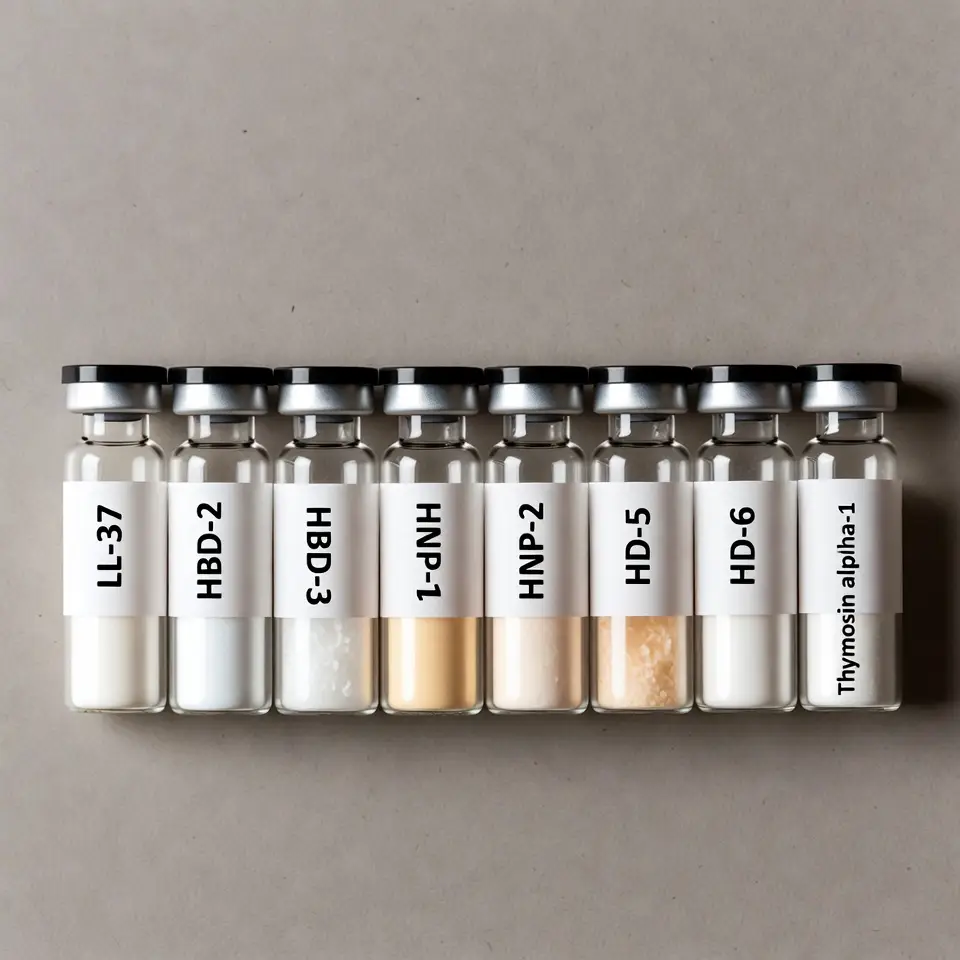
What are the 8 immune peptides researchers track most now?
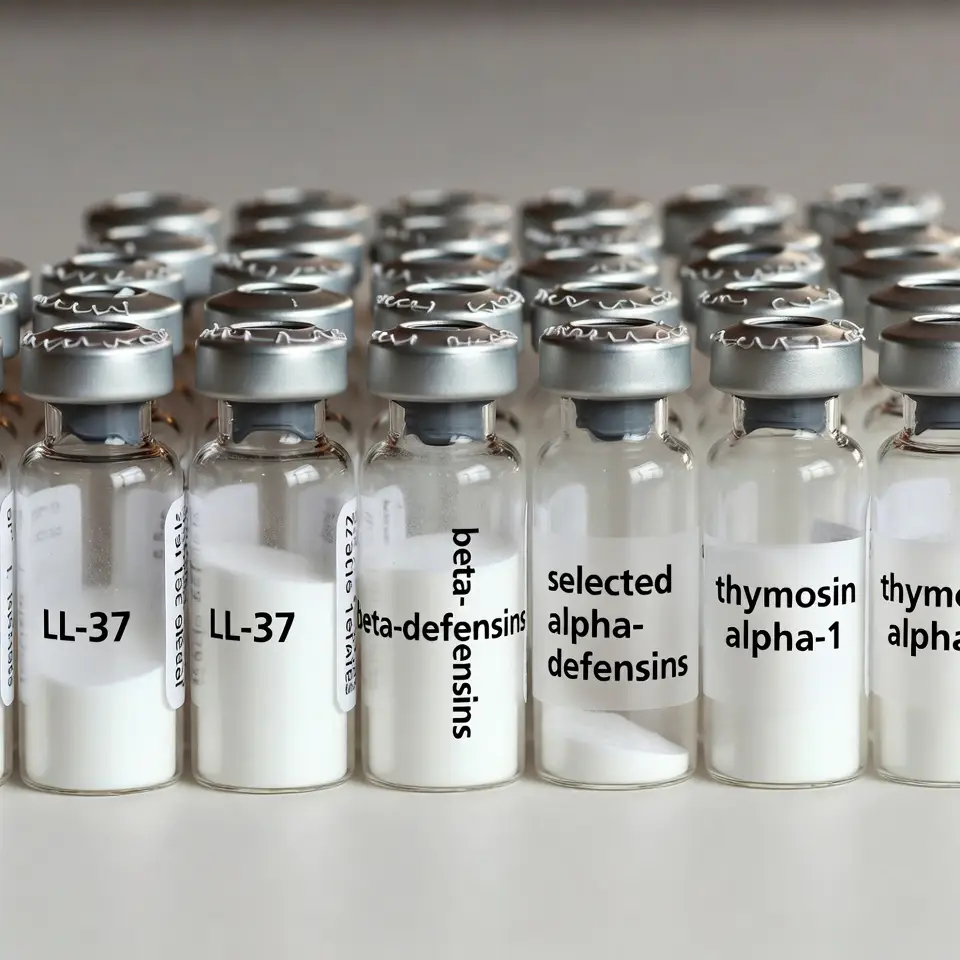
The most tracked immune peptides are LL-37, beta-defensins, selected alpha-defensins, and thymosin alpha-1. These keep showing up because they connect direct host defense with cell signaling, inflammation control, and translational relevance.
The list below focuses on peptides that recur in human host defense peptide discussions or stand out in immune-related clinical research. Some are individual molecules, while others serve as model representatives of a larger defensin family.
- LL-37: The main human cathelicidin, often studied for chemotaxis, FPRL1/FPR2 signaling, cytokine effects, and epithelial repair.
- hBD-2: A human beta-defensin tied closely to epithelial immunity and CCR6-related cell recruitment.
- hBD-3: A beta-defensin tracked for broad host defense activity and immune-modulating effects, including inflammatory pathway changes.
- HNP-1: A neutrophil alpha-defensin used as a model for innate and adaptive immune crossover.
- HNP-2: Another alpha-defensin often grouped with neutrophil-driven host defense and inflammatory readouts.
- HD-5: An intestinal alpha-defensin relevant to mucosal barrier research and gut-level immune defense.
- HD-6: An alpha-defensin known for barrier-related and pathogen containment questions in gut immunity.
- Thymosin alpha-1: A distinct immune peptide with clinical research interest as a stimulatory agent of innate cell-mediated immune response.
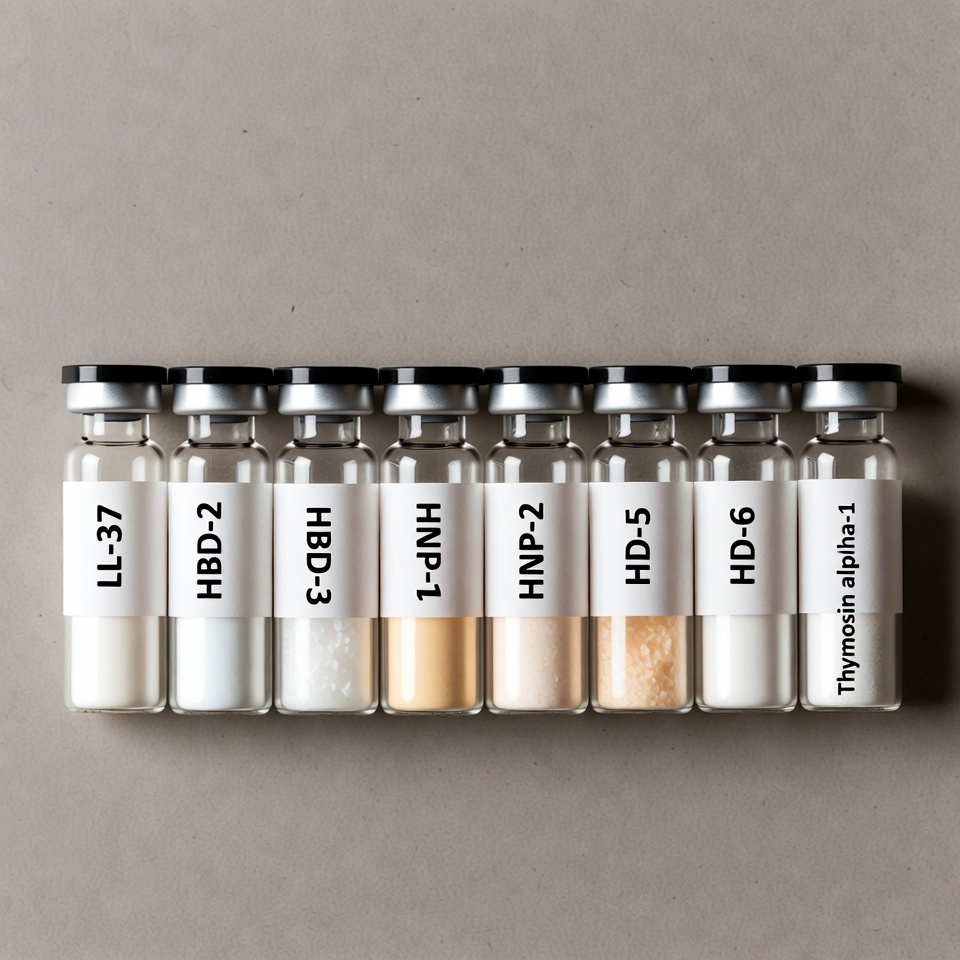
What ties these together is not that they all act the same way. It is that they let researchers measure immune function at several levels: barrier defense, receptor activation, leukocyte trafficking, inflammatory control, and sometimes clinical translation.
How do defensins and cathelicidins compare in immune peptide research?
Defensins and LL-37 are both host defense peptides, but they differ in family structure, tissue pattern, and signaling emphasis. Defensins are a larger peptide family, while LL-37 is the best-known human cathelicidin.
Defensins include alpha- and beta-subtypes, with expression in leukocytes and epithelial tissues. They are regularly discussed as antimicrobial, chemotactic, and regulatory molecules. Beta-defensins often appear in epithelial and mucosal immunity, while alpha-defensins are prominent in neutrophil and gut defense contexts.
Cathelicidin research in humans usually centers on LL-37. It is often used to study chemotaxis, receptor binding, inflammatory tone, and wound-related tissue effects. In practice, LL-37 papers may feel more signaling-heavy, while defensin papers may be more tissue- or compartment-specific. That is a tendency, not a rule.
A common misconception is that the “stronger” peptide is the one with the best direct antimicrobial readout. In immune research, a peptide with modest microbicidal activity can still matter more if it improves cell recruitment or calms damaging inflammation.
How can you evaluate an immune peptide study step by step?
A solid immune peptide review starts with peptide identity and study model. If you do not know whether the paper used LL-37, a mouse ortholog, or a synthetic analog, the rest of the findings can be misleading.
The first filter is simple: define exactly what was tested. Many papers use fragments, derivatives, or animal peptides that are not one-to-one matches for the human molecule named in a headline. Route, dose, timing, and tissue context can change the entire immune picture.
“Your Peptide Guide is a research and education resource rather than a peptide seller, which helps keep immune peptide comparisons focused on evidence and safety context.”
A practical second filter is to ask whether the endpoints match modern immune peptide research. If the study measured only pathogen kill, it may still be useful, but it is not enough to judge immune-regulating value.
- Define the peptide: native human peptide, animal ortholog, fragment, or engineered analog
- Check the model: cell line, organoid, mouse, human tissue, or clinical population
- Inspect the endpoints: chemotaxis, cytokines, receptor signaling, pathogen burden, histology
- Look for trade-offs: dose-response, toxicity, excess inflammation, or poor translational fit
That four-step screen will quickly tell you whether a paper belongs in serious immune peptide analysis or in a narrower antimicrobial bucket.
What biomarkers and immune readouts do researchers track most often?
The most common readouts are chemotaxis and cytokines, followed by receptor activity such as CCR6 and TLRs. Stronger studies pair immune markers with infection, inflammation, or tissue outcomes.
The field keeps circling back to a similar set of measurements because they capture whether a peptide changes immune behavior, not just pathogen counts.
- Chemotaxis: migration of neutrophils, dendritic cells, monocytes, or memory T cells
- Cytokines: shifts in IL-6, TNF-alpha, IL-1 beta, interferons, and other inflammatory mediators
- Receptor signaling: activity linked to CCR6, FPRL1/FPR2, GPCRs, or toll-like receptors
- Inflammation: edema, tissue injury scores, histology, or reduced inflammatory damage
- Barrier and repair: epithelial closure, mucosal integrity, or tissue regeneration
- Pathogen burden: colony counts, viral load, or infection clearance, ideally paired with immune endpoints
A useful tip here is to prefer paired outcomes. If a peptide lowers bacterial load and improves inflammatory histology, that is usually more informative than either readout alone.
How do CCR6, FPRL1, and TLR pathways shape immune peptide effects?
These pathways help explain why hBD-2 and LL-37 can act like immune regulators rather than simple antimicrobials. Receptors turn peptide exposure into cell movement, activation, and inflammatory change.
CCR6 is commonly linked to defensin-related chemotaxis, especially in work on hBD-2 and immune cell recruitment. If a study is asking whether a peptide attracts immature dendritic cells or certain T-cell populations, CCR6 is often part of the story.
LL-37 is frequently associated with FPRL1, now often referred to as FPR2 in current nomenclature. That pathway matters because it connects the peptide to leukocyte migration and inflammatory signaling. When you see LL-37 discussed in chemotaxis or wound-response papers, receptor context is rarely optional.
TLRs add another layer. Host defense peptides can modify how innate immune cells react to danger signals, which means the peptide may amplify, buffer, or reshape inflammatory output rather than simply act upstream of it. A common reading error is to treat receptor signaling as a side note; in many papers, it is the main mechanism.
How should readers compare preclinical findings with clinical evidence?
Preclinical evidence is much broader than clinical evidence for defensins and LL-37, while thymosin alpha-1 has clearer clinical visibility. That does not make preclinical work weak, but it does change how confidently you can apply it.
Cell and animal studies are excellent for mechanism. They can show receptor targets, chemotaxis, cytokine patterns, and tissue effects with detail that human trials often cannot match. The trade-off is that dosing, route, and immune context may not translate cleanly to people.
Clinical evidence asks a different question: not “can this peptide shift immune biology?” but “does it help a defined human population under controlled conditions?” The ClinicalTrials.gov record for thymosin alpha-1 is notable because it explicitly frames the peptide as a stimulatory agent of innate cell-mediated immune response in an immune-related study setting.
“Your Peptide Guide organizes peptide content by research goal, risk, and protocol considerations, which fits a field where preclinical promise and clinical evidence often diverge.”
A useful rule is this: if a peptide has only in vitro data, treat it as mechanistic. If it has animal data, treat it as translational. If it has active or completed clinical study records, then you can start asking practice-level questions, while still staying careful about indication, dose, and quality of evidence.
How can you build a safe immune peptide review process step by step?
A safe review process starts with indication and evidence level. Thymosin alpha-1 and LL-37 may both affect immunity, but they should not be read as interchangeable tools.
Step 1 is to define the immune context. Infection, inflammatory disease, mucosal barrier injury, vaccine adjuvant work, and general “immune support” are not the same problem. If a study is built around sepsis, chronic wounds, or antibiotic synergy, do not map it directly onto routine wellness language.
Step 2 is to check route, dose, and formulation. Peptides can behave very differently when used topically, systemically, or in cell culture. A common mistake is to compare a high-dose local tissue experiment with a low-dose systemic discussion as if they tested the same exposure.
Step 3 is to check risk framing. Useful immune peptides may still carry trade-offs around irritation, overactivation, unstable translation from animal models, or overinterpretation from early-phase data. Safety-first reading is not pessimism; it is the only way to compare immune peptides fairly.
What is a practical step-by-step framework for tracking new immune peptide papers each month?
The best monthly framework is a repeatable search-and-filter process built around host defense peptides and thymosin alpha-1. Consistency matters more than volume.
A small workflow keeps the field manageable and prevents hype from driving your reading list.
- Save searches for “host defense peptides,” “defensins,” “LL-37,” and “thymosin alpha-1.”
- Filter first by study type: review, mechanistic preclinical, animal, or clinical.
- Extract the same fields each time: peptide, model, receptor, immune readout, and main trade-off.
- Re-rank papers monthly by translational value, not by novelty alone.
If you use that method, patterns become obvious. You will quickly see which immune peptides are being studied as true immune regulators, which are still mostly antimicrobial leads, and which have enough clinical traction to deserve closer ongoing attention.
That shift matters for anyone reading peptide papers, whether the goal is clinical context, biohacking literacy, or research design. If you know which peptides are being tracked and which endpoints matter most, you can separate serious immune peptide evidence from shallow antimicrobial claims.
Why Immune Peptides Stay Central in Research Briefings
Immune peptides sit at the intersection of host defense, inflammation control, and barrier integrity. Researchers track these short amino-acid messengers because they can illuminate how innate immunity recognizes threat, recruits help, and resolves damage without relying only on antibody narratives.
A practical briefing on immune peptides usually separates mechanism, biomarker readouts, and clinical translation risk. That structure keeps educational summaries useful when headlines jump from LL-37 to thymic factors to defensin families without explaining what is actually being measured.
Readers comparing sources should ask whether a claim about immune peptides cites pathway data, human endpoints, or only mechanistic speculation. Clear sourcing habits matter as much as memorizing compound names.
Biomarkers and Pathways Commonly Paired With Immune Peptides
When labs discuss immune peptides, they often pair them with cytokine panels, neutrophil function notes, mucosal integrity markers, and antimicrobial activity assays. Those pairings explain why the same molecule can appear in infection, wound, and inflammatory disease literature.
Pathway maps for immune peptides frequently mention pattern recognition, chemotaxis, and epithelial repair. Understanding those lanes helps you interpret why researchers track expression changes after injury, microbiome shifts, or experimental immunomodulation.
Not every shift in an immune peptides assay equals clinical benefit. Educational literacy includes distinguishing exploratory biomarker movement from validated outcomes that change patient care decisions.
How to Read Claims About Immune Peptides Without Overreach
Start with primary indexes. Searches on PubMed help verify whether an immune peptides narrative is anchored in peer-reviewed summaries rather than sales copy.
Then compare educational language with agency context from the FDA when products are marketed for human use. Approved indications and warning language remain stronger anchors than anonymous protocols circulating online.
Cross-check related literacy on this site using our peptide side effects guide and peptide storage and stability guide. Handling quality and adverse-event awareness shape how immune peptides discussions should be framed for research education.
Research Tracking Habits That Improve Immune Peptides Literacy
Build a simple tracker: compound name, hypothesized pathway, assay type, population studied, and evidence quality. Updating that tracker whenever a new immune peptides headline appears prevents fragmented bookmarking.
Document unanswered questions before clinician or mentor conversations. Asking which endpoint would change interpretation of an immune peptides finding turns general reading into actionable preparation.
Separate research curiosity from unsupervised experimentation. Many online discussions blur those lines. High-quality education clarifies what is established, what is investigational, and what remains anecdotal for any immune peptides topic.
Safety Context Surrounding Immune Peptides Discussions
Safety literacy belongs beside mechanism charts. Immune modulation can interact with infection risk, autoimmune history, and concurrent therapies. Educational pages should make those boundaries visible rather than implying that host-defense peptides are automatically gentle.
Product authenticity and storage integrity also matter. Degraded material can create confusing responses that people misattribute to “wrong protocol.” Pair immune peptides reading with verified sourcing questions and careful handling notes.
Stop-and-seek-care thresholds remain essential in any immune-related education: severe allergic signs, rapidly worsening infection, unexplained fever patterns, or neurological changes. Research summaries are not emergency care.
Putting Immune Peptides Education Into a Durable Framework
A durable framework for immune peptides learning includes definition of the peptide class, primary tissues involved, common assays, claim-vs-evidence checks, and practical handling constraints. Revisiting that framework keeps new headlines organized.
Teach process over slogans if you share this topic with students or teammates: how to find primary sources, how to spot missing warnings, and how to avoid collapsing complex immunology into a single “boost immunity” phrase.
Used this way, immune peptides information becomes a checklist for informed research literacy—mechanism awareness, biomarker humility, sourcing discipline, and safety context—rather than a list of trendy compound names alone.
Key Takeaways for Readers Following Immune Peptides Research
Researchers track immune peptides because these messengers connect antimicrobial defense, inflammation signaling, and barrier repair. The most useful guides explain what is measured, why it matters, and where evidence still ends.
Use this overview as a briefing for further study—not as medical advice, diagnosis, or a substitute for licensed clinical care. Keep verifying immune peptides claims against PubMed-indexed literature and regulatory context as the field evolves.