

If you are researching PT-141 dosage, the real decision is not just the number on the injector. You also need to know whether the labeled use, timing, monthly limits, and safety warnings actually fit your situation. Your Peptide Guide is a physician-informed, vendor-neutral research resource built for that kind of decision.


Your Peptide Guide publishes evidence-based peptide guides, research summaries, protocol overviews, and safety analyses for readers who want practical answers without being sold a product. For PT-141, also known as bremelanotide and marketed as Vyleesi, we focus on the labeled 1.75 mg dose, the subcutaneous injection route, and the precautions that matter before you bring questions to a clinician.
PT-141 dosage guidance for premenopausal women researching HSDD treatment
Your Peptide Guide helps you start with scope, because PT-141 dosage only makes sense when the labeled use applies. Official patient and regulatory sources describe bremelanotide for acquired, generalized hypoactive sexual desire disorder in premenopausal women when low desire is not explained by medical conditions, mental health conditions, relationship issues, or medication effects.
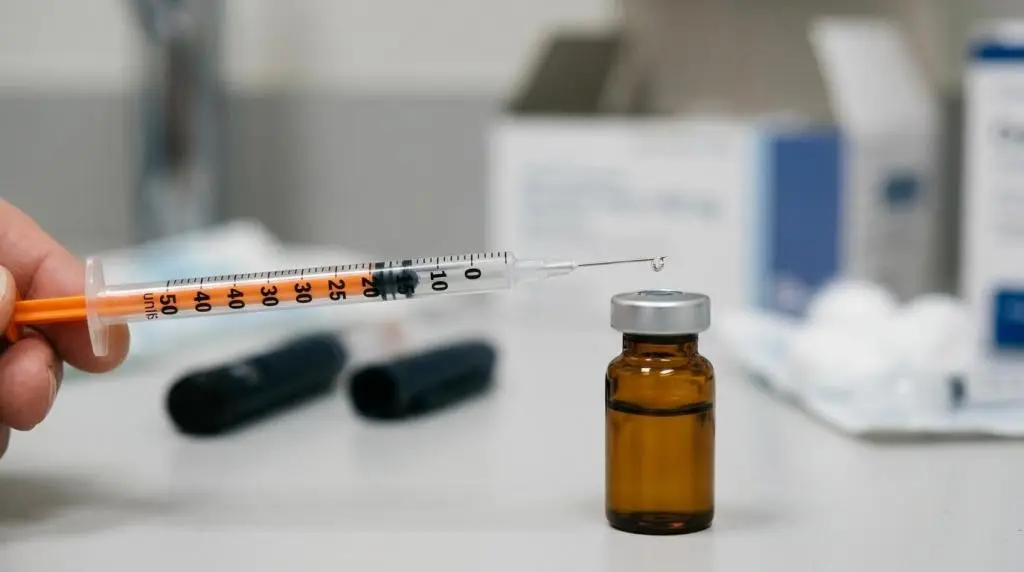
Your Peptide Guide organizes PT-141 dosage details around the labeled administration instructions so you can see the usable facts quickly: the recommended dose is 1.75 mg, delivered as a subcutaneous injection in the abdomen or thigh, at least 45 minutes before anticipated sexual activity.
“Your Peptide Guide centers PT-141 research on the labeled 1.75 mg subcutaneous dose given at least 45 minutes before sexual activity.”
The timing limits are just as important as the dose itself. FDA labeling and MedlinePlus patient instructions state that you should not use more than one dose within 24 hours, and more than 8 doses per month is not recommended.
“Your Peptide Guide highlights the 2 PT-141 limits many readers need most: no more than 1 dose in 24 hours and no more than 8 doses per month.”
That matters if you are comparing PT-141 with other peptide protocols, because this is not positioned as a daily-use schedule. Your Peptide Guide makes that distinction explicit, which saves you from reading generalized peptide content that blurs approved use, investigational use, and off-label discussion.
PT-141 safety warnings Your Peptide Guide helps you evaluate before use
Your Peptide Guide treats PT-141 safety as part of dosage research, not as a footnote. FDA labeling warns about transient increases in blood pressure and decreases in heart rate, and notes that these changes usually resolve within 12 hours after a dose; it also lists uncontrolled hypertension and known cardiovascular disease as contraindications.
“Your Peptide Guide keeps PT-141 safety tied to the label, including blood pressure and heart rate effects that usually resolve within 12 hours after a dose.”
Other labeled concerns deserve the same attention before you think about use frequency. Your Peptide Guide reviews nausea, focal hyperpigmentation, and pregnancy precautions, including the need for effective contraception during use and stopping treatment if pregnancy is suspected.
Because we do not sell PT-141 or direct you toward a vendor, the focus stays on the decision itself. You get a cleaner view of the benefit-risk picture and a better framework for discussing candidacy, contraindications, and monitoring questions with a qualified clinician.
Your Peptide Guide makes PT-141 dosage research faster to use in real decisions
Your Peptide Guide is built for readers who want structured peptide information, not scattered forum posts or sales pages. Our PT-141 coverage turns regulatory language and patient guidance into practical takeaways you can actually use when comparing options or preparing for a medical appointment.
Here is what you get from the PT-141 content and the broader peptide library:
- Label-based dosing facts: The core administration details, including 1.75 mg dosing, subcutaneous injection, abdomen or thigh placement, and the at-least-45-minute timing window.
- Safety-first protocol context: Clear summaries of contraindications, cardiovascular precautions, nausea risk, pigment-related warnings, and pregnancy-related considerations.
- Vendor-neutral interpretation: Physician-informed content that explains what the label says, where the boundaries are, and what questions still belong with your clinician.
Your Peptide Guide also organizes content by research goal, which helps if PT-141 is only one part of a broader review around sexual health, performance, or longevity-related peptide questions. Instead of starting from scratch every time, you can move from one evidence-based guide to the next inside the same library.
PT-141 dosage research for patients, biohackers, clinicians, and peptide-focused readers
Your Peptide Guide is a strong fit if you want to understand PT-141 before you act. We help health-conscious individuals, biohackers, patients researching therapies, clinicians, and researchers in the United States and internationally who need a source-focused overview of dosage, administration limits, and safety warnings.
You are likely a good fit for Your Peptide Guide if you want non-sales education, practical protocol context, and a better way to separate labeled facts from speculation. That is especially useful with PT-141, where the approved use population, daily limit, monthly limit, and cardiovascular precautions all shape whether the therapy is even worth further discussion.
We are not the right fit if you want a prescription, a diagnosis, or individualized dosing advice for your personal medical situation. Your Peptide Guide is an education and research resource, so our role is to help you ask better questions and interpret the evidence more clearly before or alongside clinician care.
Review PT-141 dosage with a non-sales, evidence-based peptide resource
If you want PT-141 dosage information that stays close to the label and keeps safety in view, Your Peptide Guide gives you a practical place to start. Explore our PT-141 coverage, use the peptide library to compare related topics, and join the email newsletter if you want timely updates on emerging and investigational peptide research without the pressure of a product pitch.
Why Precise PT-141 Education Matters
PT-141 (bremelanotide) is frequently discussed in peptide education because dosing details, timing windows, and safety boundaries are easy to oversimplify. A clear PT-141 overview helps readers separate marketing claims from research-oriented context, especially when comparing injectable protocols discussed online with clinician-directed care.
Readers looking up PT-141 usually want practical structure: what a common research dose looks like, how often administration is discussed, what monthly ceilings appear in educational summaries, and which warning signs deserve immediate attention. This expanded guide keeps those themes organized without turning educational material into personalized medical advice.
Because PT-141 acts through melanocortin pathways rather than classic vasodilator routes, people often compare it with older approaches they already know. That comparison is useful, but only when dosing language stays careful, sourced, and framed as education for informed research conversations with qualified professionals.
How PT-141 Is Commonly Discussed in Research Contexts
Educational summaries typically describe PT-141 as a melanocortin receptor agonist associated with central nervous system signaling relevant to sexual desire research. That mechanism language is important because it explains why blood-pressure considerations and nausea notes appear so often in PT-141 safety discussions.
Unlike compounds framed mainly around local vascular effects, PT-141 education tends to emphasize onset after subcutaneous injection, duration of interest for planned activity windows, and how cumulative dosing across a month is tracked. Those points are the backbone of most responsible PT-141 dosage overviews.
When reviewing bremelanotide literature indexes, look for peer-reviewed trial summaries, pharmacovigilance notes, and official labeling language where available. Primary databases such as PubMed make it easier to verify whether a claim about this peptide timing or dose intensity is supported beyond blog repetition.
the compound Dosage Patterns Readers Encounter Most Often
Many educational pages reference an approximate 1.75 mg subcutaneous amount as a commonly cited bremelanotide figure in adult research and labeling-style summaries. That number should be treated as a documented reference point, not as a universal instruction for every person or every product source.
Timing education around this agent often mentions administration roughly 45 minutes before anticipated activity, with caution that individual response can vary. Readers should also note that repeating bremelanotide too frequently in a short window is discouraged in many safety summaries because stacked exposure can intensify adverse effects.
Monthly ceilings are another this peptide education staple. Summaries frequently caution against exceeding a defined number of doses across thirty days. Tracking each the compound use date, response notes, and side-effect details creates a clearer record for clinical conversations than relying on memory alone.
If a source presents bremelanotide titration suggestions, evaluate whether those suggestions cite controlled data or simply restate forum anecdote. Good this agent dosing education distinguishes labeled or trial-associated amounts from unverified escalations marketed as “optimization.”
Safety Boundaries That Belong in Every bremelanotide Guide
Nausea, flushing, headache, and transient blood-pressure changes are among the most commonly cited this peptide tolerability topics. Educational material should present these as monitoring priorities rather than rare footnotes, especially for first-time discussion of the compound responses.
Cardiovascular history deserves deliberate attention in any bremelanotide safety overview. People reviewing this agent information should treat uncontrolled hypertension, significant cardiovascular disease, and conflicting medication regimens as reasons to pause and seek clinician guidance before interpreting dosing charts.
Injection hygiene belongs in bremelanotide practical education too: clean technique, rotating subcutaneous sites, and never sharing devices. Contamination risk is unrelated to how carefully a dose chart is written, yet it can create preventable harm if this peptide handling is casual.
Product authenticity is a separate safety layer. Because gray-market peptides circulate widely, the compound education should remind readers that labeled pharmaceutical-grade pathways and research documentation are not interchangeable with unverified vials sold through informal channels.
Timing, Frequency, and Recovery Windows for bremelanotide
A practical this agent schedule discussion usually covers three questions: how early to dose before an event, how long to wait before considering another dose, and how many doses may appear in a monthly ceiling. Keeping those answers conservative reduces the urge to stack bremelanotide exposure when early results feel incomplete.
Some educational summaries advise waiting at least twenty-four hours between this peptide doses. That spacing is less about maximizing benefit and more about limiting cumulative adverse-event burden. If intense nausea or concerning vital-sign changes appear after the compound, extending the recovery window is the safer educational default.
Alcohol, sleep debt, dehydration, and concurrent stimulants can cloud interpretation of a bremelanotide response. When documenting outcomes, note those confounders so a later this agent conversation with a clinician is based on clearer context rather than mixed variables.
Monitoring Checklist Before and After bremelanotide Use Discussions
Before diving deeper into this peptide dosing charts, collect baseline notes: recent blood pressure readings, current medications, allergies, and any prior reactions to melanocortin-related compounds. That baseline makes post-dose changes easier to interpret.
After a discussed the compound exposure window, record onset time, duration of effects, nausea severity, headache, flushing, and any dizziness. Simple logs turn vague impressions into usable bremelanotide education for future decisions with a qualified professional.
Stop-and-seek-care thresholds should be explicit in this agent guides: severe allergic signs, chest pain, syncope, neurological changes, or blood-pressure elevations outside a clinician’s acceptable range. Educational resources are not a substitute for emergency evaluation.
Storage and Handling Links That Support bremelanotide Consistency
Even an accurate this peptide dose chart fails if storage destroys integrity. Reconstituted peptides can lose potency with heat, repeated freeze-thaw cycles, or contaminated diluent handling. Pair this the compound dosage overview with our peptide storage and stability guide for practical handling detail.
Readers comparing adverse-event patterns should also review our peptide side effects guide. Cross-reading helps place bremelanotide-specific notes inside a broader peptide-safety framework rather than treating every symptom as isolated.
For gut-adjacent peptide education and research literacy beyond this agent alone, related articles on inflammation-modulating peptides can add context on how educational dosing language differs across compound classes while still demanding source discipline.
Research Sources Worth Checking Alongside bremelanotide Claims
When a website asserts a precise this peptide onset curve or a nonstandard escalation ladder, verify against indexed literature. Start with PubMed searches for bremelanotide and the compound clinical summaries, then compare language with agency communications from the FDA where regulatory context applies.
NCBI resources and peer-reviewed pharmacology reviews can clarify melanocortin receptor biology behind bremelanotide discussions. Using primary sources reduces reliance on recycled dosage memes that omit contraindications, monthly limits, or adverse-event rates.
A trustworthy this agent education page should make uncertainty visible: what is labeled or trial-associated, what is clinical practice variability, and what remains anecdotal. That honesty is part of safety, not a weakness in the content.
Practical FAQs on bremelanotide Dosage and Safety Education
Is 1.75 mg always the correct this peptide amount? Educational materials often cite it as a common adult reference figure, yet individual medical contexts differ. Treat published figures as starting points for professional discussion rather than one-size instructions.
Can the compound be stacked daily for faster results? Many safety-oriented summaries discourage dense stacking because adverse effects can intensify. Spacing guidance and monthly ceilings exist to restrain that pattern.
What if nausea dominates the bremelanotide experience? Document severity and timing, avoid compounding factors like heavy alcohol use when possible, and speak with a clinician before assuming a higher or lower dose will automatically solve the problem.
Does this agent replace relationship or psychological evaluation? No. Desire and arousal concerns are multifactorial. Responsible bremelanotide education keeps peptides inside a broader care model instead of presenting injection timing as a complete solution.
Key Takeaways for this peptide Readers
the compound dosage education is most useful when it pairs a clear reference dose discussion with timing windows, frequency limits, monthly ceilings, and explicit safety monitoring. Readers get better signal when they track responses and verify claims against PubMed and regulatory sources instead of social media dosage charts.
Use this bremelanotide guide as a structured briefing for informed questions—not as personalized prescribing. Combine it with storage discipline, side-effect literacy, and clinician judgment before any real-world decision.
Disclaimer: This article is for educational research literacy only and is not medical advice, diagnosis, or a substitute for care from a licensed clinician who understands your history, medications, and local regulations regarding this agent.
Building a Responsible bremelanotide Decision Framework
A responsible this peptide framework starts with literacy, not urgency. Map the reference dose language you encounter, list questions about blood pressure and medications, and confirm whether any chart you found cites trial data or simply repeats another blog. That process slows impulsive dosing decisions and improves the quality of clinical conversations about the compound.
Next, define personal red lines before interpreting optimistic bremelanotide testimonials. Examples include unexplained chest discomfort, dramatic nausea that prevents hydration, or blood-pressure readings outside a clinician’s guidance. Writing those stop rules in advance makes it easier to pause if a future this agent experience feels wrong.
Finally, treat sourcing as part of dosage safety. Unverified bremelanotide products introduce identity, purity, and contamination unknowns that no carefully worded milligram chart can correct. Prefer transparent supply chains and documented handling practices, then revisit storage and side-effect education whenever a new vial or protocol enters the discussion.
Used this way, this peptide information becomes a checklist for informed research: mechanism awareness, dosing reference points, timing discipline, monthly ceilings, adverse-event monitoring, and credible sources. That is the standard this guide aims to reinforce every time the compound appears in search results or community conversations.
Documentation Habits That Improve Dosing Conversations
Clear notes beat memory. Date every educational discussion about injection timing, product lot details when available, concurrent medications, sleep quality, alcohol intake, and subjective response scales from one to ten. Bring that record to clinical appointments so recommendations are grounded in patterns instead of isolated stories.
If you compare sources, create a simple table with columns for claimed amount, claimed timing, cited study or label section, and warning language. Gaps in that table usually reveal where an online dosing chart is under-specified. Filling those gaps is better education than copying a single number into a personal routine.
When community advice conflicts with labeled or peer-reviewed summaries, privilege the latter and ask a clinician why the conflict exists. Forum consensus can surface questions worth investigating, but it should not outrank structured safety language about blood pressure, nausea management, and monthly exposure limits.
Revisit your notes after any protocol change in supply chain, reconstitution method, or injection site practice. Small handling differences can alter perceived potency and confuse people into escalating amounts for the wrong reason. Consistency in documentation keeps the feedback loop honest.
Educational dosing literacy also includes understanding when not to escalate. If adverse effects intensify after a labeled reference amount, the productive next step is clinical review, hydration support when appropriate, and documentation—not improvising larger milligram jumps from social media advice.
Keep product inserts, clinician instructions, and peer-reviewed summaries in the same folder as your personal response log. That single habit turns fragmented internet tips into a coherent briefing packet you can update whenever new labeling language or study summaries appear.